
5 Haunted National Parks in the USA (Part 1)
Haunted national parks pair wild, often otherworldly landscapes with stories of ghostly sightings, unfinished histories, and eerie echoes—think fog rolling over abandoned lookout towers or moonlit trails where voices of the past seem to drift between trees.
National parks preserve not only ecosystems but human history: old mining camps, Civilian Conservation Corps structures, frontier homesteads, and battle sites. Those places carry layered memories—tragedies, disappearances, and long-ago settlements—that fuel reported hauntings and give paranormal experiences deep context.
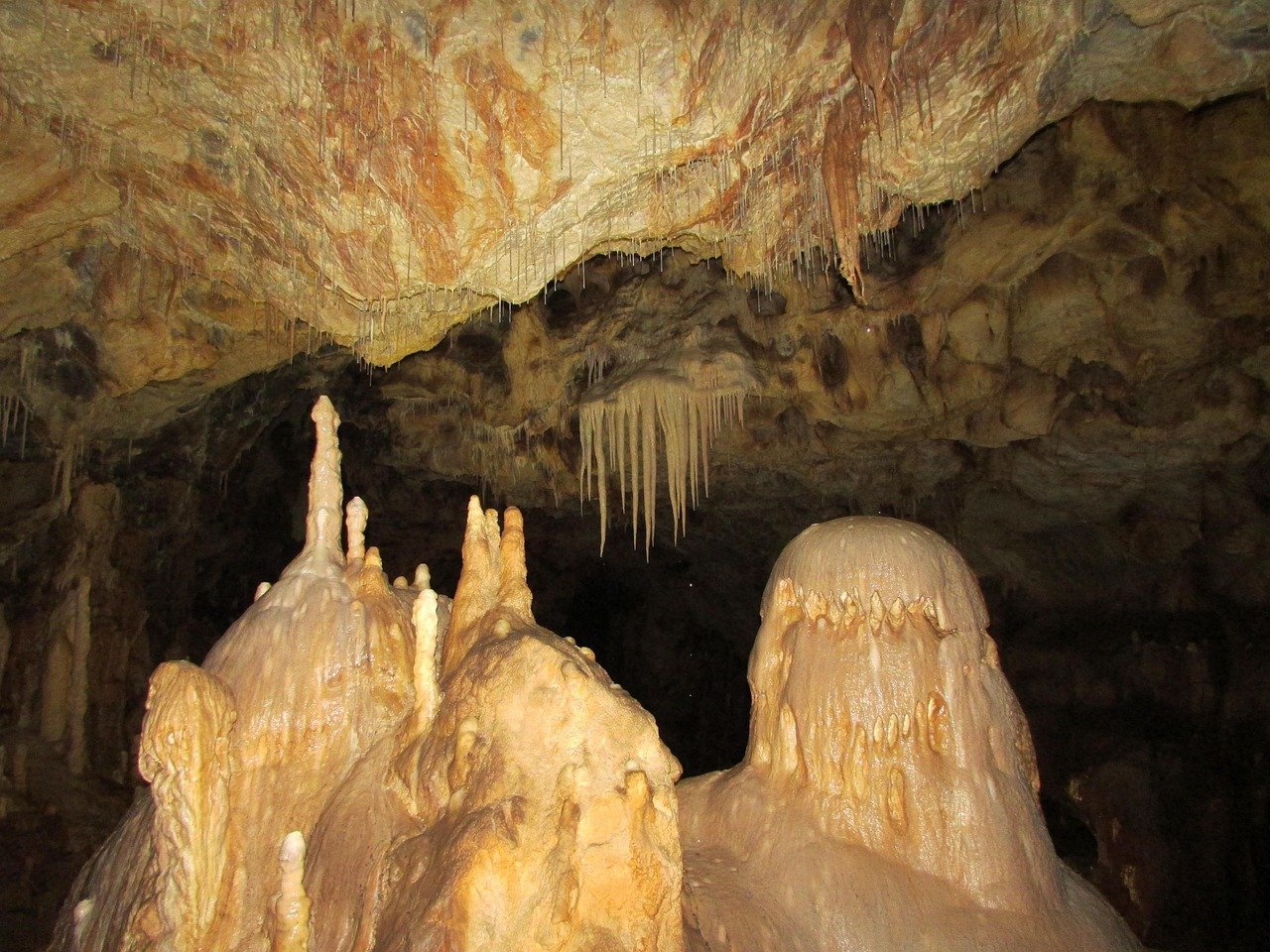
Mammoth Cave National Park (Kentucky)
Mammoth Cave National Park — located in central Kentucky — is one of the most fascinating and mysterious places in the United States. Known for its vast underground labyrinth, it is both a natural wonder and a place steeped in legend, tragedy, and ghostly lore. Mammoth Cave’s extensive network of passageways includes vast chambers, tight tunnels, underground rivers, and rare geological formations such as gypsum flowers and flowstone.
The cave became a local curiosity and later a major tourist attraction in the early 1800s. Enslaved guides such as Stephen Bishop, Mat Bransford, and Nick Bransford made significant contributions to the cave’s exploration and mapping. Bishop’s maps were widely recognized for their accuracy. Physician Dr. John Croghan purchased the cave in 1839 with the idea of turning it into a sanatorium for tuberculosis patients. He built huts inside the cave, believing the constant, cool air would heal patients. The experiment failed disastrously — many died in the damp darkness — and this era gave rise to some of the most enduring ghost stories tied to the cave.
Hauntings:
Visitors and park rangers have reported faint coughing or whispers echoing through the passages near the old tuberculosis huts, apparitions of pale figures dressed in ragged 19th-century clothing. cold spots — unusual even in the uniformly cool cave air.
Bishop, enslaved and later freed, became one of the most celebrated figures in Mammoth Cave’s history. Some say his spirit still roams the cave, guiding visitors or watching over the passages he loved. Tour guides have reported seeing a shadowy figure with a lantern flickering just ahead — only for it to vanish when approached.
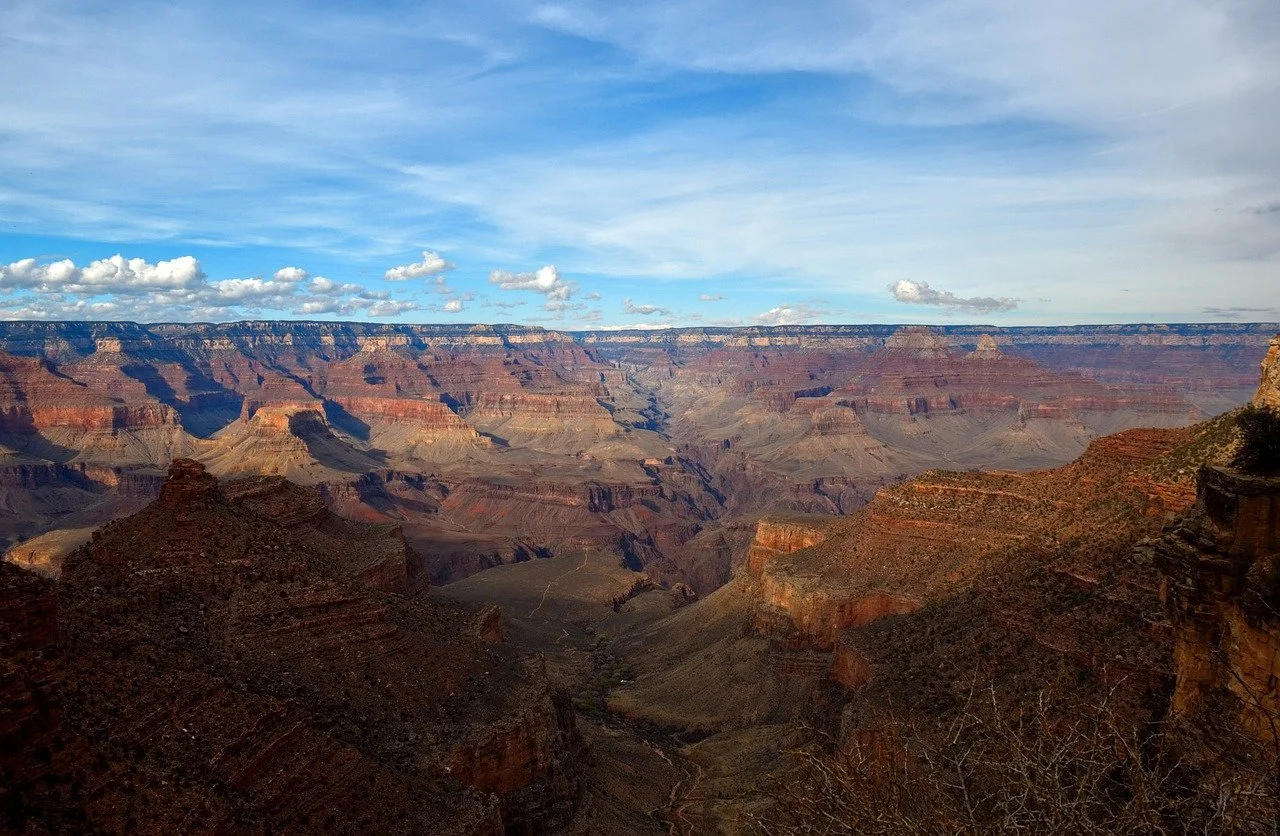
Grand Canyon National Park (Arizona)
The Grand Canyon is one of the most iconic landscapes in the world — vast, awe-inspiring, and ancient beyond comprehension. But alongside its natural splendor and geological wonder, the Grand Canyon has deep roots in Native American traditions, tragic frontier history, and haunted legends whispered by visitors, rangers, and locals alike. The canyon’s layers of rock preserve nearly two billion years of Earth’s history, creating a geological and spiritual marvel that has drawn explorers, scientists, and shamans for centuries.
Human history here dates back thousands of years, with hundreds of deaths recorded in the canyon. The first Europeans to record seeing the canyon were members of a Spanish expedition in 1540. The canyon’s full exploration and mapping came much later — notably through expeditions by John Wesley Powell in the late 1800s, who famously led daring river runs through the Colorado River’s rapids. The Santa Fe Railway and early tourism in the 1900s helped turn the canyon into a national symbol. The park’s lodges (like El Tovar Hotel, opened in 1905) became the heart of early Grand Canyon travel — and also the setting for several ghost stories.
Hauntings:
Despite its reputation as a natural wonder, the Grand Canyon has a darker, quieter side full of tragedy, mystery, and reported hauntings that have scared and fascinated rangers and visitors for generations. The "Wailing Woman" is frequently seen on the Transept Trail. Legend says she committed suicide after her husband and son died in a hiking accident. Others report seeing a "Red-Headed Woman" near Phantom Ranch who vanishes after asking for directions.
The historic El Tovar Hotel, perched on the South Rim, has long been associated with ghostly encounters. Guests and staff have reporte flickering hallway lights with no electrical cause, unexplained footsteps pacing above empty rooms, a man in an old-fashioned railroad porter uniform seen roaming the halls — thought to be the spirit of a worker from the hotel’s early years, and the ghost of Fred Harvey, founder of the famous Harvey House hotels (including El Tovar), still checks on his guests late at night.
Phantom Ranch, deep at the canyon’s bottom, is one of the park’s most remote and isolated accommodations. Guests and rangers describe a "Red-Headed Woman" near Phantom Ranch who vanishes after asking for directions, lantern lights moving across the dark riverbank with no one there, murmuring voices and the smell of tobacco when the area is deserted, and apparitions of old miners and explorers, possibly remnants of those who died during the canyon’s harsh early prospecting days.
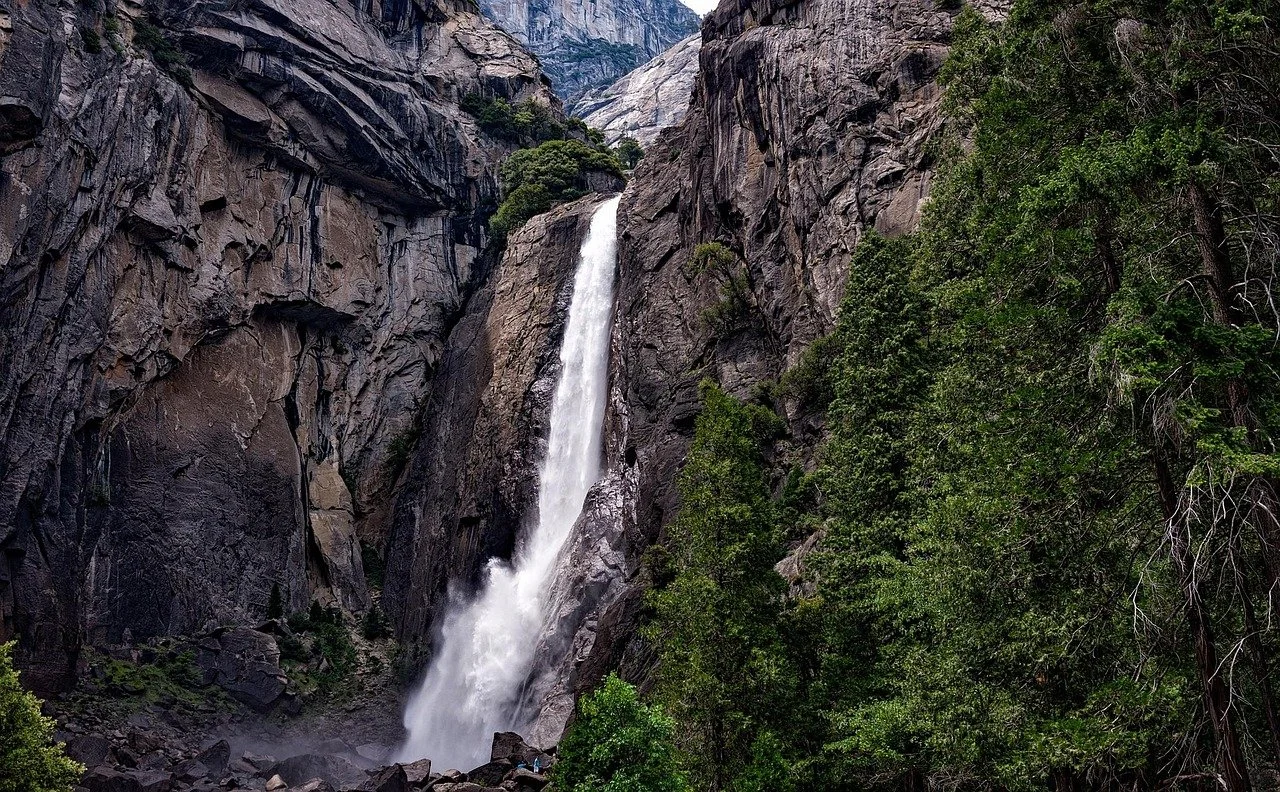
Yosemite National Park (California)
Yosemite is not only a crown jewel of the U.S. National Park System but also the birthplace of the modern environmental conservation movement, greatly influenced by figures like John Muir and President Theodore Roosevelt, who camped there in 1903 and were inspired to protect much of the American wilderness.
Yosemite National Park is a place where the scenery is so massive it practically demands you feel small—and if the granite cliffs don't do it, the local ghost stories might. It’s a landscape defined by deep time, ancient cultures, and enough "strange occurrences" to keep park rangers checking over their shoulders at night.
Hauntings:
The Ahwahnee Hotel is famous for its "Parkitecture" and for inspiring the interior sets of Stanley Kubrick’s The Shining.Mary Curry Tresidder, the former hotel manager lived on the sixth floor until her death in 1970. Guests and staff often report seeing a woman in 1920s attire wandering the halls or feeling a presence "tucking them in" at night. During his 1962 visit, President John F. Kennedy requested a rocking chair for his back pain. Though the chair was removed long ago, guests on the third floor still report hearing the rhythmic creak-creak of a chair rocking on the floorboards.
Now comes the Ghost of Grouse Lake…….
This is perhaps the park's oldest documented ghost story, first reported by Galen Clark himself in 1857. While hiking near Grouse Lake, Clark heard a high-pitched wailing, like a puppy in distress. Local indigenous hunters warned him it wasn't a dog, but the spirit of a boy who had drowned there. The legend says the boy calls out to lure travelers into the water. If you wade in to "save" him, he will grab your legs and pull you under.
Tenaya Canyon is notoriously dangerous, and many believe it’s cursed. When Chief Tenaya was being forced out of the valley, his son was killed by the Mariposa Battalion. Enraged, the Chief cursed the canyon, vowing that he and his people would haunt the rocks and wind, and that white men would never find peace there. From mysterious disappearances to "inexplicable" falls (even the legendary John Muir once fell unconscious here for no clear reason), the canyon has a reputation for being a place where technology fails and experienced hikers lose their way.
If ghosts aren't weird enough, Yosemite is also a hotspot for the "Fresno Nightcrawlers." These are legendary cryptids—described as looking like a pair of white, spindly legs with no torso or arms—that were famously caught on Yosemite security footage in 2011. While skeptics call them puppets or digital hoaxes, they’ve become a beloved (and creepy) part of local lore.
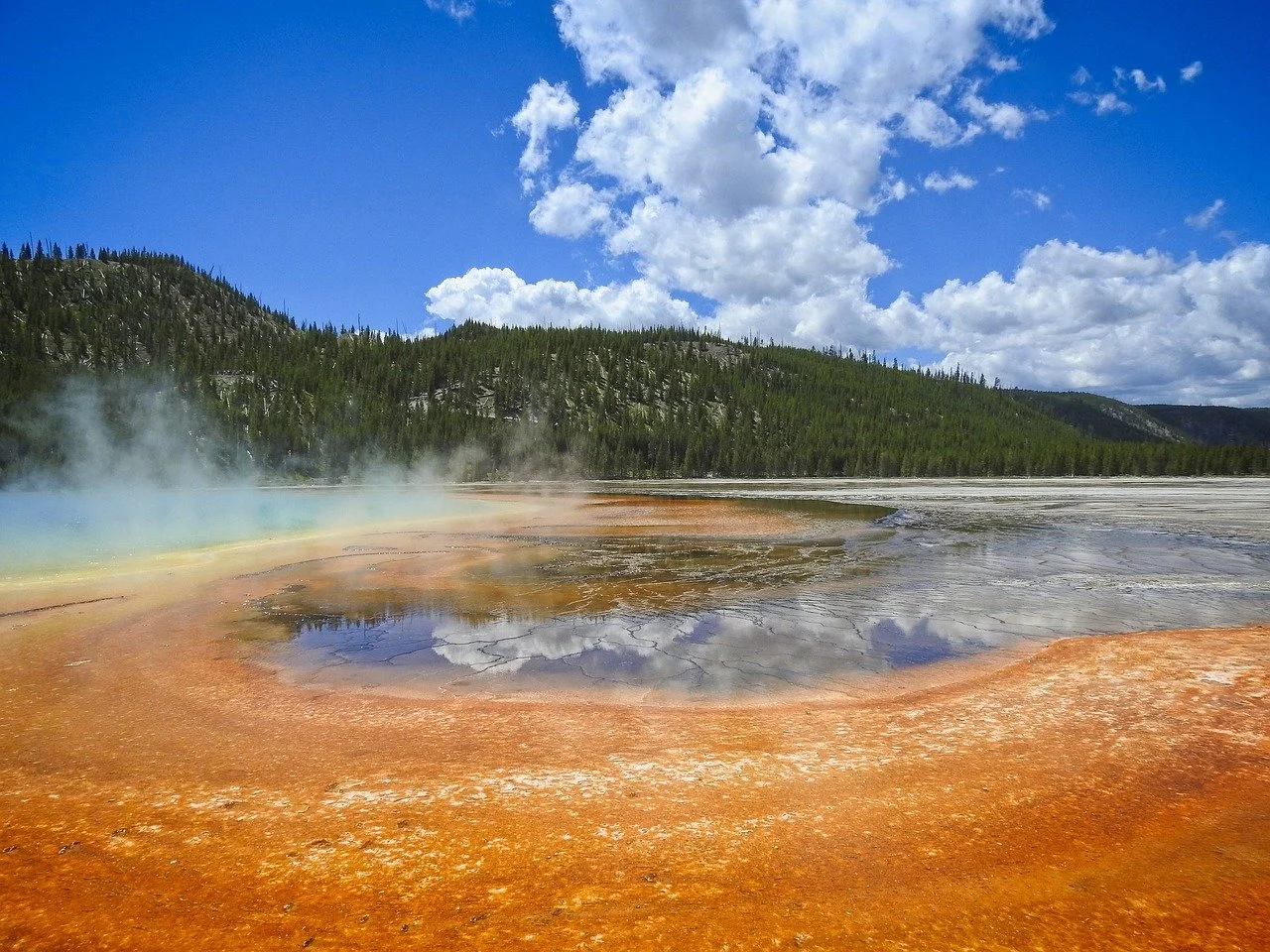
Yellowstone National Park (Wyoming)
Yellowstone National Park is a place of extremes—where the earth literally boils beneath your feet and the history is as colorful as the Grand Prismatic Spring. As the world’s first national park, it has had plenty of time to collect a few permanent, spectral residents. President Ulysses S. Grant signed the Yellowstone National Park Protection Act into law on March 1, 1872. This marked the first time a government set aside land purely for the enjoyment of the people and the preservation of its natural wonders.
Hauntings:
The Headless Bride of Old Faithful Inn is arguably the most famous ghost story in the entire National Park system. The story dates back to the early 1900s. A wealthy young woman reportedly married a man against her father's wishes. During their honeymoon at the Old Faithful Inn, the couple had a violent argument about money (specifically her spent dowry). The husband allegedly decapitated her and fled the park. Guests and staff have reported seeing a woman in a white lace wedding dress wandering the corridors of the "Crow’s Nest"—the high wooden balconies near the roof. The most chilling detail? She is often seen carrying her own head under her arm.
While the Headless Bride is terrifying, the spirit at the Lake Yellowstone Hotel is surprisingly polite. Staff and guests at this elegant, colonial-style hotel have reported sightings of a man dressed in a vintage, 1900s-era porter uniform. He is known as the "Ghost Porter." Rather than scaring people, he is said to appear near the elevators or in the hallways, often leaning over to offer assistance with guests' luggage before vanishing into thin air.
Beyond the hotels, some visitors report a more environmental form of haunting. In the geyser basins, particularly near Upper Geyser Basin, the combination of thick steam and the "thumping" sounds of underground thermal activity often leads visitors to believe they hear distant voices or music. Hikers near the Canyon Village area have reported hearing the sounds of phantom horses or wagon wheels on trails that haven't seen a carriage in over a century.
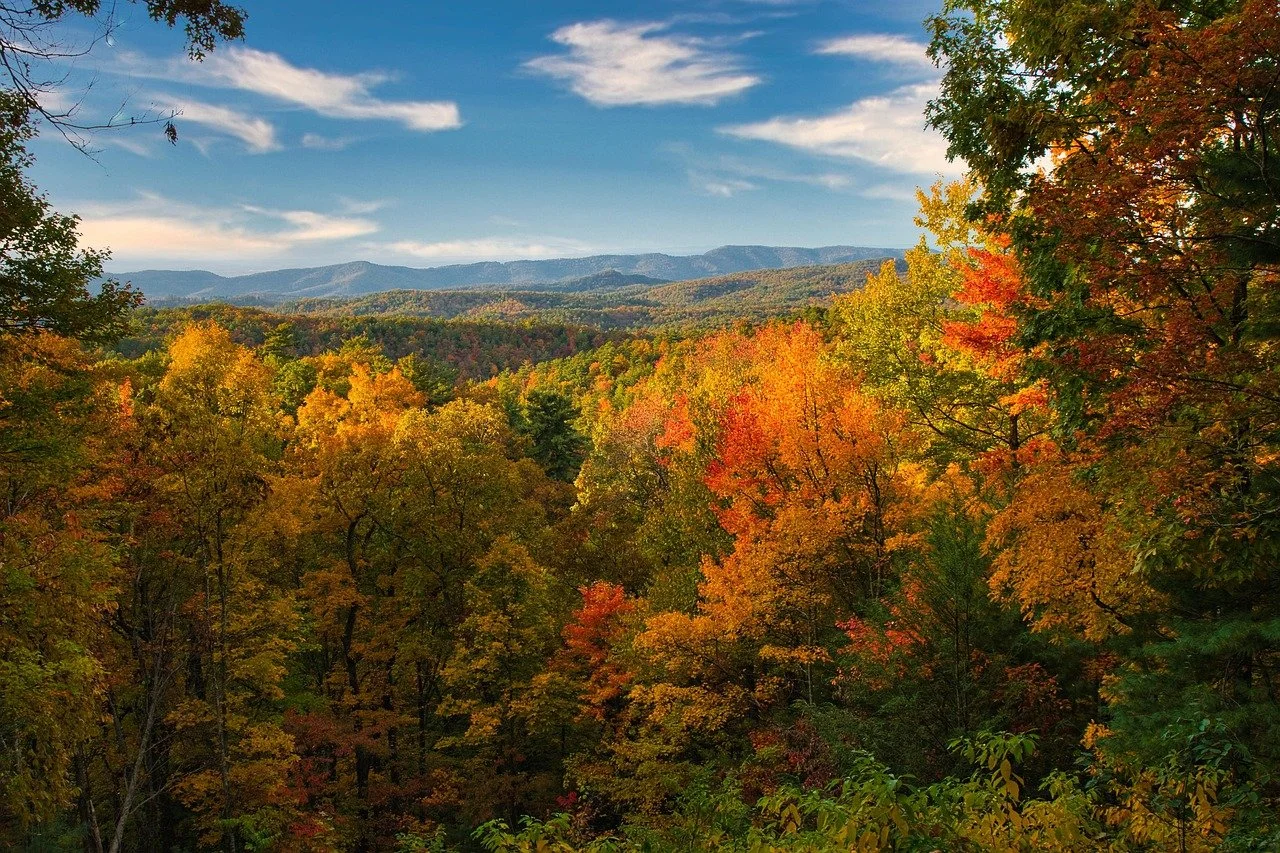
Great Smoky Mountains National Park (NC/Tennessee)
Continuing our tour of the spectral side of our National Parks, the Great Smoky Mountains (often just called "The Smokies") offers a blend of ancient Appalachian culture, Cherokee legends, and mist-filled hollows that feel like they belong in a storybook. The Smokies are among the oldest mountains on Earth, and their history is deeply layered.
Unlike Western parks that were mostly carvings out of public land, the Smokies had to be bought back from thousands of small farmers and massive timber companies. It was officially established in 1934 and remains the most visited National Park in the U.S.
Hauntings:
The Spearfinger (U’tlun’ta) is one of the most terrifying Cherokee legends. Spearfinger is described as a stone-skinned witch who haunts the high ridges (specifically around Whiteside Mountain and Norton Creek Trail). She has a long, razor-sharp finger made of obsidian that she uses to lure children away from their families so she can steal their livers. Locals still warn hikers to be wary of "strange old women" wandering the trails alone.
The Glowing Light of Noland Creek is a more benevolent, though still chilling, tale from the North Carolina side of the park. After the creation of Fontana Lake flooded many old homesteads, many residents had to move. According to local lore, a young girl went missing in the woods near Noland Creek. Her father searched for her with a lantern until he eventually died of exhaustion and heartbreak. Hikers near the Noland Creek Trail often report seeing a floating, bobbing lantern light in the distance. It is said to be the father’s spirit, still swinging his lantern as he continues his eternal search for his daughter.
The Cursed Cades Cove is the most popular spot in the park, but it carries the heavy energy of the families forced to leave their homes when the park was formed. Visitors often report "cold spots" in the historic churches and graveyards. At the Primitive Baptist Church, people have reported hearing phantom singing or the sound of a congregation murmuring when the building is completely empty.
The Ghost of White Oak Sink is a remote area known known to hold the legend of a "White Lady." She is said to be the spirit of a woman who died during a particularly harsh winter in the 1800s. Hikers report seeing a woman in a white, flowing dress wandering the bat caves and rocky outcroppings, appearing as a shimmering mist before vanishing into the limestone.
************************
If you love ghost hunts but want something beyond urban tours and haunted houses, national parks offer a fresh, nature-first form of dark tourism—where mythology, conservation, and wild beauty intersect.
Practical notes for visiting
Always check park rules: many parks prohibit off-trail exploration, nighttime access in certain areas, and entering historic structures.
Respect closures, wildlife, and cultural sites—especially those sacred to Indigenous peoples.
Join ranger programs or guided ghost walks where available for legal, safe, and informative experiences.
Pack for conditions: weather, navigation, and low temperatures at night matter more in wild places than in cities.
Bring curiosity, respect, and a good headlamp—national parks serve up scenery, history, and goosebumps in equal measure.
Go out and make this beautiful day count!
Annette