
5 Spooky Spring Break Trip Ideas
Swap crowded beaches and predictable parties for eerie mansions, foggy graveyards, and late-night ghost tours. It’s a memorable reset. Haunted sites serve up the best travel anecdotes—strange knocks, cold spots, or an unexpected EVP make for instant bragging rights back home. Many haunted locations are rich in local history, architecture, and legends. You’ll learn about communities, historical events, and hidden stories while getting chills.
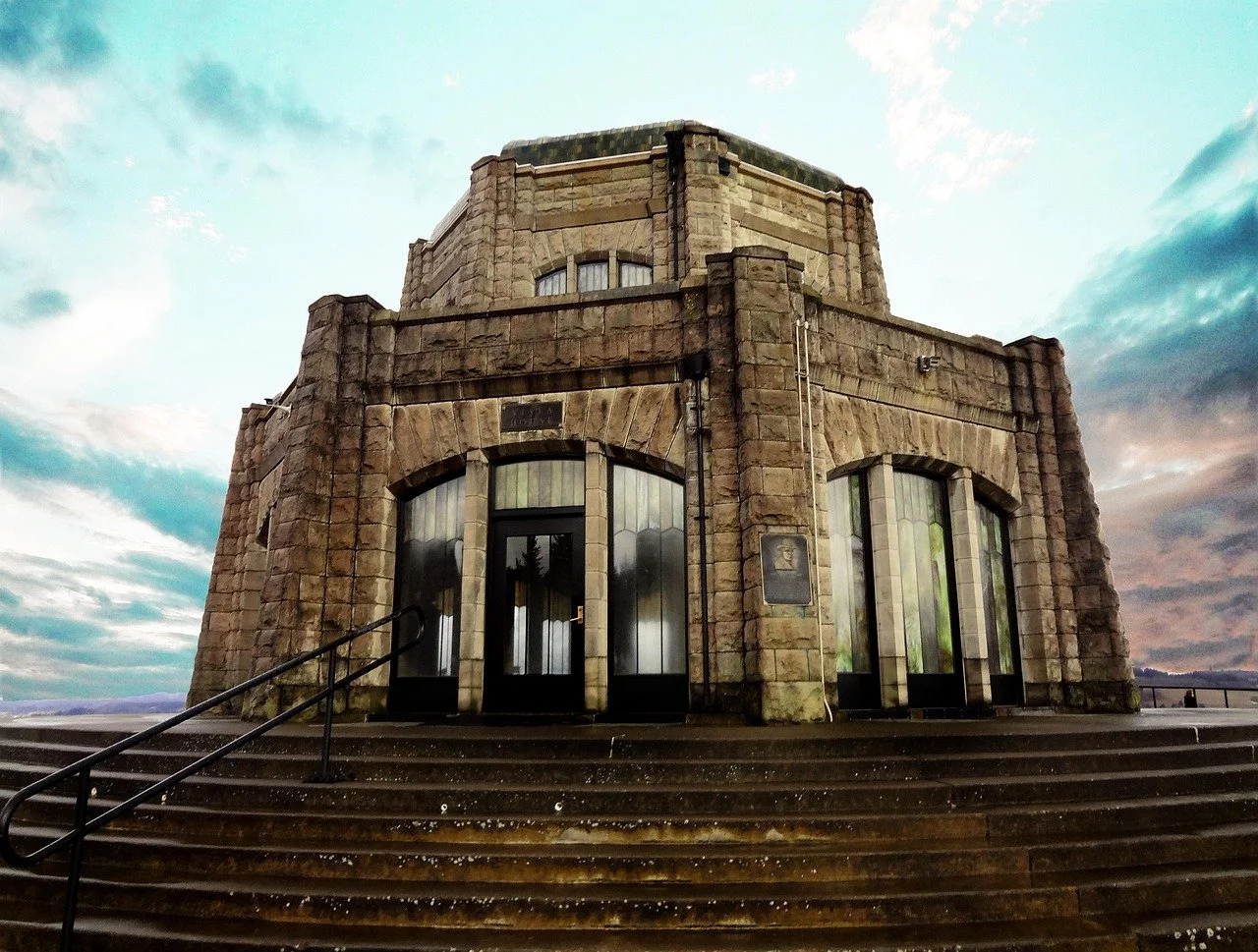
Vista House at Crown Point
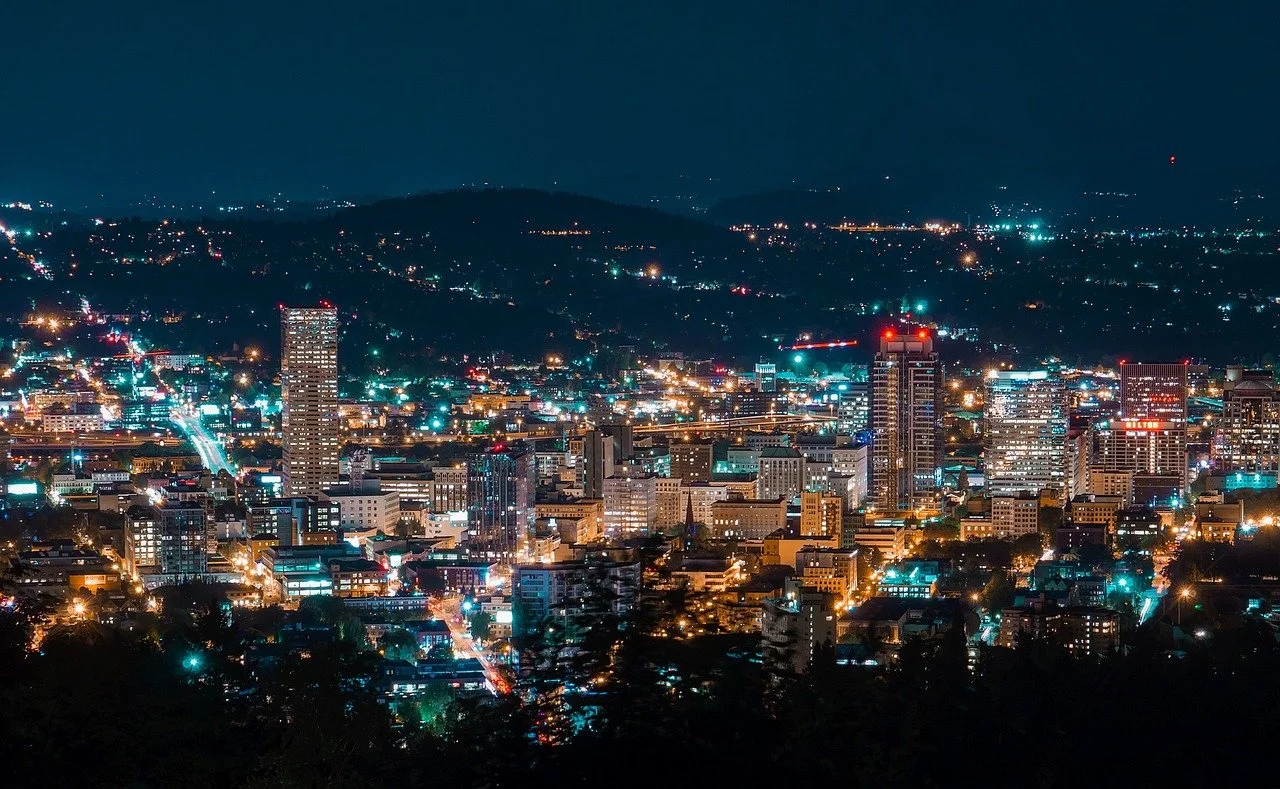
Portland, Oregon — a city of rain, roses, bridges, food carts, and a quietly roiling undercurrent of history and hauntings. Founded at the confluence of the Willamette and Columbia Rivers, Portland grew from frontier outpost to lumber and shipping hub, then into the eclectic, creative city it is today. Its layered past — Indigenous presence, pioneer boom, boom-and-bust industry, immigrant communities, and countercultural movements — makes it fertile ground for ghost stories, urban legends, and atmospheric dark-tourism stops.
Brief historical sketch
Early settlement and Portland’s founding: In the 1840s–1850s, settlers arrived via the Oregon Trail and by ship. In 1845, the townsite that became Portland was claimed by William Overton and Asa Lovejoy; Francis Pettygrove and Lovejoy famously flipped a coin to decide the town’s name — Pettygrove won and named it after his hometown of Portland, ME.
Boom industries: By the late 19th century, Portland was booming on timber, shipping, and the rail connection. The city became the region’s economic hub, with dense warehouses and thriving port facilities. Wealth built ornate downtown buildings; factories and mills employed thousands.
20th-century change: Fires, floods, and economic shifts shaped Portland — the Lewis and Clark Centennial in 1905, Prohibition-era speakeasies, Great Depression hardships, wartime shipbuilding booms in WWII, and postwar suburbanization. The city later attracted counterculture artists, environmentalists, and small-business entrepreneurs, developing the offbeat, progressive reputation it has now.
Neighborhood diversity: Portland’s neighborhoods each carry distinct histories: Old Town/Chinatown (early Chinese and immigrant presence, historic red-light districts), the West End (civic and cultural institutions), the industrial east side (mills, rail yards), and neighborhoods like Sellwood, St. Johns, and Ladd’s Addition with their own development arcs.
Shanghai Tunnels/ Undercity (Old Town)
Beneath Old Town and the waterfront is a network of tunnels said to have been used to kidnap sailors — “shanghaiing” them into coerced shipboard labor — and to ferry illicit goods and bods beneath the city. Stories describe drug dens, opium houses, and hidden rooms where victims were sold or held. Portions of the basements and old utility corridors do exist, and the area’s 19th-century maritime history included rough treatment of sailors and boarding-house schemes. Modern tours mix documented history with lurid lore. Visitors report cold spots, disembodied footsteps, and a claustrophobic, watching feeling in the undercity. Old Town/Chinatown, especially basements and preserved historic buildings along SW Ankeny and the waterfront piers. Many guided ghost/tunnel tours operate in this neighborhood.
Pittock Mansion
Built in 1914 for tobacco and newspaper magnate Henry Pittock, the Georgian-Revival mansion perches on the West Hills with sweeping views. Guests and staff have reported apparitions, music and voices from empty rooms, and lights that turn on and off. The Pittocks lost much of their fortune in later years; the mansion’s history of family tragedy and financial ups-and-downs feeds ghost stories. Visitors sometimes describe a melancholy, almost domestic presence — footsteps on staircases, scent of pipe tobacco, and shadowy figures glimpsed in upper windows. Pittock Mansion grounds and house tours; evening events heighten the atmospheric chills.
Shanghai/Whiskey Bar at the Benson Hotel
The Benson Hotel (built 1913) has a reputation for elegant hauntings. People speak of the “Lady in the Blue Dress” on upper floors, phantom perfume, and the soft cadence of a pianist when no one is playing. As a storied downtown hotel, the Benson has hosted politicians, performers, and grieving families for generations.
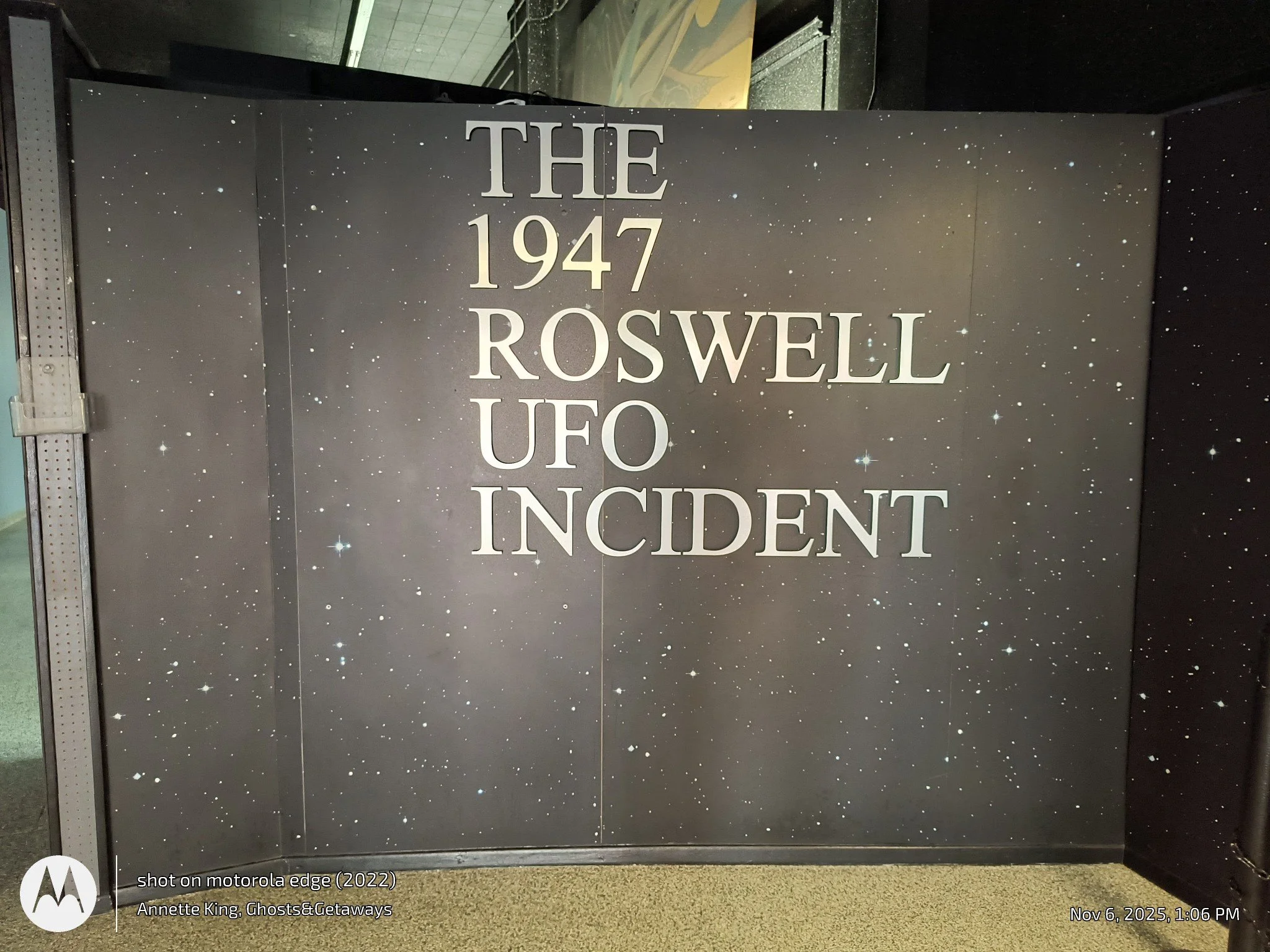
Summary of our time in Albuquerque, Santa Fe, and Roswell.
Roswell, New Mexico — a sunbaked crossroads of ranching, military history, and UFO lore — has a layered past that blends real events, rumor, and the supernatural. Below is a concise history of the city, followed by its haunted places and best-known ghost stories. If ghosts aren't your only interest, head to the UFO capital for a "haunted" experience involving extraterrestrial lore and government cover-ups.
History
19th Century: Ranching and Town Founding
The area developed with cattle ranching and the arrival of Anglo-American settlers after the Mexican–American War and the establishment of U.S. territorial control.
Roswell was founded in 1869 as a military post and supply point. It expanded rapidly as ranches and irrigation projects (notably artesian well systems) made farming and livestock operations more viable in the high desert.
Early 20th Century: Growth and Modernization - Roswell incorporated in 1891. The arrival of railroads and agricultural development (alfalfa, pecans, dairy, and specialized crops) strengthened the local economy. Military presence increased in the region over time, culminating in major developments in the mid-20th century.
1947 and the UFO Incident
Roswell’s international renown began with the July 1947 incident, when a local rancher, Mack Brazel, discovered unusual debris on his property near Corona, roughly 75 miles northeast of Roswell.
Initial press reports and a military press release suggested the recovery of a “flying disc.” Very quickly, the Army Air Forces retracted that wording, stating the debris was from a weather balloon, later elaborated as part of a classified program (Project Mogul) decades later.
The mixed messages, secrecy of Cold War military programs, and local eyewitness accounts initiated decades of speculation, conspiracy theories, and popular fascination that transformed Roswell into a focal point for UFO enthusiasts and alien-themed tourism.
Post-1947 Development
Roswell developed a tourist identity around the UFO story, with museums, festivals, and kitschy alien imagery contributing to the local economy.
Roswell also continued as a regional hub for ranching, agriculture, and as a support center for nearby military installations. In recent decades it has balanced that identity with efforts to promote local history, art, and heritage beyond UFOs.
Haunts, Haunted Sites, Ghost Stories and Local Lore
Roswell Museum District (Anderson Museum)
Museums often accumulate stories about artifacts moving or museum staff hearing voices near certain—allegedly energetic—objects. In Roswell, staff have reported late-night footsteps and objects slightly out of place. These are usually framed as residual rather than interactive hauntings connected to local personalities and artists.
The “UFO” connection as a modern mythic layer
Although the 1947 incident is not a traditional haunting, the UFO narrative has created a unique cultural haunt: people report dreams, premonitions, or recurring visions of lights and figures tied to the 1947 timeline. For some, Roswell itself feels haunted by a national memory — a place where secrecy and speculation linger like a psychic residue.
Haunts, Haunted Sites, Ghost Stories and Local Lore
Roswell Museum District (Anderson Museum)
Museums often accumulate stories about artifacts moving or museum staff hearing voices near certain—allegedly energetic—objects. In Roswell, staff have reported late-night footsteps and objects slightly out of place. These are usually framed as residual rather than interactive hauntings connected to local personalities and artists.
The “UFO” connection as a modern mythic layer
Although the 1947 incident is not a traditional haunting, the UFO narrative has created a unique cultural haunt: people report dreams, premonitions, or recurring visions of lights and figures tied to the 1947 timeline. For some, Roswell itself feels haunted by a national memory — a place where secrecy and speculation linger like a psychic residue.
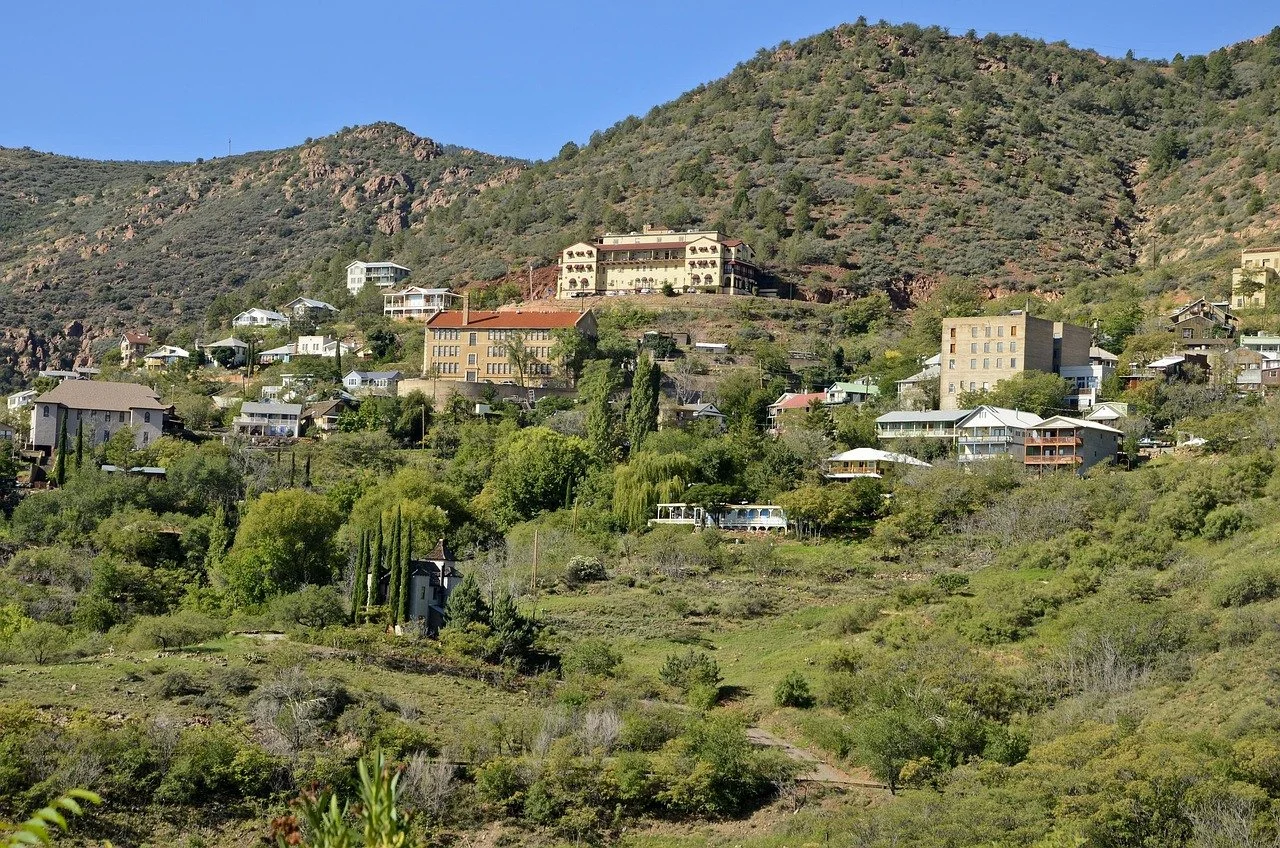
Jerome, Arizona — the copper-mining boomtown turned near-ghost town clinging to Cleopatra Hill above the Verde Valley — is a sticky, dramatic slice of Old West and industrial America, with a heavy overlay of hauntings that keep it lively long after the mines closed.
Brief history
Pre-mining: The area around present-day Jerome was used seasonally by Sinagua and Yavapai peoples for centuries before European-American settlement.
Mining begins (late 1800s): Copper was discovered near the 1870s–1880s. By the 1890s, small camps coalesced into a town. Jerome was officially established in 1883 and incorporated in 1899.
Boom era (early 1900s): At its height, Jerome was called the “Wickedest Town in the West,” with a population around 10,000. Multiple large underground copper mines — notably the United Verde, United Verde Extension (UVX), and Little Daisy — dominated the economy. The town had boarding houses, bars, brothels, saloons, schools, churches, and even a red-light district.
Labor strife and disasters: Jerome’s history included violent labor disputes and mine-related accidents. Fires and cave-ins were not uncommon. The combination of intense extraction, minimal regulation, and dangerous working conditions produced both tragedy and folklore.
Decline (1930s–1950s): As copper prices fell and ore bodies were depleted, operations slowed. The Great Depression accelerated abandonment. By the 1950s many residents had left; the town’s population dwindled to a few hundred and much of the town slid downhill as buildings were abandoned or moved.
Preservation and rebirth (1960s–present): In the 1960s and 1970s artists, preservationists, and entrepreneurs revived Jerome as an arts community and tourist destination. The town was designated a National Historic Landmark District, and mining remnants, brick buildings, and narrow streets became part of its charm. Modern Jerome is a mix of galleries, shops, museums, and restaurants, perched dramatically on terraces of the hillside.
Why it feels haunted
Jerome’s steep, collapsing terrain and mine history left empty, crumbling buildings, underground shafts, and the sense of abrupt departures. High death rates in the mines and the town’s lawless early reputation seeded ghost stories. Preservation of many original structures means the town retains strong echoes of its past — perfect fuel for haunt lore.
Notable haunts and ghost stories
The Jerome Grand Hotel (formerly the United Verde Hospital): The largest and most famous haunted site in town. Converted into a hotel in the 1980s, its past as a hospital and morgue inspires many reports.
“The Nurse” and “The Doctor”: Guests and staff report sightings of a female apparition in hospital garb and shadowy figures believed to be a doctor. Rooms and hallways sometimes produce cold spots and footsteps.
Slamming doors and music: Unexplained piano music, footsteps, voices, and doors that latch or slam on their own are frequently reported. Several guests say they’ve woken up to find their blankets folded or rearranged.
Room 32: Among the more commonly mentioned rooms for paranormal activity. People report feeling watched, sudden cold, and items moved.
Historical note: The hospital was one of the town’s principal medical facilities while the mines were active; it treated miners with grievous injuries. Many believe the hotel’s activity is linked to those deaths and to the building’s use as a morgue and medical ward.
Jerome State Historic Park & Douglas Mansion: The home of mining magnate James S. Douglas, the Douglas Mansion sits near the old mine. Visitors report the feeling of a presence, phantom footsteps, and sometimes seeing figures in period clothing near windows or in rooms. Some say the mansion still echoes with the business of a bygone mining household.
The Sliding Jail: A small red sandstone jail that physically slid downhill as the mountain eroded. Its peculiar history—literally moving from its original position—makes it part of local lore. People tell stories of odd sounds and an oppressive atmosphere near the jail, often tied to the memory of criminals and law enforcement from Jerome’s rowdier days.
Haunted businesses and storefronts:
The Gold King Mine & Ghost Town & Ghost Town: This private site (often listed in Jerome-area tours) markets itself as a ghost experience; actors, staged sets, and the real mine. if you want to check out what life was like, you will want to visit the Gold King Mine & Ghost Town!
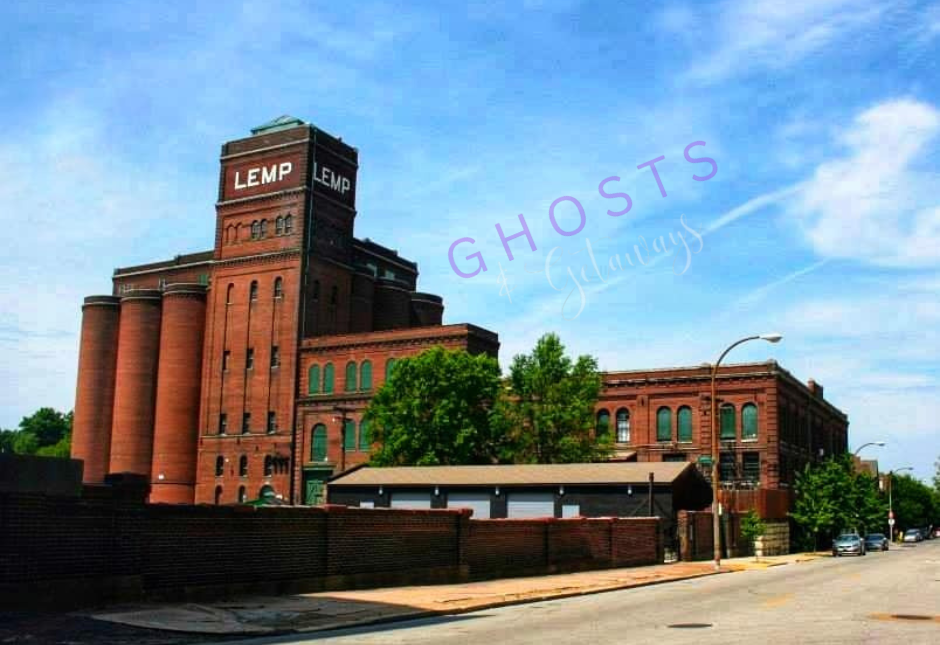
The old Lemp Brewery
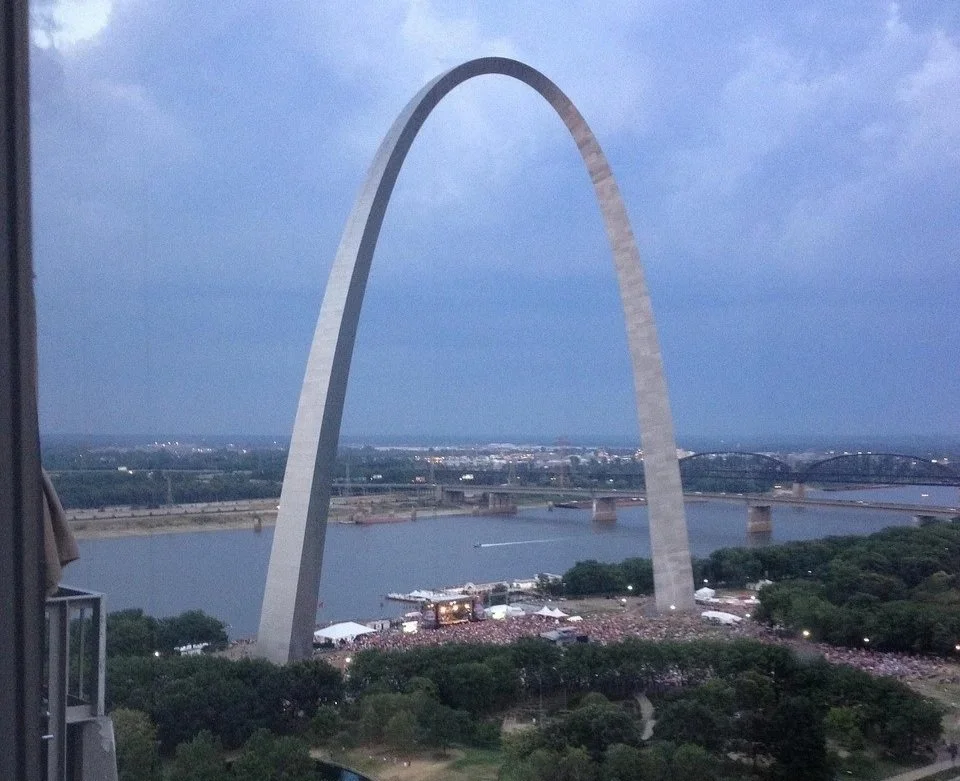
St. Louis, Missouri — where the Mississippi bends, the Gateway Arch pierces the skyline, and layers of French, Spanish, and American history pile up like apparitions. Below is a concise history of the city followed by its best-known haunts and ghost stories for the curious, the skeptical, and anyone planning a paranormal itinerary.
History — a quick, lively timeline
French founding (1764): St. Louis was founded by Pierre Laclède and Auguste Chouteau as a fur-trading post named St. Louis, after King Louis IX of France. The settlers drew on French and Creole culture and established a trading hub on the river’s west bank.
Louisiana Purchase (1803): The United States bought the vast territory from France, and St. Louis quickly became a gateway to the American West.
Gateway to the West (early–mid 1800s): St. Louis grew as an outfitting point for Lewis and Clark’s legacies, steamboat traffic, and overland migration. It became a major commercial and transportation center.
20th-century change: Decline of industry, suburbanization, and urban renewal reshaped neighborhoods. Civil rights struggles and demographic shifts marked the city’s social history.
Modern era: St. Louis is known for its cultural institutions, music (notably blues and ragtime), food (toasted ravioli, gooey butter cake), and historic neighborhoods. Preservation efforts and dark-tourism interest have made its haunted past a cultural asset.
Why so many ghost stories?
Two-and-a-half centuries of continuous settlement, war, epidemics (notably yellow fever and cholera), river disasters, and industrial accidents create many tragic stories that evolve into hauntings. Older neighborhoods, cemeteries, theaters, hospitals, and former slave-holding sites concentrate layered memories and rumors.
Notable haunts and ghost stories in St. Louis
Lemp Mansion (Lemp Brewery complex)
History: The Lemp family built a brewing empire in the 19th century. The Lemp Brewery and family arc are marked by immense success followed by bankruptcies and a series of tragic deaths and suicides in the family during the late 19th and early 20th centuries.
Hauntings: Guests and staff report cold spots, shadow figures, whispers, moving objects, and a male apparition believed to be William Lemp or other family members. The mansion operates as a restaurant, inn, and paranormal-tour venue.
Atmosphere: Heavy, melancholic — ideal for staged ghost hunts and atmospheric dining.
Missouri State Penitentiary (Jefferson City, near St. Louis region but often included in Missouri haunt tours)
Note: While outside St. Louis proper, it appears on regional ghost-tour itineraries. Built in 1836, it housed notorious criminals and saw executions and violence. Visitors report slamming doors, footsteps, and anguished sounds.
Anheuser-Busch Brewery complex
History: Massive brewing complex with deep ties to St. Louis industry and immigrant labor.
Hauntings: Workers have reported unexplainable noises, apparitions of former workers, and a feeling of being watched in older sections of the complex, particularly near original cellars and bottling areas.
The Lyceum Theatre / Fox Theatre area (The Fox Theatre itself has stories)
History: St. Louis’s theaters have hosted performers for generations; The Fox Theatre (1929) is an architectural gem with an ornate, fantastical interior.
Hauntings: Reports include phantom applause, footsteps, and a presence believed to be a former stage manager or actor. Dressing rooms and backstage areas are favorite hotspots for sightings.
Missouri State Penitentiary (Jefferson City, near St. Louis region but often included in Missouri haunt tours)
Note: While outside St. Louis proper, it appears on regional ghost-tour itineraries. Built in 1836, it housed notorious criminals and saw executions and violence. Visitors report slamming doors, footsteps, and anguished sounds.
Anheuser-Busch Brewery complex
History: Massive brewing complex with deep ties to St. Louis industry and immigrant labor.
Hauntings: Workers have reported unexplainable noises, apparitions of former workers, and a feeling of being watched in older sections of the complex, particularly near original cellars and bottling areas.
The Lyceum Theatre / Fox Theatre area (The Fox Theatre itself has stories)
History: St. Louis’s theaters have hosted performers for generations; The Fox Theatre (1929) is an architectural gem with an ornate, fantastical interior.
Hauntings: Reports include phantom applause, footsteps, and a presence believed to be a former stage manager or actor. Dressing rooms and backstage areas are favorite hotspots for sightings.Note: While outside St. Louis proper, it appears on regional ghost-tour itineraries. Built in 1836, it housed notorious criminals and saw executions and violence. Visitors report slamming doors, footsteps, and anguished sounds.
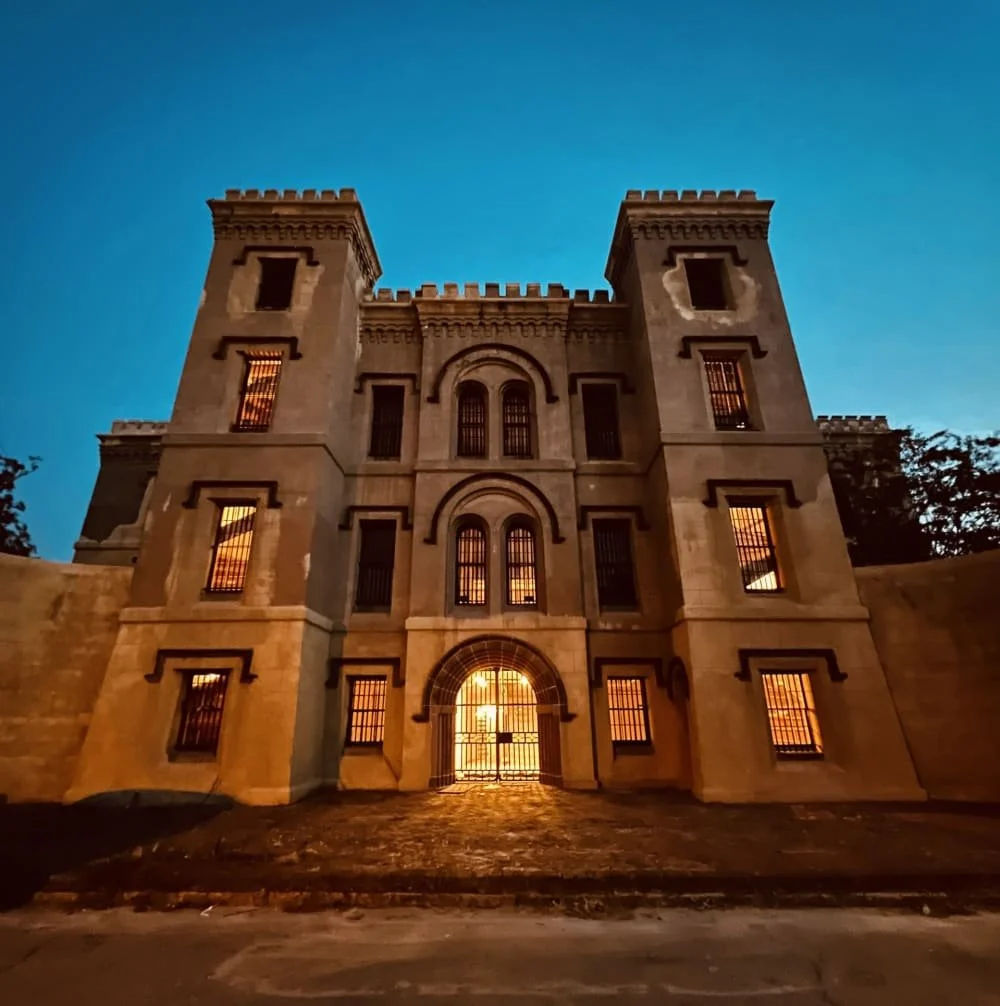
Charleston Jail
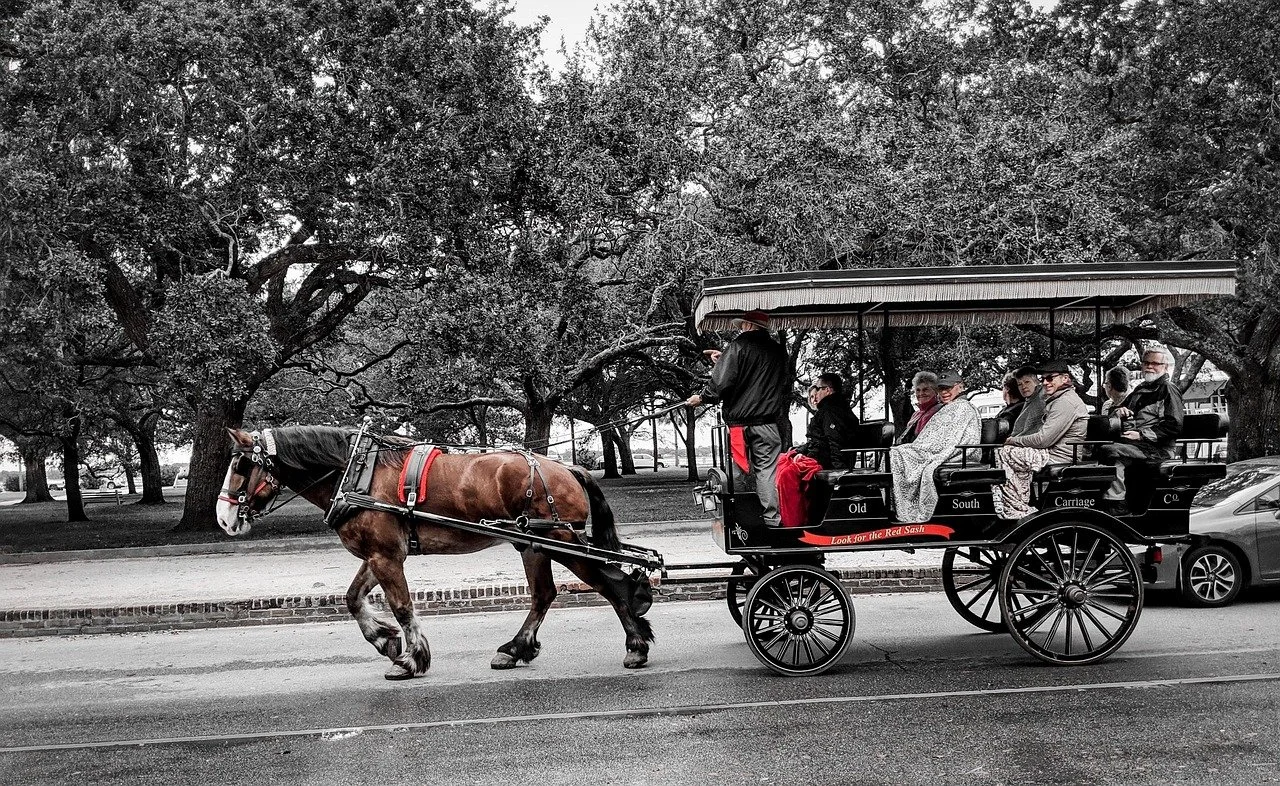
Charleston, South Carolina — founded 1670 as Charles Town — is a layered city where colonial ambition, wealth from rice and indigo plantations, Revolutionary and Civil War drama, and a long arc of slavery and segregation shaped its streets, architecture, and culture. The city’s history is intimate with maritime trade, plantation economies, and a vibrant Black community whose cultural contributions — Gullah language, cuisine, crafts, and spiritual traditions — remain central to Charleston’s identity. Those same layers of history feed the city’s rich ghost lore: antebellum mansions, burial grounds, old hospitals, and battlegrounds are all settings for stories that locals and visitors tell about spirits that linger.
History — quick timeline and context
1670: Settlers from the British Isles establish Charles Town on Albemarle Point; the settlement moves to the peninsula in 1680 and becomes Charleston.
1700s: Charleston grows into one of the British colonial Americas’ wealthiest cities due to rice, indigo, and later sea island cotton, powered by enslaved labor. It was a major Atlantic port and a cultural hub in the South.
Revolutionary War: Charleston is a strategic port; the city fell to the British in 1780, one of the worst Patriot defeats.
1860–1865: South Carolina is the first state to secede; Confederates fire on Fort Sumter (1861) in Charleston Harbor, starting the Civil War. The city endured blockade and bombardment but largely survived intact architecturally.
Reconstruction through Jim Crow: Charleston’s Black population sustains cultural life and resistance amid legalized segregation and economic oppression. Port and tourism revive in the 20th century.
20th–21st centuries: Historic preservation movements protect antebellum streetscapes; tourism and culinary culture boom. The 2015 Emanuel AME Church shooting was a tragic, recent event that continues to shape civic conversation and memorial landscape.
Why Charleston feels haunted
Deep layers of history and visible physical continuity — old homes, cobblestone lanes, graveyards, the Battery, and old hospitals — create a sense of the past being present. The city’s painful history of slavery and wartime losses feeds many ghost stories that center on restless spirits, grief, and unresolved injustice. The Gullah spiritual traditions — with strong beliefs about ancestors and spirits — permeate local folklore, blending West African spirituality and Christianity and influencing how stories of ghosts are told.
Famous haunts and ghost stories in Charleston
The Battery and White Point Garden - Visitors report sightings of full-figure apparitions on the seawall and the gardens, phantom sounds of military drills, and ghostly cavalry seen near the park. Stories often tie to Civil War soldiers and earlier conflicts. The park’s age and proximity to wartime sites make it rich ground for spectral tales.
The Old Exchange and Provost Dungeon - Reports include cold spots, disembodied voices, and vaulted cellar apparitions. Guides recount tales of Revolutionary prisoners and British sentries lingering in the dungeon’s stone rooms. The building’s long public use and reputation as a place of imprisonment feed its haunted reputation.
The Dock Street Theatre - Actors and staff have reported hearing phantom applause, seeing a lady in period costume in the balcony, and encountering a spectral young janitor who tidies after performances. Some attribute hauntings to past performers and patrons.
Charleston City Market and Market Hall - Vendors and visitors tell of footsteps and shadowy figures among the stalls after hours. The market sits over many layers of the city’s past commerce; ghost stories here often reflect the market’s role in everyday life across centuries.
The Pink House - One of the oldest buildings in Charleston, it’s often included in walking tours of spooky sites. While technically not on the Battery proper, its age and wartime proximity earn it ghost stories tied to sailors, smugglers, and sailors’ lovers.
*********************
Ready to plan? Haunted spring break is a fun alternative for bachelor(ette) parties, birthdays, or a “different” college break that people actually remember. Spring often brings ghost walks, paranormal conferences, and historic reenactments that you won’t find at other times of year. Pick a region, pick a vibe (gothic mansion vs. small-town cemetery), and I’ll draft a haunted spring-break itinerary packed with tours, eats, and social nights. Build an itinerary around a particular era (Victorian hauntings), a type of site (asylums, lighthouses), or a regional legend—turn spring break into an immersive story. Fear is a thrill, curiosity is addictive, and the unexpected moments—laughs, spooks, and shared chills—make for one unforgettable spring break.
Make this beautiful day count!
Annette