
Texas Cemeteries: Where You Can Dig the Grave Yourself
Come to Texas and you will find above-ground scraped-earth cemeteries, roadside grave houses, and 50,000+ burial grounds (when you factor in private family cemeteries, unmarked graves, historic sites, and unmarked graves) scattered from the Panhandle to the Rio Grande. So it's fitting that Texas has also become fertile ground for one of the fastest-growing shifts in American death care: green burial.
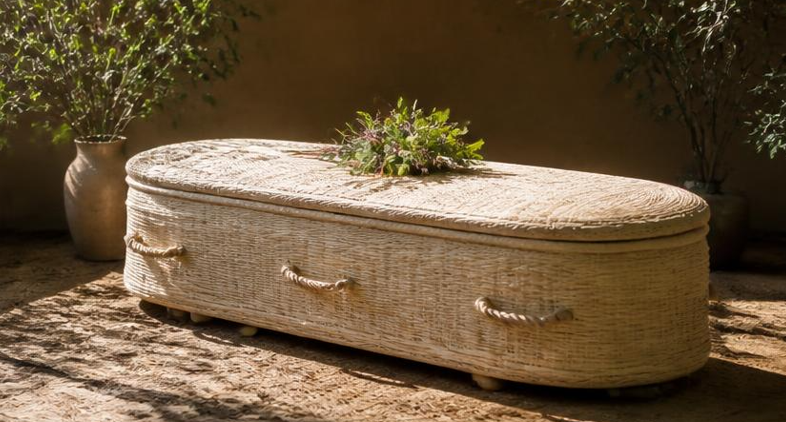
If green burials are something with which you are not familiar, here is what you need to know: green burial (also called natural burial) removes the need for caskets, embalming fluid, and concrete vaults. The body is placed in the ground in a biodegradable shroud or simple wooden casket, allowed to decompose naturally. It's cheaper, it's simpler, and for some people, it feels more honest than a conventional funeral.
Here's where to find it in Texas, what it actually involves, and what makes each site unique.
Eloise Woods Community Natural Burial Park — Cedar Creek, near Austin
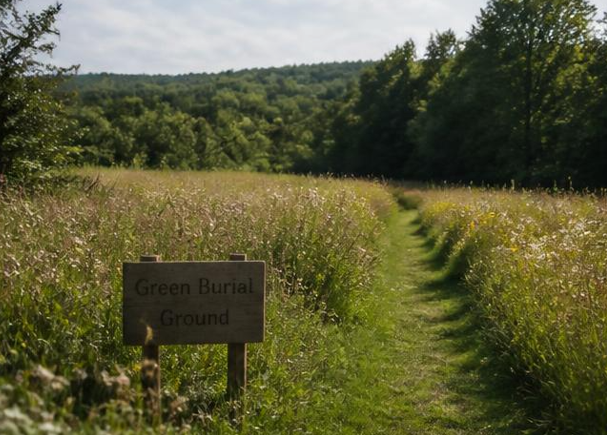
Tucked into the woods about ten miles east of Austin, Eloise Woods is the state's best-known natural burial ground and one of its earliest. It was founded in 2009 and sits on 9 acres. Bodies are wrapped in shrouds or placed in simple wooden containers and lowered directly into the soil. Graves are marked with natural stones rather than headstones, and only native Texas plants are allowed near a burial site, since there's no irrigation system to keep anything else alive.
What sets Eloise Woods apart is its flexibility and its sectioning:
Teva Garden — reserved exclusively for Jewish burials
Sweet Angel Garden — set aside for infants
Soaring Hawk Garden — for cremated remains, buried or scattered
Rainbow Bridge Garden — for pets and other animals
Perhaps the most striking detail: Macdonald allows families to dig the grave themselves and even lower the body if they choose, rather than requiring a licensed mortician to handle every step. This approach is perfect for families looking for something more intimate with a hands-on farewell,.
Nature's Burial at Coastal Prairie Conservancy — Katy Prairie
Located within the Katy Prairie Preserve west of Houston, Nature’s Burial @ Coastal Prairie Conservancy is Texas's first certified conservation burial ground. That certification means the land is protected from development, and it is financially supported by burial fees. For dark tourism readers, this is a compelling site: burial here isn't just personal, it's literally an act of habitat restoration for one of the most endangered ecosystems in North America.
Other Green and Hybrid Options Around the State
Not every green burial option in Texas is a dedicated conservation cemetery. Several sites offer natural burial as part of a broader operation:
Mount Olivet Cemetery — Fort Worth
Countryside Memorial Park — near San Antonio
Mountain Creek Cemetery — Grand Prairie
Hybrid cemeteries are conventional cemeteries — mowed lawns, traditional headstones, the works — that have carved out a section following green burial standards. They're a good entry point for families who want a natural burial without traveling to a dedicated preserve.
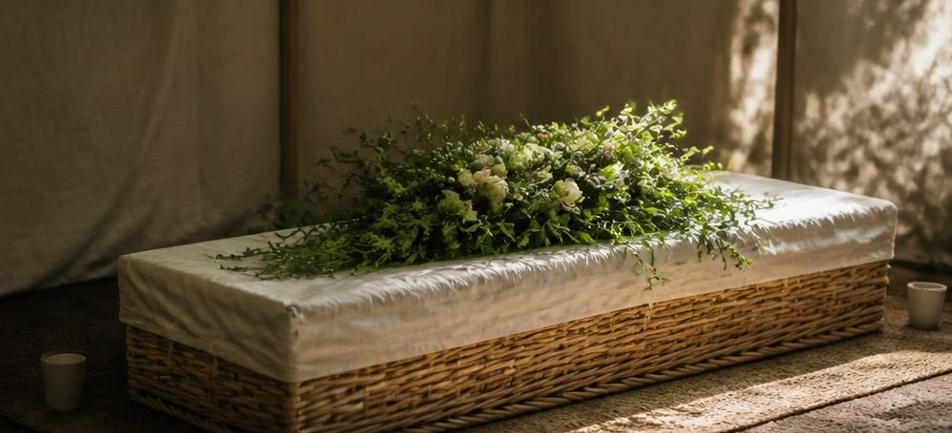
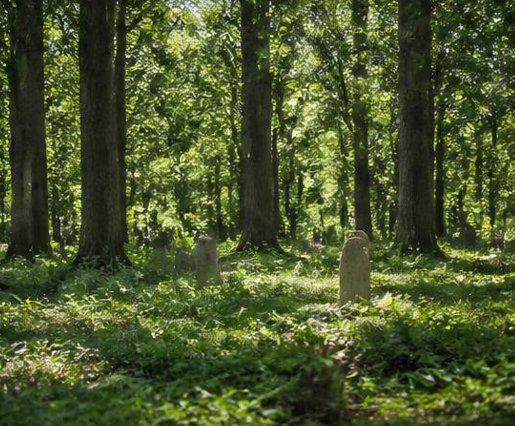
The Three Tiers of Green Cemetery
When researching options, you'll run into three tiers, certified by the Green Burial Council:
Natural burial ground — the entire site follows green practices, but isn't under a permanent conservation mandate (Eloise Woods fits here)
Conservation cemetery — the highest tier; the land is permanently protected as a nature preserve in perpetuity (Nature's Burial at Katy Prairie fits here)
Hybrid — a conventional cemetery with a green-burial section (Mount Olivet fits here)
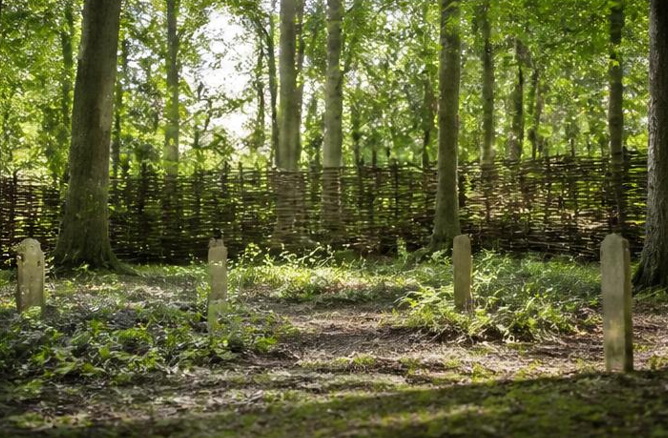
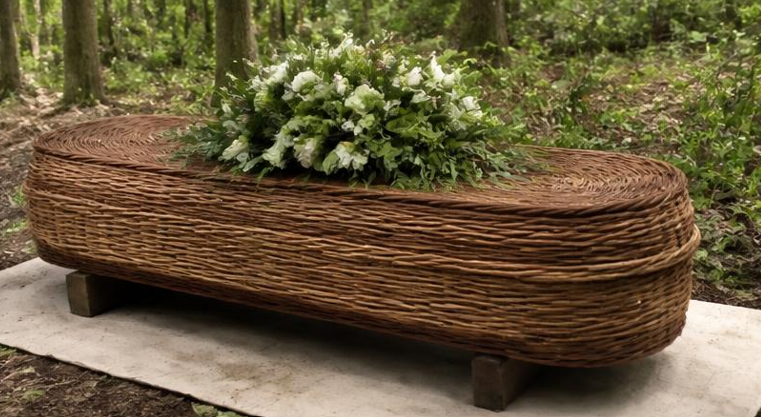
What Green Burial Actually Costs in Texas
Green burial tends to run significantly cheaper than conventional burial, because it skips embalming, the cost of expensive metal caskets, and a concrete vault. Plot prices vary by site, but a green buria in Texas starts from around $1500 on the low end to several thousand dollars depending on what the family wants for their loved one.
Yes. Green burial is legal in Texas, though individual cemeteries set their own rules about grave markers, caskets, and grave depth. Texas does not require embalming by law for a standard burial unless the body is held for more than 24 hours and not refrigerated.
One category to watch: human composting (natural organic reduction) is not yet legal in Texas. For now, Texans interested in that option would need to look to one of the states where it's already legal, such as Arizona, California, Colorado, Delaware, Georgia, Maine, Minnesota, Nevada, New Jersey, New York, Oregon, Vermont, and Washington.
Planning Ahead
If you're considering a green burial in Texas, or just researching it for your own morbid curiosity, a few practical notes worth passing along to readers:
Confirm each cemetery's specific rules before assuming — "green burial" isn't one uniform standard, and container, marker, and service rules differ site to site.
Ask whether the site allows family or self-dug graves, as Eloise Woods does — this varies widely.
If land conservation matters to you, look specifically for Green Burial Council–certified conservation grounds, since that's the only tier with a legal permanent-protection guarantee.
Texas's green burial movement is still young compared to its above-ground New Orleans tombs or its century-old German and Czech decoration-day cemeteries — but it's growing fast, and it says something about how the state's relationship with death is shifting: less embalming fluid and concrete, more oak trees and native wildflowers.
Make this beautiful day count!
Annette