
Class Dismissed: A Road Trip to Texas’s Haunted Schools (Part 2)
(Continuing from the July 26, 2026 blog post…………here is part 2 of Texas’s Haunted Schools.)
**********
Dust off your backpacks and sharpen your pencils—these Texas classrooms still hold more than chalk dust. From abandoned campuses where echoes of recess never faded to historic schoolhouses with restless night watchmen, Texas’s haunted schools offer spine-tingling history, local lore, and an education in the uncanny. Whether you crave EVP hunts in creaky gymnasiums or guided twilight tours through century-old halls, this guide will map out the most eerie alma maters across the Lone Star State.
12. University of the Incarnate Word — San Antonio
History
The University of the Incarnate Word traces back to 1869, when the Sisters of Charity of the Incarnate Word came to San Antonio to help treat an ongoing cholera outbreak. The order chartered a Catholic women's college in 1881, and in 1897 purchased land from the George W. Brackenridge estate near the headwaters of the San Antonio River. The campus moved to its current Alamo Heights-area site around 1900, and the current Administration Building — the one at the center of the ghost stories — was completed in 1922. It's still the university's signature building and houses classrooms, and offices.
Ghost Stories
The Ghost Boy — On the third floor, people have long reported the sound and sight of a young boy playing with a ball, the sound of disembodied footsteps, and a man's voice talking and/or laughing.
The TB Quarantine Floor — The fourth floor once served as a tuberculosis quarantine ward. Students and staff describe it as noticeably colder than the rest of the building, flickering lights, and unpredictable elevators all attributed to patients who died there.
The Nun of Dubuis Hall — The most dramatic legend involves a nun said to have died by suicide in a fourth floor room. Some versions say she was distraught after becoming pregnant by a student. Her room was reportedly blessed by priests and sealed with cement, never reopened although the story has never been verified or confirmed. Reports of paranormal activity include hearing a woman’s cries, the feeling of being watched, unexplained scratching closet doors, and the feeling of someone sitting on the bed.
Visiting
UIW is a working university campus, open to the public during the day. The Administration Building and Dubuis Hall are visible/walkable as part of general campus access, though interiors (dorm floors especially) aren't open to outside visitors — this one's more of a "look, don't wander the halls uninvited" haunt than a tour.
Ghost and Historical Tours
San Antonio's Ultimate Ghost and Murder Walking Guided Tour
San Antonio Haunted Ghost Bus Tour
Small-Group World Heritage San Antonio Missions Guided Tour
13. Southern Methodist University (Dallas Hall) — Dallas
History
Southern Methodist University was chartered on April 17, 1911. Historians have since ranked SMU's founding among the most pivotal events in Dallas history. More than a century later, Dallas Hall remains the architectural and symbolic heart of campus, and it's also ground zero for SMU's best-known ghost lore.
Ghost Stories and Hauntings
The Abandoned Room atop Dallas Hall — This is SMU's most enduring piece of campus mythology. High above the rotunda, reached by an elevated ramp circling the building's dome, sits a small room that once served as housing for a few male students in the university's earliest years. It has become something of a rite of passage with generations of students sneaking up to it over the years. Officially, the space is off-limits and genuinely unsafe but that hasn't stopped the tradition, or the persistent hope among some student ghost-hunters that something more is up there.
Fondren Library and the Ghost of Umphrey Lee — Legend holds that former SMU President Umphrey Lee died of a heart attack while working in his third-floor office at Fondren Library, and that his spirit now haunts the library's west stacks. A former SMU English professor confirmed in 2008 that Lee genuinely did die in the library while working on a book — so unlike some campus ghost stories, the death itself is documented fact. Whether his spirit lingers is, naturally, unconfirmed; skeptical students tend to chalk up "Fondren ghost" sightings to late-night sleep deprivation and finals-week stress rather than the supernatural.
The Campus Tunnels — The tunnels — a steam heating and venting tunnel system running mostly beneath the older, northern part of campus — have accumulated their own legend, including a story from a former HVAC technician who claimed to have found a skeleton down there — and, upon shining his flashlight closer, realized the "walls around him were moving," reportedly covered in ants. He supposedly grabbed the skull as evidence before fleeing. Students who've snuck into the tunnels describe them as narrow, damp, and catacomb-like, requiring crawling in some stretches.
Visiting
SMU is a private university campus in Dallas, open to walk around during the day, and Dallas Hall's ground floor and rotunda are publicly accessible as one of the campus's architectural centerpieces. The abandoned attic room and the steam tunnels are both officially off-limits and genuinely hazardous — not recommended, and explicitly discouraged by university staff — so this one's better suited to a "look, don't trespass" write-up unless you want to lean on secondhand student accounts rather than firsthand exploration.
Ghost and Historical Tours:
JFK Assassination Tour with Oswald's Rooming House
14. Terlingua Schoolhouse Ruins — Terlingua (ghost town)
History
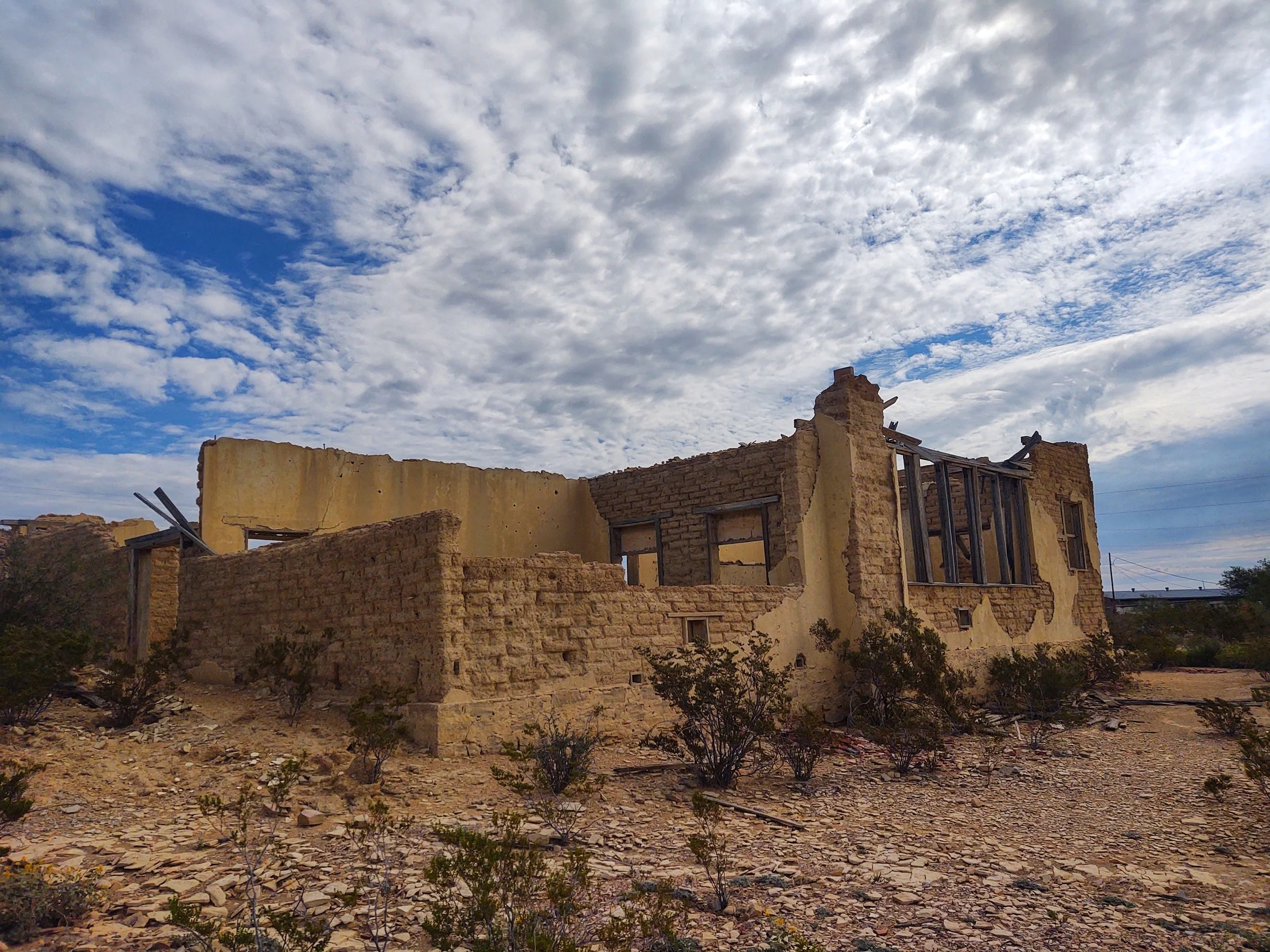
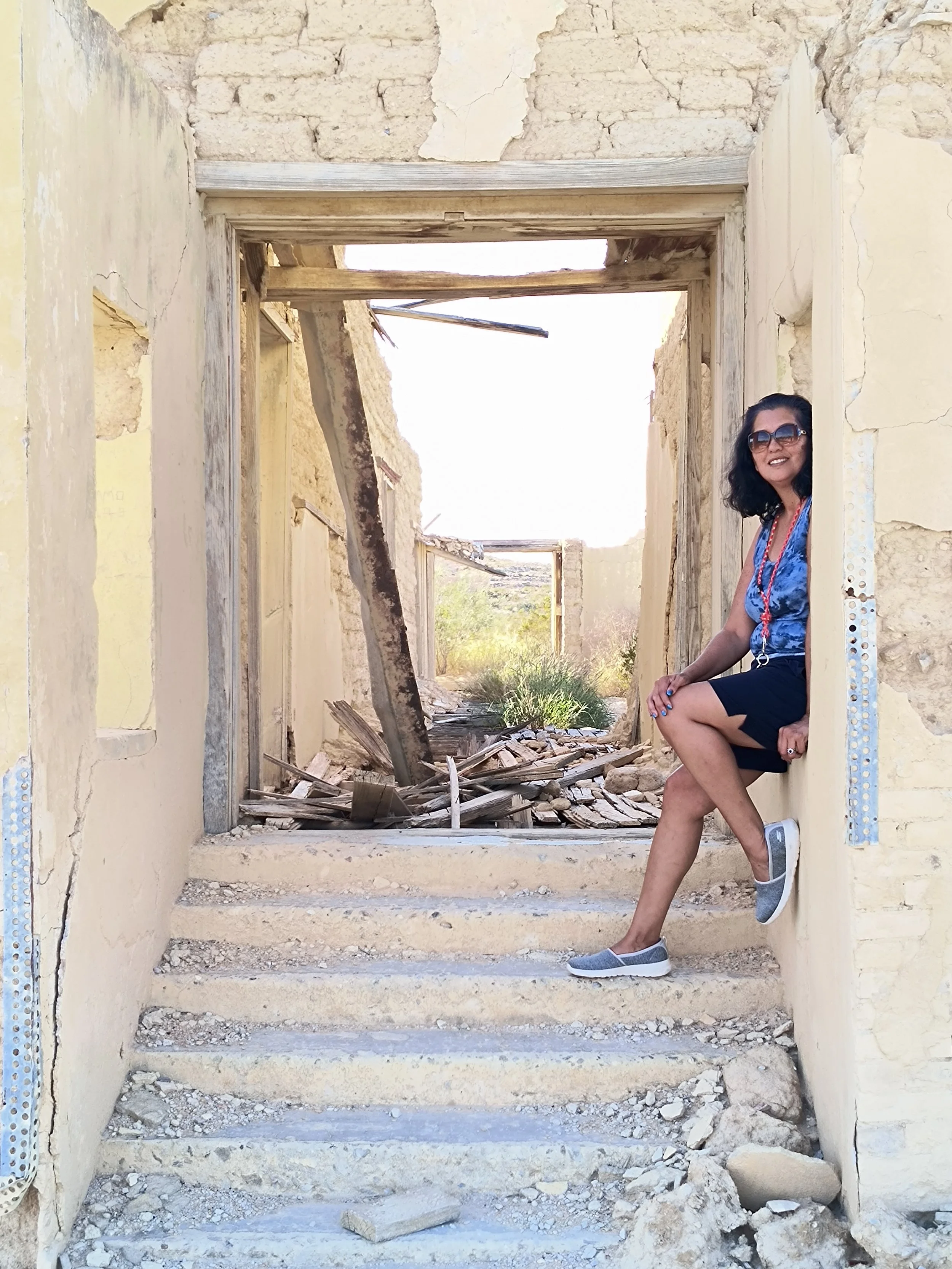
Perry School takes its name from Howard E. Perry, the Maine businessman who founded the Chisos Mining Company in 1903 and built Terlingua into one of the most productive mercury (quicksilver) mining operations in the country. Brewster County organized the town's first public school in 1907, with classes initially held in a makeshift tent-house structure. Terlingua's population hit around 1,000 to 2,000 residents by the 1910s, with a company store, hotel, doctor, and even erratic telephone service. The school could no longer serve the community so the company replaced the tent school with the permanent Perry School building in 1930.
Terlingua was a segregated company town: Mexican families lived east of the company store, while Anglo residents, including Perry himself in his Moorish-inspired mansion, lived on the west side. Quicksilver production peaked during World War I, and by 1922 Terlingua accounted for 40% of all U.S. mercury output. But the market crashed after the war, and the Chisos Mining Company filed for bankruptcy on October 1, 1942. Most residents scattered, leaving Terlingua — and Perry School with it — to the desert. The school building has been crumbling ever since; remnants of its old playground are still visible among the ruins. Tourism revived the town starting in the late 1960s, largely thanks to its now-famous chili cook-off, which earned Terlingua the title "Chili Capital of the World" in 1967.
Ghost Stories and Hauntings
There isn’t a specific, documented ghost story attached to Perry School the way there is for the nearby Perry Mansion (where Howard Perry's own apparition is reportedly seen on the verandah and in the Great Room). What exists instead is broader Terlingua ghost-town lore that folds the schoolhouse ruins into its overall haunted reputation:
Visitors and paranormal enthusiasts report shadow figures moving among the ruins throughout the ghost town generally, including around structures like the old school and mining company buildings.
The spirits of miners who died from mercury exposure, accidents, or harsh conditions are said to still walk Terlingua's dusty streets, particularly near the Terlingua Cemetery ("Boot Hill"), often cited as the epicenter of the town's paranormal reputation given how many miners, children, and early settlers are buried there.
Local legend also places La Llorona along the nearby banks of the Rio Grande, wandering and crying for her lost children — a well-known Southwest folklore figure rather than a Terlingua-specific ghost, but one residents and visitors frequently invoke as part of the area's haunted atmosphere.
For your blog, Perry School's honest hook is less "here's the specific haunting" and more "here's a real, crumbling monument to a company town that vanished almost overnight" — a genuinely dark-tourism-worthy site (child mortality, toxic mercury exposure, a vanished segregated mining community) even without a named ghost attached to it specifically.
Visiting
Terlingua Ghost Town is open to the public during daylight hours and is a genuine, walkable tourist destination near Big Bend National Park — one of the most visited and photographed ghost towns in the country. Perry School's ruins and playground remnants are part of the scattered site you can walk through, though some structures nearby (including the Perry Mansion) are privately owned. As with any ruin site, watch your footing around unstable structures.
15. Texas A&M University — College Station
History
Texas A&M is Texas's oldest public university, opening October 4, 1876 as the Agricultural and Mechanical College of Texas — the state's land-grant institution created under the Morrill Act of 1862. It began as an all-male military school with mandatory participation in the Corps of Cadets. The surrounding community, designated "College Station" by the Postal Service in 1877, took its name from the train depot that served the campus. The school adopted its current name, Texas A&M University, in 1963 to reflect its growth beyond agriculture and mechanics into a full research university.
Any honest account of A&M's history has to include November 18, 1999, when the massive Aggie Bonfire — a century-old tradition of stacked logs built each year ahead of the Texas-A&M football rivalry game — collapsed during construction, killing twelve students and injuring 27 others. It remains one of the defining tragedies in the university's history, and it reshaped campus culture profoundly: the Bonfire Memorial now stands on the site, and existing A&M traditions like Silver Taps (a solemn ceremony honoring students who died while enrolled) and Aggie Muster (an annual roll call where "Here" is answered for the living and silence stands in for the dead) carry that same weight of remembrance. These are treated by the A&M community with real reverence rather than spooky campus lore, and worth approaching that way in your own writing.
Ghost Stories and Hauntings
Roy Simms and the Animal Industries Building — A&M's best-documented campus haunting, and unlike most "ghost" stories, this one starts with a verified death certificate. Roy Lee Simms joined A&M's staff in 1938, served in the Navy during WWII, returned in 1946, and by 1948 became Meat Locker Room Foreman in the basement animal laboratory of the Animal Industries Building. On the morning of Saturday, November 14, 1959, while his assistant briefly stepped outside, Simms was cutting a slab of bacon when his knife slipped and severed his femoral artery. He reportedly tried to crawl to the building's freight elevator for help and died before he could escape or reach the elevator. He was buried at Wellborn Cemetery two days later.
The hauntings began soon after: custodians and students working late report screaming voices in empty hallways, footsteps and slamming doors with no one visible, and objects moving near the freight elevator where Simms bled out. The legend grew enough that in the 1980s, a custodian named Henry Turner convinced a faculty member to leave the basement freight elevator open overnight specifically so "Simms' spirit" would have somewhere to rest — the idea being that if he didn't, he'd go rummaging through the meat lab's equipment instead. That practice reportedly continues among cleaning staff to this day. The actual room where Simms died is now a men's restroom, still lined with the original steel meat hooks and drain from its slaughterhouse-lab days.
Corps of Cadets Dining Hall (Duncan/Sbisa) — Less documented but frequently mentioned by current and former students, who describe general poltergeist-style activity — unexplained noises and disturbances — in the dining facilities historically used by the Corps of Cadets.
Visiting
Texas A&M is a large public university campus in College Station, open to walk around during the day. The Animal Industries Building remains an active academic building, so you can view it and walk its halls during normal hours, restroom included, if you're feeling brave. The Bonfire Memorial is a public, outdoor memorial site open for quiet visitation and reflection — worth treating as a solemn stop rather than folding into "haunted campus" content, given what it commemorates.
16. Old Baylor Park (Baylor Female College Ruins) — Independence
History
Old Baylor Park preserves the ruins of Baylor University's original campus in Independence, Texas — the town where Baylor actually began, decades before Waco. The Republic of Texas Congress chartered Baylor on February 1, 1845 at Washington-on-the-Brazos. Classes began May 18, 1846, at Academy Hill (the former Independence Academy campus) but that was only temporary.
The women's campus, known as Academy Hill, was completed in 1856,with four stone columns…..those four columns are the famous ruins still standing today. Meanwhile, the men's campus at Windmill Hill was comprised of Graves Hall (1849–50), Tryon Hall (1860 - 1882), and Houston Hall (1859–62). There was also a bell tower (1882) and the Burleson Domicile (1856), which served as the dining hall, dorm, and residence for the president. Judge R.E.B. Baylor himself, the university's namesake, was buried on the east side of the men's campus in 1873 but his remains were moved in 1917 to Belton to what is now the campus of Mary Hardin-Baylor.
Independence's fortunes soured when the railroad bypassed the town, and in 1886 Baylor's trustees merged with Waco University and relocated the whole operation to Waco — the school's current, much larger home. The Baylor Female College trustees moved their institution to Belton, where it became the University of Mary Hardin-Baylor. Independence deteriorated into what's now basically a ghost town. Today Old Baylor Park is jointly maintained by Baylor University and UMHB, and the Male Department site was added to the National Register of Historic Places as recently as 2024.
Ghost Stories and Hauntings
As with a couple of the other Texas ruins we've covered, Old Baylor Park doesn't carry a single named, documented ghost story the way a haunted hotel or dorm might. What it has instead is a broader reputation woven into Independence's identity as a "forgotten ghost town":
There have been claims that the land around Independence sits on a convergence of electromagnetic fields, which has been blamed for causing insomnis, headaches, and even hallucinations in visitors and residents.
One account describes a man who got lost near the ruins and experienced vivid visions of long-dead loved ones while there.
More generally, Independence is grouped with Texas's classic "haunted ghost town" roundups — its abandoned homes, dilapidated buildings, and old cemetery lending it an atmosphere that visitors and paranormal writers describe as unsettling, even without a specific named apparition tied to the four columns themselves.
Visiting
Old Baylor Park is open to the public and free to visit, located in Independence near Brenham. It's a popular stop during Texas wildflower season and is still used by Baylor for freshman orientation retreats (Baylor Line Camp), so it's very much an active, welcoming historic site rather than an off-limits ruin. The nearby Independence Visitor Center (10270 T.S. Saul Road, Brenham) can provide additional context, and both Academy Hill (the four columns) and Windmill Hill (the men's campus outlines) are walkable.
17. Texas Woman's University (Old Main) — Denton
History
Texas Woman's University began as the Girls Industrial College in 1901. The school opened that year with 186 students and 14 faculty. It went through several names — becoming Texas State College for Women in 1934 before settling on Texas Woman's University in 1957. Men were admitted at the graduate level starting in 1972, and subsequently undergraduate admission in 1994.
Ghost Stories and Hauntings
Old Main — The very first building on campus (opened 1903) and still home to its most talked-about haunting: moaning voices, said to belong to former faculty, reportedly heard wandering the halls. Its portico is also guarded by a headless "Winged Victory" statue, a detail that adds to the building's eerie reputation even before you get to the ghost stories.
The Music Building — Students and staff report unexplained melodies drifting through the building with no player to be found.
Hubbard Hall — Known for reports of figures or spirits that appear briefly and then vanish.
Stoddard Hall — Home to a reported "phantom" that's stalked students and staff over the years, though details of its identity are thin.
Guinn Hall — The Spirit of Dr. John — A named haunting, said to be the ghost of a "Dr. John," reported by both students and staff.
Little Chapel in the Woods — The Hooded/Weeping Bride — Perhaps TWU's most atmospheric legend: a hooded, weeping female figure reportedly seen roaming the grounds near this small, architecturally beloved chapel, often described in local lore as a bride in mourning.
Virginia Carpenter and the site of Brackenridge Hall — In June 1948, 21-year-old Mary Virginia Carpenter arrived in Denton to attend what was then Texas State College for Women. A taxi driver, Edgar Ray “Jack” Zachary, dropped her off at Brackenridge Hall around 9 p.m., where witnesses saw her walk over and speak with two unidentified men in a light-colored convertible parked outside — she never checked into her dorm room and was never seen again. It remains one of Texas's oldest unsolved missing-persons cases, still discussed by true-crime researchers today. Brackenridge Hall was later demolished and replaced by the Student Union, and campus legend holds that Virginia's spirit still lingers around the site of her disappearance — a case where the "haunting" grew directly out of a real, unresolved human tragedy rather than pure invented folklore. (Zachary cooperated with investigators but a decade or so later his ex-wife said he convinced her to lie about his whereabouts on the night Virginia disappeared. He died in 1984.)
Visiting
TWU is a public university campus in Denton, open to walk around during the day. Old Main, Guinn Hall, and the Little Chapel in the Woods (a genuinely beautiful, historic chapel worth seeing on its own merits) are all publicly accessible. Residence halls like Hubbard and Stoddard aren't open to outside visitors. TWU has run its own "Ghost Stories Tour" for incoming freshmen during Pioneer Camp, and Denton's Historic Square also offers commercial ghost tours if you want to pair a TWU visit with the town's broader haunted history — just note that neighboring University of North Texas has its own separate, sometimes-confused-with-TWU ghost lore (like the "Wanda" legend tied to UNT's Bruce Hall), so it's worth double-checking which campus a given Denton ghost story actually belongs to before publishing.
18. Brenham Schoolhouse Hotel — Brenham
History
The Brenham Schoolhouse Hotel occupies an 1883 Italianate building that claims to be the first free public school in Texas established under the Landmark School Law of 1875 (historians can confirm it was among the earliest, though the "first" claim couldn't be definitively proven when the Washington County Historical Commission sought a state marker in 1969). Built with 15-inch brick walls made with plaster mixed with cow hair, the building welcomed schoolchildren January 20, 1884.
The Independent School District sold the property in 1909 to N.A. Gallagher, Bishop of Galveston, and it immediately became St. Agnes, Sacred Heart Convent, staffed by Dominican Sisters who came from Galveston to teach. The convent couldn't sustain itself financially and closed by 1916, sending the nuns back to Galveston. From there the building was converted into apartments. That lasted into the 1970s, then it sat abandoned for decades and in a state of severe disrepair.
The Gumm Family from Refugio, Texas, bought the building in 2018 and began renovations. The hotel officially opened in February 2024 with 3 one-room suites and 4 two-room suites, and leans hard into its schoolhouse-turned-convent history: old school desks as nightstands, salvaged law-office books, and globes.
Ghost Stories and Hauntings
While there isn’t a verified, documented ghost story specifically tied to the Brenham Schoolhouse Hotel, I have heard a couple of rumors. While it may not have well known ghost stories, it does have is exactly the kind of backstory that tends to grow into ghost lore over time: a schoolhouse, a convent, years of abandonment and neglect, squatters, and a fire.
If you want documented haunted history in Brenham itself, the town has several well-established spots: the 1895 F.W. Schuerenberg House, with reports of a young girl in old-fashioned dress and a tragic nursery suicide; and The Citadel, a 1920s building where 1990s renovation crews repeatedly reported a woman in expensive jewelry and old-fashioned white clothing who vanished before they could approach her.
Visiting
The Brenham Schoolhouse Hotel operates as a boutique hotel at 600 E. Alamo St. in downtown Brenham genuinely bookable for an overnight stay if you want firsthand time in the building. It has no on-site staff or food service, so guests largely have the historic space to themselves after check-in, which honestly might be the best setup for noticing anything unusual, if there's anything to notice yet.
19.Sul Ross State University — Alpine
History
Sul Ross State University traces to the Alpine Summer Normal School, which starting in 1910 brought teachers to Alpine's mild climate each summer to earn their teaching certificates. The Texas Legislature formalized this into Sul Ross State Normal College in 1917, named for Lawrence Sullivan Ross — Texas governor from 1887 to 1891 and later president of Texas A&M. Doors opened on June 14, 1920, with 77 students enrolled that first summer. The school became a full university in 1969. Today Sul Ross is the primary higher-education institution in far West Texas, sitting in the dramatic high-desert landscape of the Big Bend region — a genuinely remote, atmospheric setting for any ghost-story collection.
Ghost Stories and Hauntings
You may hear a rumor or two of paranormal activity but, honestly, there is no well-documented, building-specific ghost stories tied to Sul Ross's own campus buildings or dorms. What Sul Ross does have is a genuinely notable role in the region's ghost lore — its Fine Arts Department once co-produced the award-winning Historic Alpine Ghost Tours alongside the Historic Alpine Association, and Sul Ross theater students actually perform as the ghosts.
The tours, launched in 2021 as a semiannual (spring and fall) event through downtown Alpine, however I don’t see evidence of those tours after 2023. Here are some of the stops at real historic sites tied to real, documented tragedies:
The Brewster County Courthouse, where the ghost of Harvey Hughes appears — he was hanged on the courthouse lawn in 1923, one of the last legal hangings in Texas.
The Historic Holland Hotel, where Crystal Holland was murdered in front of the building in 1916 by her jealous husband; the Holland regularly shows up on national "most haunted hotels" lists.
The Hotel Ritchey and historic Murphy Street, tied to additional local folklore spirits.
A deserted stretch of track near the Alpine Train Station.
An appearance (sometimes) by La Llorona, the well-known Southwest folklore figure.
Visiting
Sul Ross's campus is public and walkable during the day, set against striking Big Bend scenery. For the ghost content specifically, the Historic Alpine Ghost Tours run seasonally (spring and fall) through downtown Alpine — worth checking the Historic Alpine Association or Sul Ross's own site for current dates, since these are limited-run theatrical events rather than a standing attraction. Pairing a Sul Ross visit with the tour, and a nightcap afterward at the Holland Hotel, would make for a strong feature if you want firsthand material.
20. Old Town Coldspring Schoolhouse — Spring
History
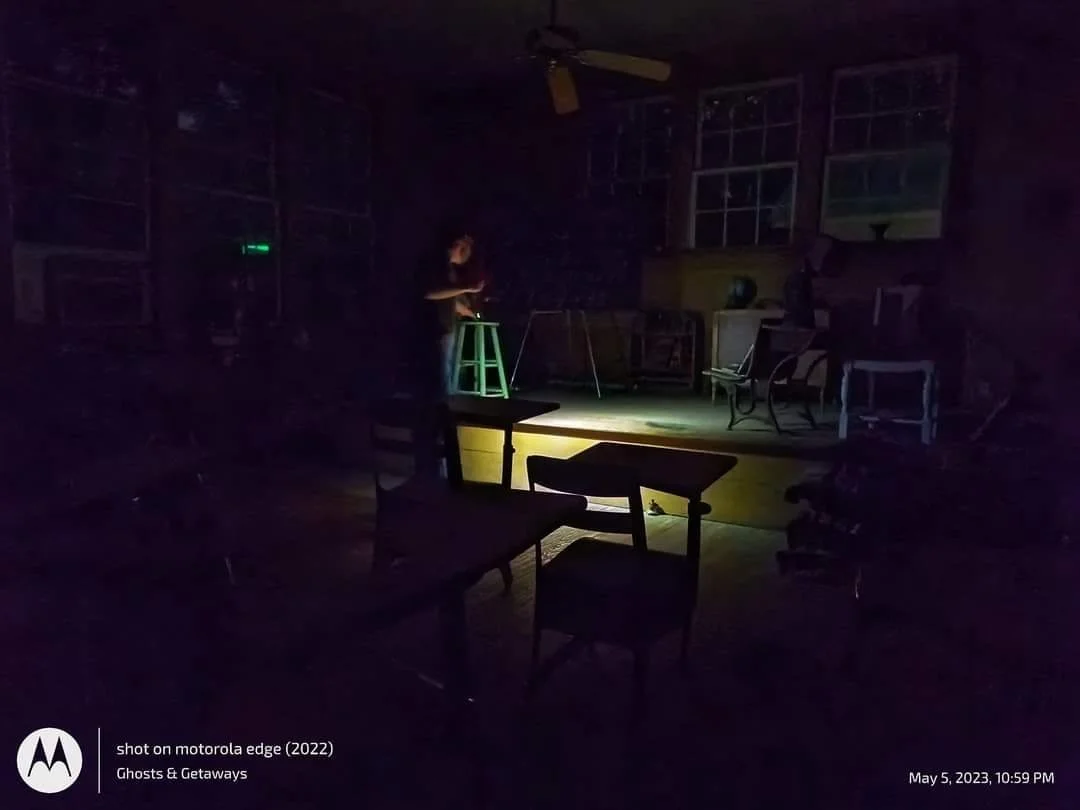
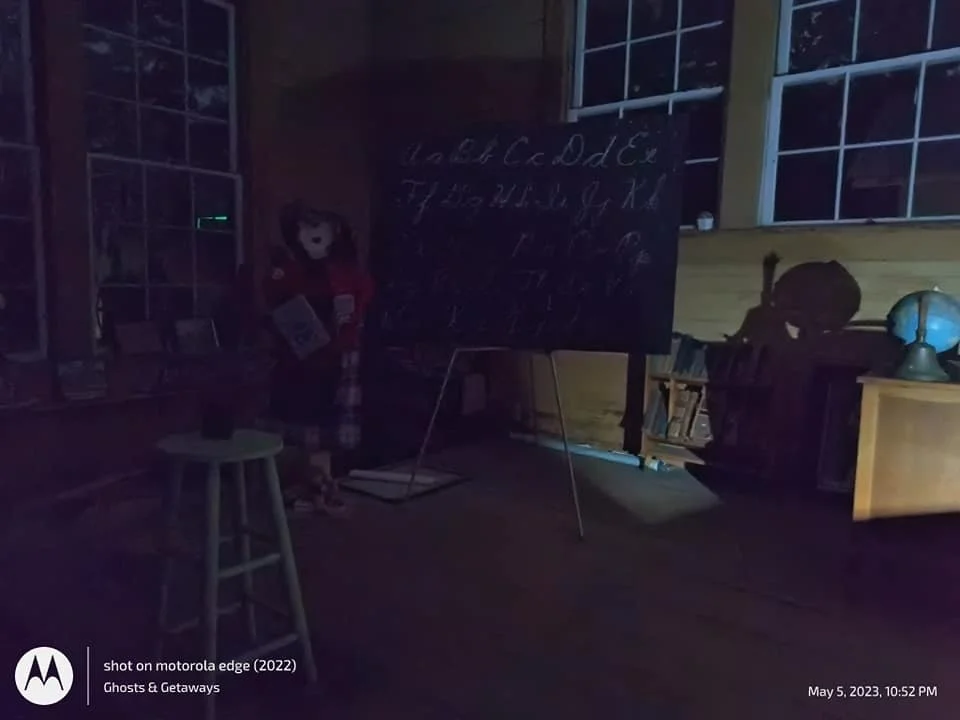
The "Old Town Coldspring Schoolhouse" sits within Old Town Coldspring, a recreated historic village next to the Old San Jacinto County Jail. Coldspring became the county seat of San Jacinto County in 1870. It all sits on the site of Coldspring's original 19th-century town square which burned in a fire in March 1915 that destroyed the wooden courthouse and other buildings.
The building most likely referred to as "the schoolhouse" is the Old Waverly schoolhouse, built in 1921 and relocated to Old Town Coldspring in the mid-1980s. It now stands alongside several other relocated historic structures the San Jacinto County Historical Commission has assembled into the Old Town museum complex: the Old Jackson Store (1890), the 1930s Camilla Post Office, a 1890s log cabin/crib, the restored Urbana Depot, and a replica of the county's first general store, all clustered around the 1887 San Jacinto County Jail, now the Old Jail Museum, listed on the National Register of Historic Places (1980) and recognized as a Texas landmark (1982).
Ghost Stories and Hauntings
The haunted reputation here centers overwhelmingly on the jail itself and the grounds it shares with the relocated schoolhouse and other buildings, rather than the schoolhouse having its own distinct, separately documented legend. Paranormal investigators have reported disembodied voices, and footsteps, strange sounds, EVPs, bangs, and shadow figures throughout the jail and surrounding structures. The most dramatic element of the site's dark history is the old hanging tree on the jail grounds — while no executions took place inside the jail building itself, local lore holds that the tree once standing on the property was the site of over 300 hangings historically. The tree has since been cut down, but investigators say the "energy" of the site remains a focal point of overnight ghost hunts, with vigils specifically held there.
Given how the schoolhouse and other buildings were physically relocated to this site decades after their original construction, any paranormal activity reported in that specific structure tends to get folded into the broader "Old Town Coldspring" haunted reputation rather than treated as its own separate case.
Visiting
Old Town Coldspring and the Old Jail Museum are operated by the San Jacinto County Historical Commission. For the paranormal angle specifically, you can book your paranormal group/team for an overnight that includes access to the jail and the historic Old Town buildings. There’s plenty of space for groups if you spread out amongst all of the buildings.
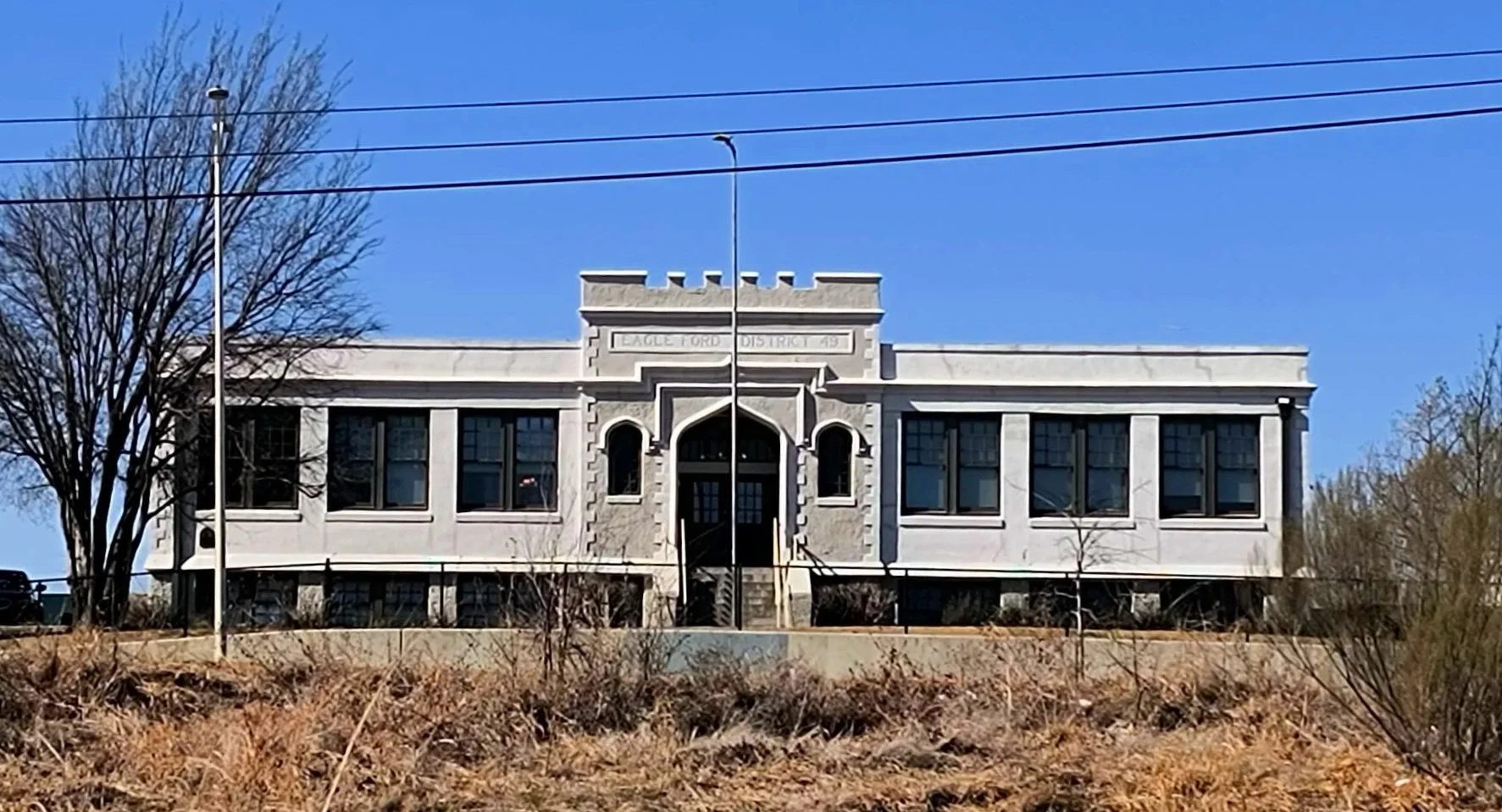
21. The SchoolHouse Dallas — Dallas
History
The SchoolHouse Dallas occupies the former Eagle Ford School, built in 1923 in West Dallas. Its most striking claim to fame is who sat in its classrooms. From 1923 to 1959, hundreds of students passed through Eagle Ford School, including a young Bonnie Parker — yes, that Bonnie, of Bonnie and Clyde. This connection to one of the most notorious criminal duos in American history, decades before Bonnie's outlaw life began, gives it a unique twist.
The 102-year old school closed in 1965, and the building eventually fell out of educational use. It underwent a full restoration in 2024 then reopened as The SchoolHouse Dallas, a wedding and event venue. The renovation preserved original architectural details typical of early-20th-century schoolhouses.
Ghost Stories and Hauntings
While there isn’t an abundance of documented ghost stories (there’s a rumor or two) or reported hauntings tied specifically to Eagle Ford School, what it does have is a genuinely compelling historical hook without needing an invented haunting: a 100-year-old schoolhouse from a vanished company town, standing as one of DISD's rarest surviving structures, where a future half of America's most infamous crime duo once sat in a classroom desk. That's a strong dark-tourism angle in its own right — the "ghost" here is really the shadow of Bonnie Parker's later legend hanging over an otherwise unremarkable childhood, rather than a reported apparition.
Visiting
The SchoolHouse Dallas operates as a private event and wedding venue at 1601 Chalk Hill Rd, Dallas, TX 75212, in West Dallas. It's not generally open for casual walk-in visits, but the venue offers scheduled tours (Tuesday–Sunday, per their booking system) for prospective clients, which would be your best way to see the restored interior and original architectural details firsthand.
22. Trinity University — San Antonio
History
Trinity University has had three different homes before landing in San Antonio. Cumberland Presbyterians founded Trinity in 1869 in Tehuacana, Texas, consolidating the remnants of three small antebellum Presbyterian colleges (Ewing College, Chapel Hill College, and Larissa College) that had all lost enrollment during the Civil War. Trustees moved Trinity to Waxahachie in 1902 where it remained for four decades later. On February 25, 1942, the Synod of Texas accepted an invitation from the San Antonio Chamber of Commerce to relocate again — and on May 13, 1952, Trinity moved permanently to its current Skyline Campus in San Antonio.
Ghost Stories and Hauntings
The William Knox Holt Center — This is Trinity's most notoriously haunted building, and one where campus legend and documented history diverge in an interesting way. The popular rumor holds that an abortion doctor once lived in the house, that there's an incinerator in the basement, and that if you burn a fire in the fireplace you can supposedly see the faces of babies in the flames. A very different and better-documented history: the house was owned by a woman who ran a pecan company employing a large, primarily Latinx workforce, with real labor tensions tied to that history.
Coates Library — Students and staff describe the space as unusually dark, prone to lights turning off on their own, disembodied voices and footsteps, and sudden unexplained cold spots on a regular basis.
The Marrs McLean Hall Elevator — Located near the Center for Sciences and Innovation, this elevator has its own small unsettling detail baked into the architecture itself: it has a button for a fourth floor that doesn't actually exist. Combined with dim fluorescent lighting, rattling operation, and stained carpet, students describe avoiding it outright.
Jack the Prankster Ghost — A more lighthearted, dorm-focused legend: alumni have nicknamed a mischievous spirit "Jack," blamed generally for flickering lights, missing items, and unexplained pranks in the residence halls, alongside vaguer lore about "long-dead nuns" said to roam parts of campus.
Visiting
Trinity is a private university campus in San Antonio, open to walk around during the day. Coates Library and Laurie Auditorium are public-facing campus buildings you can visit during normal hours, and the Center for Sciences and Innovation (including the Marrs McLean elevator) is part of general academic building access. The Holt Center has reportedly been slated for renovation, so its specific haunted ambiance — real or rumored — may not last in its current form.
*********************
Step into corridors where history whispers between lockers and chalk dust holds secrets—our haunted schools are classrooms of the uncanny, perfect for curious minds and brave hearts. Explore aged auditoriums, creaky stairwells, and forgotten classrooms where stories of restless students and lingering lessons come alive after dusk. Come for the architecture and history, stay for the spine-tingling tales that turn every desk into a portal to the past. Bring your camera, your courage, and an appetite for the eerily educational—these schoolyards of spirits are waiting to teach you something unforgettable.
Make this beautiful day count!
Annette