
Class Dismissed: A Road Trip to Texas’s Haunted Schools (Part 1)
Dust off your backpacks and sharpen your pencils—these Texas classrooms still hold more than chalk dust. From abandoned campuses where echoes of recess never faded to historic schoolhouses with restless night watchmen, Texas’s haunted schools offer spine-tingling history, local lore, and an education in the uncanny. Whether you crave EVP hunts in creaky gymnasiums or guided twilight tours through century-old halls, this guide will map out the most eerie alma maters across the Lone Star State.
1. Angelo State University — San Angelo
Founded in 1928, Angelo State University started as San Angelo College, a two-year junior college run through the San Angelo Independent School District. It was elevated to Angelo State College in 1965, and it awarded its first bachelor's degrees in 1967. The university joined the Texas State University System in 1975 and moved under the Texas Tech University System Board of Regents in 2007. Fittingly, the campus building at the center of its most famous ghost story — Hardeman Hall — is named for the same senator who helped create the university.
The Central Ghost Story: Leandra Morales and Hardeman Hall
This one has real documentation behind it, not just campus legend. On the night of April 22, 1978, a student named Robert Mark Wagner called San Angelo police saying he'd found a body in Room 200 of the Hardeman Building (which was once home to the campus photo lab). Upon arrival, police discovered freshman Leandra Morales viciously beaten and stabbed three times. Wagner claimed he'd heard moaning as he was leaving the photo lab and found her struggling to breath. Investigators were doubtful and, by the next morning, Wagner had confessed. He was convicted and sentenced to 25 years.
Employees have since reported a variety of paranormal experiences including footsteps in empty hallways, a man and woman arguing faintly, and a ghostly figure on the staircase. Staff and students in Hardeman Hall have described:
Footsteps in empty hallways
The sounds of arguing between a man and a woman, heard with no one around
A ghostly female figure with dark hair in a white dress, often seen late at night
Radios turning on by themselves (even while unplugged) and elevators moving with no one operating them
Visiting
ASU is a public university campus in San Angelo, open to walk around during the day. Hardeman Hall is a functioning academic building, so you can view it and walk the halls during normal operating hours, though it's an active office/classroom space rather than a tourist stop.
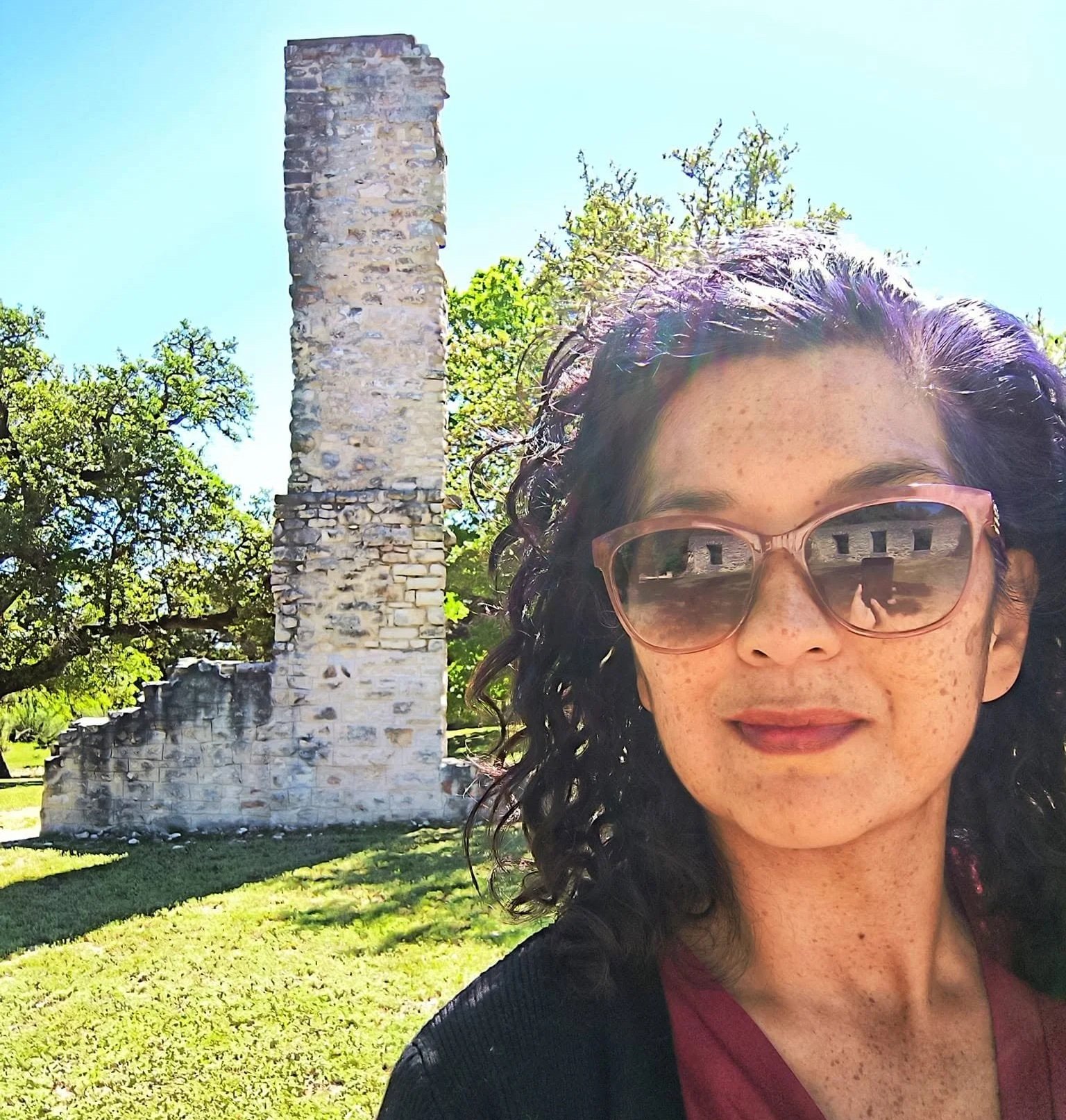
Salado College Ruins
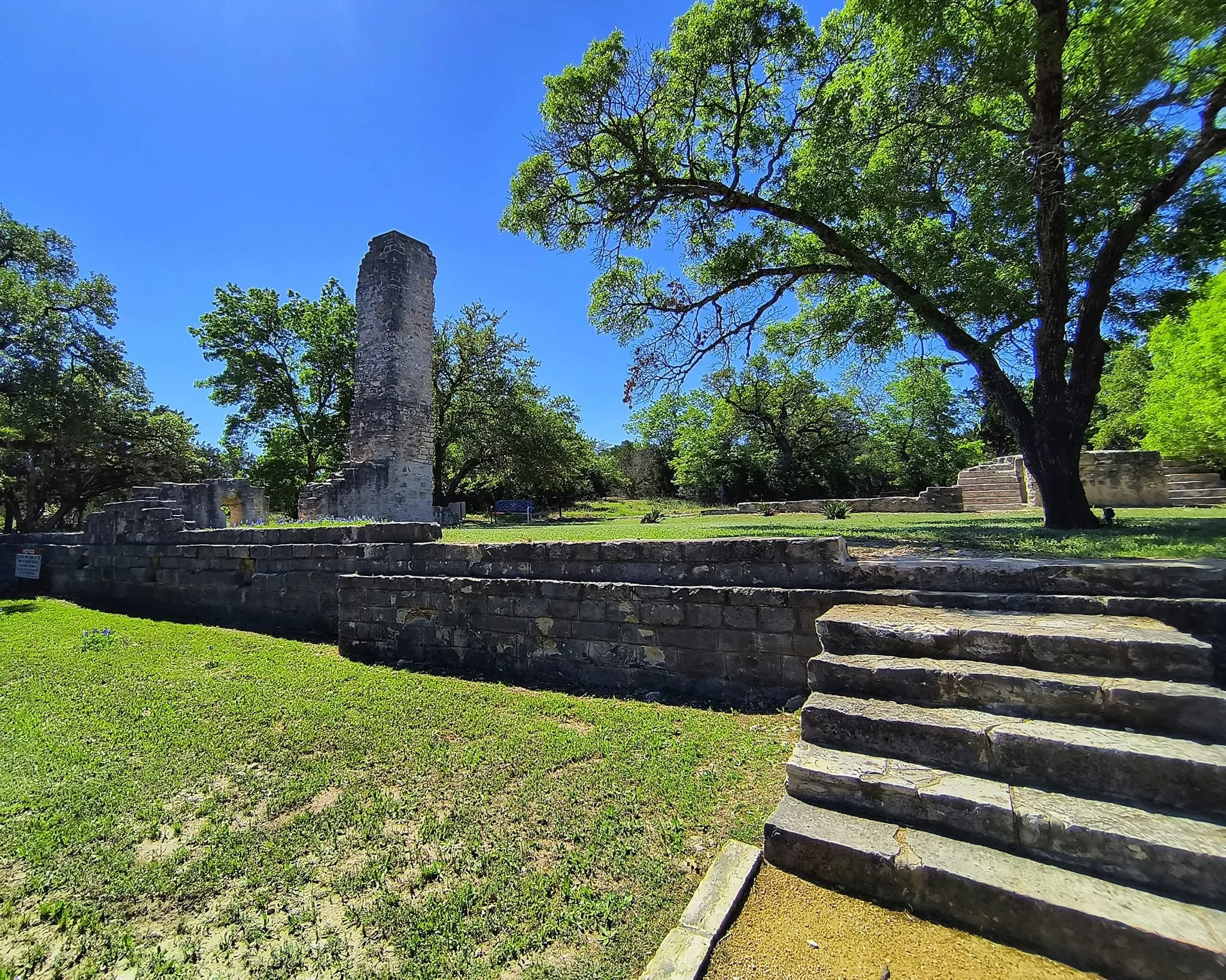
2. Salado College Ruins — Salado
Salado College was founded in February 1860, as one of the coeducational degree-granting school — unusual for the era — and it opened entirely without any church or state funding. Classes started in a temporary building in February 1860 with 75 students; the permanent two-story building had its cornerstone laid July 1865. The Panic of 1873 and the rise of state-funded colleges gutted enrollment, and Colonel Elijah Sterling Clack Robertson Robertson had to personally buy the college in 1877 to save it from foreclosure. He died in 1879, the state charter lapsed in 1880, and the college closed for good in 1885.
The building then became the private school Thomas Arnold High School from 1890 until it closed in 1913, then a public school until 1924. That's when its luck ran out for good: fires in 1901 and 1902 (each time it was rebuilt), then a final fire in 1924 destroyed it. The town couldn't afford to rebuild thereby ending the life and story of the school. Only the west wall and part of the east wall survived. The ruins were later stabilized, listed on the National Register of Historic Places in 1985, and the site — Salado College Park — is now open to the public.
Ghost Stories and Hauntings
Salado College doesn't have a well-documented, specific ghost story attached to it (no named apparition, no dated incident). I spoke with a couple of locals while out and about who told me they had heard about light anomalies, shadows, and inexplicable sounds coming from among the ruins. What exists is more atmospheric folklore:
The "suspicious" fires — Local legend in Salado has long described the 1901, 1902, and 1924 fires as suspicious, with arson suspected but never proven. That unresolved mystery is the closest thing to a "legend" tied directly to the ruins although locals have since speculated about the cause of the fires.
Salado's broader haunted reputation — The town itself punches well above its weight in Texas ghost lore, most famously around the Stagecoach Inn just across the street. The college ruins get swept into general "Salado is haunted" roundups and ghost-town lists, but without a specific reported apparition or incident tied to the site itself.
Visiting
Kiddo and I visited the ruins easily as we stayed at the Stagecoach Inn across the street. Salado College Park (423 S. Main St., Salado, TX) is free and open to the public, walking distance from the town's shops and restaurants. It's a straightforward daytime stop — no tours needed, just the stabilized ruins on their hilltop setting.
3. Sam Houston State University (Austin Hall) — Huntsville
Sam Houston State University's roots go back further than its founding year. Its campus was originally home to Austin College, a Presbyterian institution whose main building — Austin Hall — was constructed in 1851, making it the oldest university building still in operation west of the Mississippi. When Austin College relocated to Sherman, Texas in 1876, the vacated campus and building became available, hence the start of SHSU.
Classes began that October with 110 students and four faculty members however the school's first president, Bernard Mallon, died just eleven days after opening. SHSU is now the third-oldest public institution of higher learning in Texas, and Austin Hall — inherited from Austin College — remains its oldest building.
Ghost Stories and Hauntings
Austin Hall — The oldest, most storied building on campus has multiple supernatural reports: a maid reportedly seen in a 3rd floor window; a young boy said to appear in the same window; and claims that the spirit of Sam Houston himself walks the halls.
Peabody Library — Widely called the "most haunted" building on campus, reports include seeing an apparition of a woman in a long, high-necked black dress, styled like the early 20th century. Her identity is unknown since her face is never quite visible however she is believed to be one of the school's early librarians.
Belvin-Buchanan Hall and Elliott Hall — Campus lore attaches unverified accounts of a female student's suicide to Belvin-Buchanan, and a young woman's murder to Elliott Hall.
Visiting
SHSU is a public university campus in Huntsville, open to walk around during normal hours. Austin Hall and Peabody are functioning academic buildings rather than tourist stops, so you can view and walk past them, but there's no formal ghost tour. This is more of a "wander campus and admire the oldest building west of the Mississippi" thing.
4. Southwestern University — Georgetown
Southwestern University holds the title of oldest university in Texas, with roots tracing to 1840. The school opened in its permanent home of Georgetown in October 1873, and the Texas Legislature formally chartered it under the Southwestern name in 1875. It's the second-oldest coeducational liberal arts college west of the Mississippi and, at 180-plus years old, it's had plenty of time to accumulate campus ghost lore.
Ghost Stories and Hauntings
Mabee Hall (dorm) — Reports include feeling something touching them, and hearing disembodied voices.
Mood-Bridwell Hall — Named for Dr. Francis A. Mood, the university's first Regent. Legend tells us that his wife Sue was buried in the cemetery behind campus but his friends believed the couple should be at rest together. So, as the story goes, they secretly moved his remains in the middle of night and reinterred him beside her (although there is no historical record that actually confirms this). Today the nearly 120-plus-year-old building has a reputation for doors that creak open and slam shut on their own.
Brown-Cody Hall — Student reports include seeing shadows and hearing a tennis ball bouncing on the floor above every night at 3 a.m. — the "witching hour" — with no one ever found upstairs.
Clark Hall — A common report is seeing a woman with glowing hair in a white nightgown on the third floor, who who walks silently and vanishes into a wall.
Visiting
Southwestern is a private university campus in Georgetown, open to walk around during the day. The residence halls (Mabee, Brown-Cody, Clark) aren't open to outside visitors, but Mood-Bridwell and other academic buildings are viewable/walkable as part of general campus access.
5. St. Edward's University — Austin
St. Edward's University traces to 1872, when Bishop Claude Dubuis of Galveston learned that a woman by the name of Mary Doyle intended to leave most of her 498-acre South Austin farm to the Catholic Church for an educational institution. He invited Reverend Edward Sorin — the same Holy Cross priest who founded the University of Notre Dame — to Texas, and Sorin established St. Edward's Academy on the farmland in 1877. For its first decade it was a modest, homespun school. That changed in 1885 with an official college charter.
St. Edward’s had a rough run: a major fire destroyed most of it in 1903 (rebuilt by that fall), then it was beaten and battered by a tornado. The university remained an all-male, Holy Cross-run institution for decades before opening to women in 1966 through a separate school, Maryhill College. It subsequently fully merged into St. Edward's in 1970, making the university coeducational. Today it's Austin's only Catholic university and one of the more architecturally striking campuses in the state — no surprise it's accumulated a dense cluster of ghost stories.
Ghost Stories and Hauntings
The Falling Monk of Main Building — The most iconic of St. Edward's legends. While painting one of the upper floors of Main, a gust of wind reportedly pulled a monk's canvas out an open third-floor window; it is said he lunged for it and he fell to his death. Students report hearing moans and wailing from the top floor and sometimes describe a shadow figure.
The Trampled Student — This is one of the university's oldest stories dating back to 1877. A student was reportedly struck and killed by a horse-drawn carriage on what is now a campus road. Students driving that stretch at night have described hearing horses followed by a loud thud, as if their wheels just passed over something.
Mary Moody Northern Theatre — One story holds that a female student took her own life in the theater after being assaulted on campus; another story tells of a young man who hanged himself, with witnesses reporting the sound and sight of a body swinging on ropes that aren't actually there. Other experiences reported are shadows walking into walls, and a sense of being watched.
Theresa Hall — A child apparition, described as 10-12 years old with long black hair and a white dress has been reported to approach students and ask if they want to play. Some people believe her name is Danielle. Other reports include hearing whispers and seeing lights flicking on and off.
Doyle/East Hall's Protective Nun — It is believed to be haunted by a nun who reportedly opposed the school's decision to make her all-girls dorm co-ed. It is thought that she turns on showers and generally causes trouble for male residents.
Premont/Dujarie Hall — It is said someone died after slipping in the showers, but his body was not discovered for a week. The ghost is blamed for slamming doors and turning on showers.
Basil Moreau Hall's Shadow Figure — Students report a shadow-person glimpsed only peripherally, and who often becomes hostile if spoken to directly.
Visiting
St. Edward's is a private university campus, open to walk around during the day. Main Building and the Mary Moody Northern Theatre are viewable as part of general campus access, and the theater hosts public performances if you want a legitimate reason to be inside after dark. Residence halls aren't open to outside visitors.
Looking for a ghost tour in Austin? Check out Original Austin Ghost Tours!
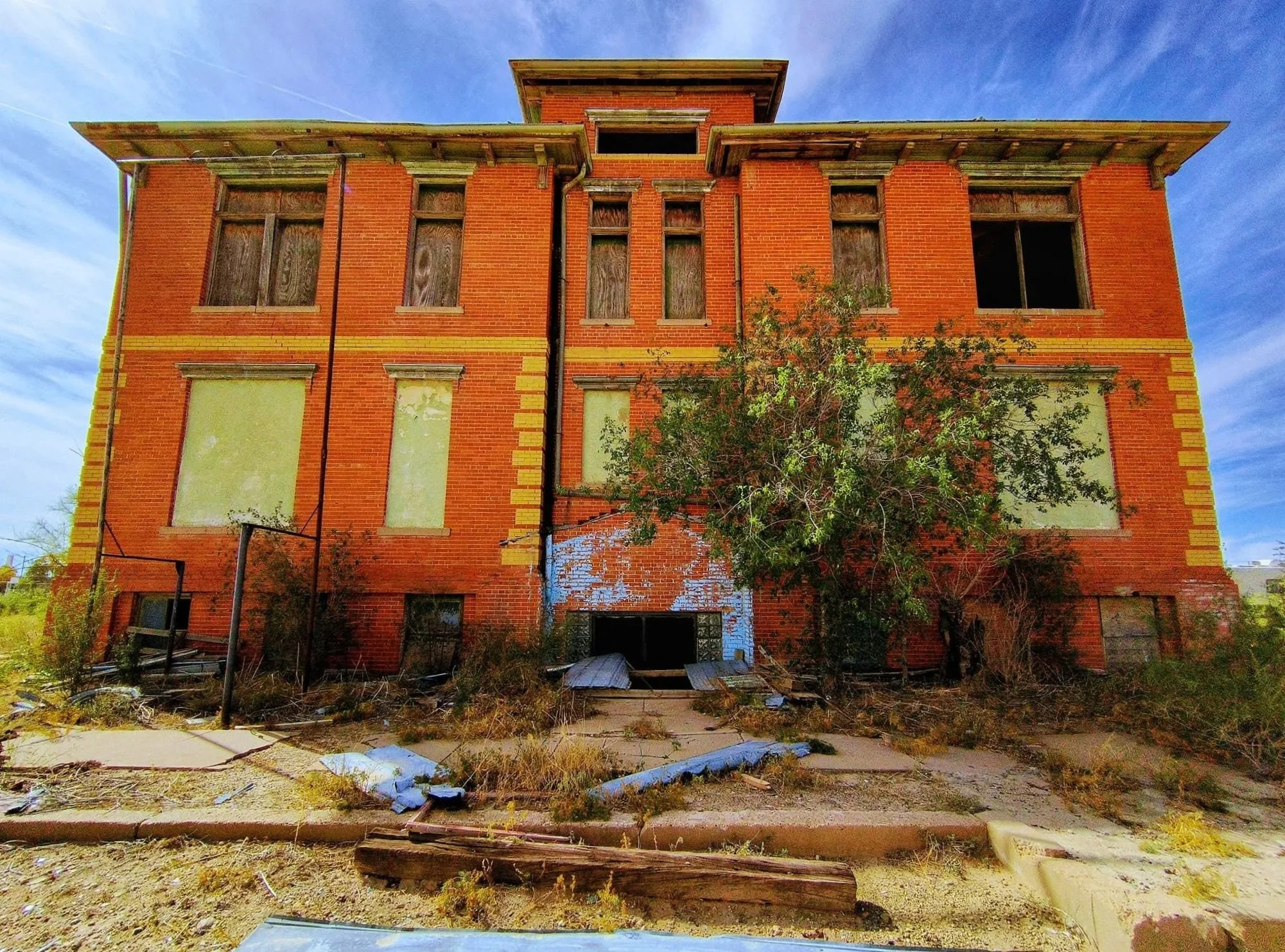
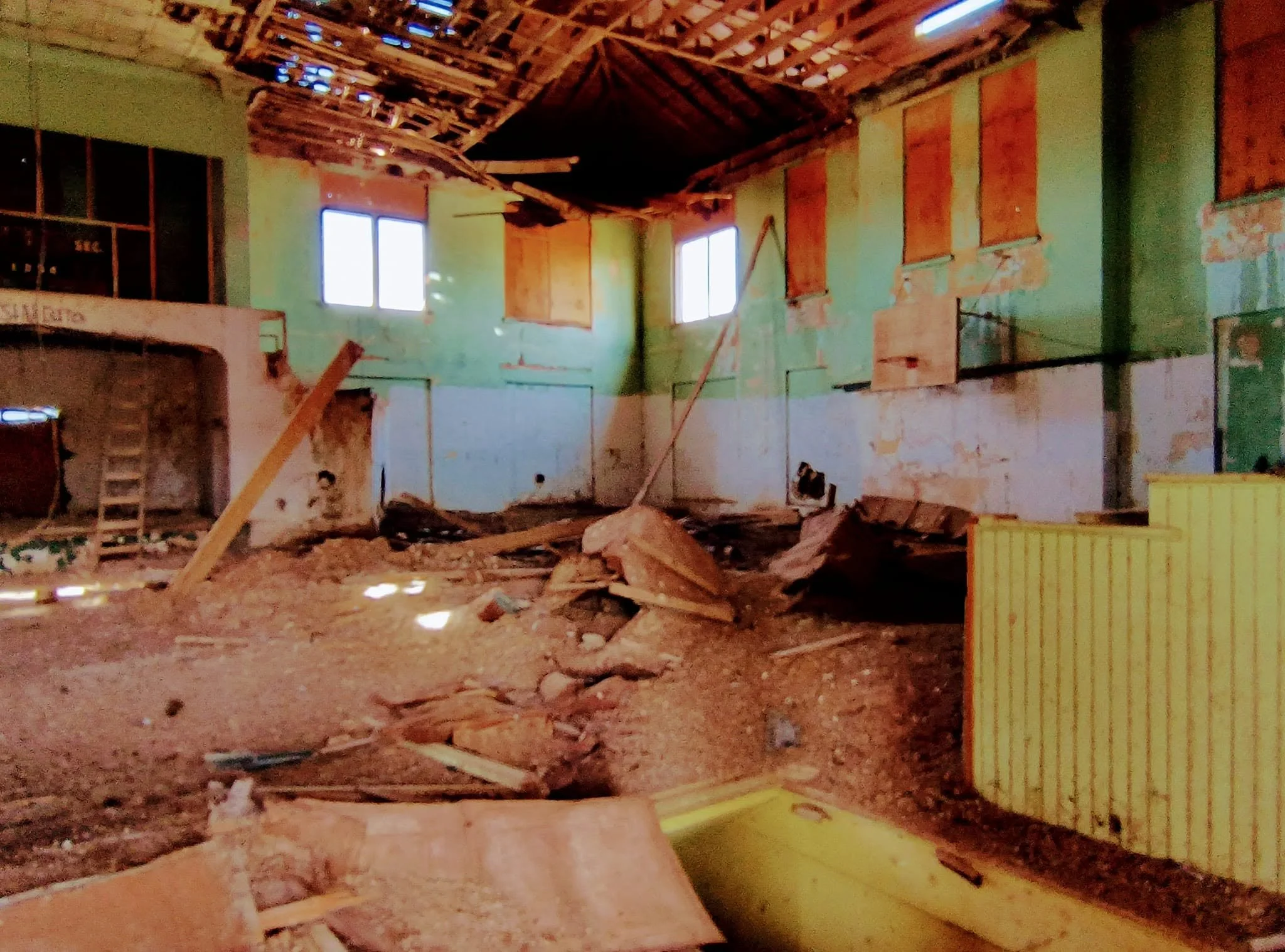
6. Toyah High School — Toyah (ghost town)
Toyah began in 1879 when W.T. Youngblood moved his family from Midland and set up a tent trading post. The Texas and Pacific Railway arrived in 1881, transforming Toyah into a boomtown of tents, saloons, and restaurants. In 1885, a drunk Reeves County sheriff was shot dead by Texas Rangers in a saloon gunfight that also resulted in the death of one of the Rangers. In 1896, former seriff George "Bud" Frazer was shotgunned to death mid-card-game by his rival "Killin'" Jim Miller, ending a long feud. In 1906, a Black man named "Slab" Pitts was lynched by a mob for living with/marrying a white woman. In addition, Toyah had barred Black residents from living within 180 miles of town, and this was a hate-driven murder, not folklore. You can find more info at Lynching of “Slab” Pitts.
The town's first school opened in 1894 as a one-room building. A large brick school was subsequently built in 1912 that served as both elementary and high school. By 1914, Toyah had peaked at almost 1,100 residents with churches, banks, and hotel. Toyah then lost its shipping business to nearby Toyahvale, and the Great Depression gutted the population further……down to approximately 500 by 1930, and 150 by 1980. A catastrophic 2004 storm dumped eight inches of rain in two hours, breached the town's dike, and flooded the remaining buildings in town. Today Toyah has roughly 50 residents at the time of this article, with the old high school standing hollow-eyed and roofless.
Ghost Stories and Hauntings
Toyah High School's central legend involves "black-eyed children" — entities said to wander Toyah's empty streets at night staring into windows of the town's last few remaining residents. Toyah is one of the specific Texas locations where it's attached to a real, physically decaying building rather than just an anecdote.
Abandoned homes, various deserted businesses, and rusted-out cars give it a post-apocalyptic atmosphere that lands it on Texas "most spooky abandoned places" lists.
Visiting
This one comes with real caveats. Toyah is a nearly-abandoned private town, not a managed historic site — there's no formal tour, no protective fencing, and structures are in active decay (collapsed roofs, broken glass). Photographers who've visited note it's technically accessible from public streets, but urban exploration here carries real risk, and a lot of what remains is still private property.
** I encourage you to take photos from the outside rather than enter the school. This site is dangerous. PLEASE EXERCISE CAUTION AND COMMON SENSE IF YOU CHOOSE TO DO ANYTHING MORE THAN PHOTOS FROM THE OUTSIDE! **
7. Stephen F. Austin State University — Nacogdoches
Stephen F. Austin State University was created by the Texas Legislature on March 2, 1915, designated to honor Stephen F. Austin, the "Father of Texas." The campus sits on part of the homestead of Thomas Jefferson Rusk, another Texas founding father, adding another layer of Texas history to the ground itself.
The school opened on September 18, 1923, with 158 students, initially using Nacogdoches public school facilities until its own campus was ready in May 1924. Today SFA is one of only four public universities in Texas that remains independent of the state's larger university systems.
Ghost Stories and Hauntings
Chester of Griffith Theatre — SFA's most famous and most affectionately regarded ghost. Chester haunts the Turner Fine Arts Auditorium in the Griffith Theatre Building, with sightings going back to 1967. Some say Chester was a construction worker who fell to his death while Griffith was being built. Theater students describe him as a mischievous prankster, blaming him for lights and equipment malfunctioning mid-rehearsal. Other reported experiences include cold spots, unexplained footsteps, a light anomalies appearing in the darkened auditorium.
Griffith Hall (dorm) — Campus legend holds that a female student died by suicide, jumping from a third-floor window after using a Ouija board. Residents report the shower room lights flickering, her apparition appearing at the end of the hall, and disembodied footsteps running down the south wing in the wee hours of the morning. The building's elevator is said to reliably skip the third floor — the floor where the incident is said to have occurred.
Mays Hall — It is said this building was once a hospital with a morgue in the basement (when the campus operated as a military training site) before it became a residence hall, although some sources dispute whether the morgue claim is accurate. Reports here are cold spots and an intense sense of unease tied to the building's institutional past. There is also a rumored 1940s-era ruined bomb shelter onsite.
Visiting
SFA is a public university campus in Nacogdoches, open to walk around during the day. Griffith Theatre hosts public performances, so you can actually have a chance at experiencing Chester's pranks by attending a show. The residence halls (Griffith Hall, Mays Hall) aren't open to outside visitors, but they're viewable from the outside as part of normal campus access.
8. Texas State University (Old Main) — San Marcos
Old Main is Texas State's founding building, and until 1908 it was the entire campus. Construction began in 1902 on Chautauqua Hill (now the heart of the university), with Governor Sayers on hand to lay the cornerstone. The building opened for the first classes on September 9, 1903, with a faculty of 18 and 300 students enrolled.
The second floor originally held a large auditorium with an ornate cathedral ceiling, and a stage used for assemblies, plays, and presentations. Old Main was added to the National Register of Historic Places in 1983, and a 1993–94 restoration returned its distinctive red-gabled roof to its original color and style. Today students know it as the School of Journalism and Mass Communication and the College of Fine Arts.
The Ghost Story: The Lady in White
Campus legend holds that in 1908, a young woman fell — or jumped — from the then-open third-floor balcony. One story says she discovered her boyfriend was killed while serving in World War I and she couldn’t handle her grief. Another version of the story says she was a student who died by suicide after failing her classes. Regardless, whether she jumped or fell has never been settled or proven.
Students todayreport seeing a woman in a white on the third floor — the same floor where the fall reportedly happened. Sightings and unexplained sounds around that floor are common enough that the "Lady in White" has become a fixture of Texas State's campus ghost stories.
Visiting
Old Main sits on a public university campus and is viewable and walkable anytime.
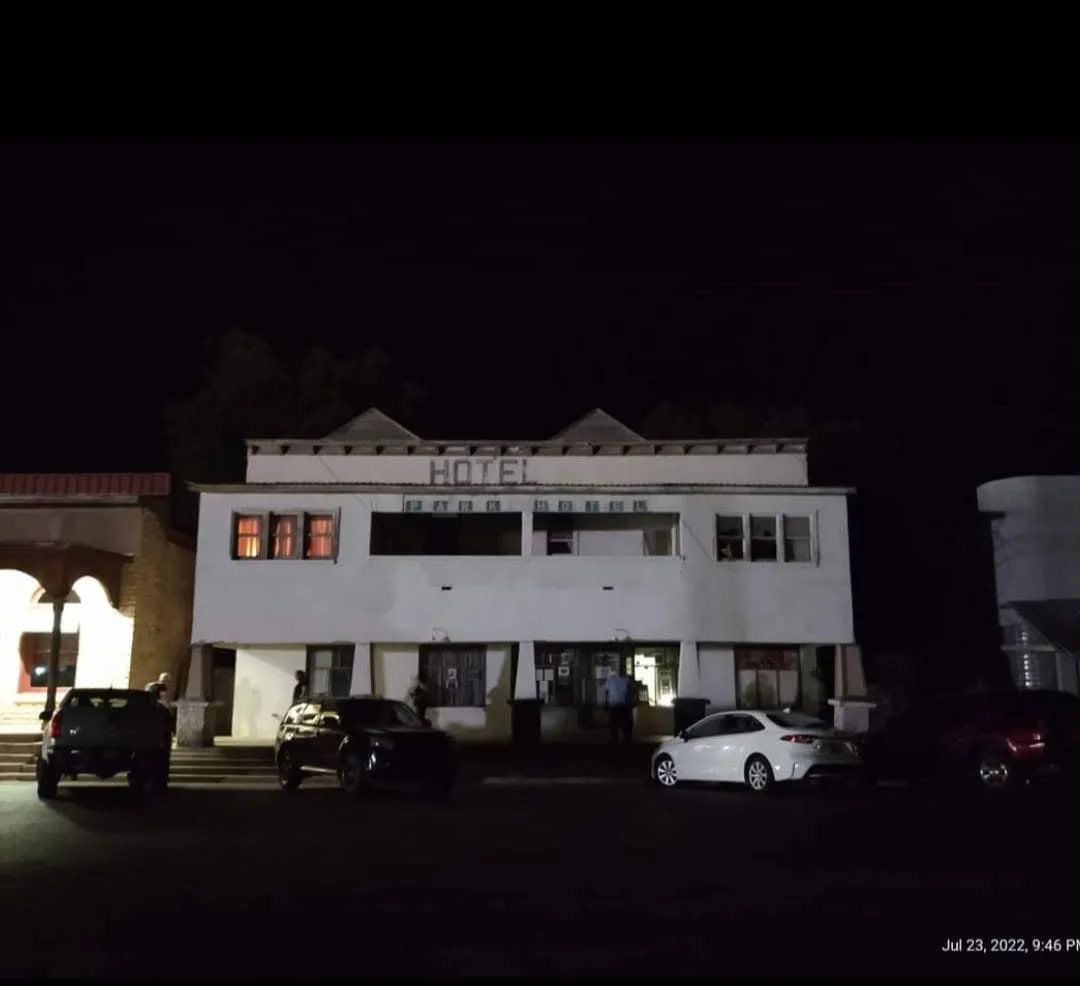
Olde Park Hotel at night
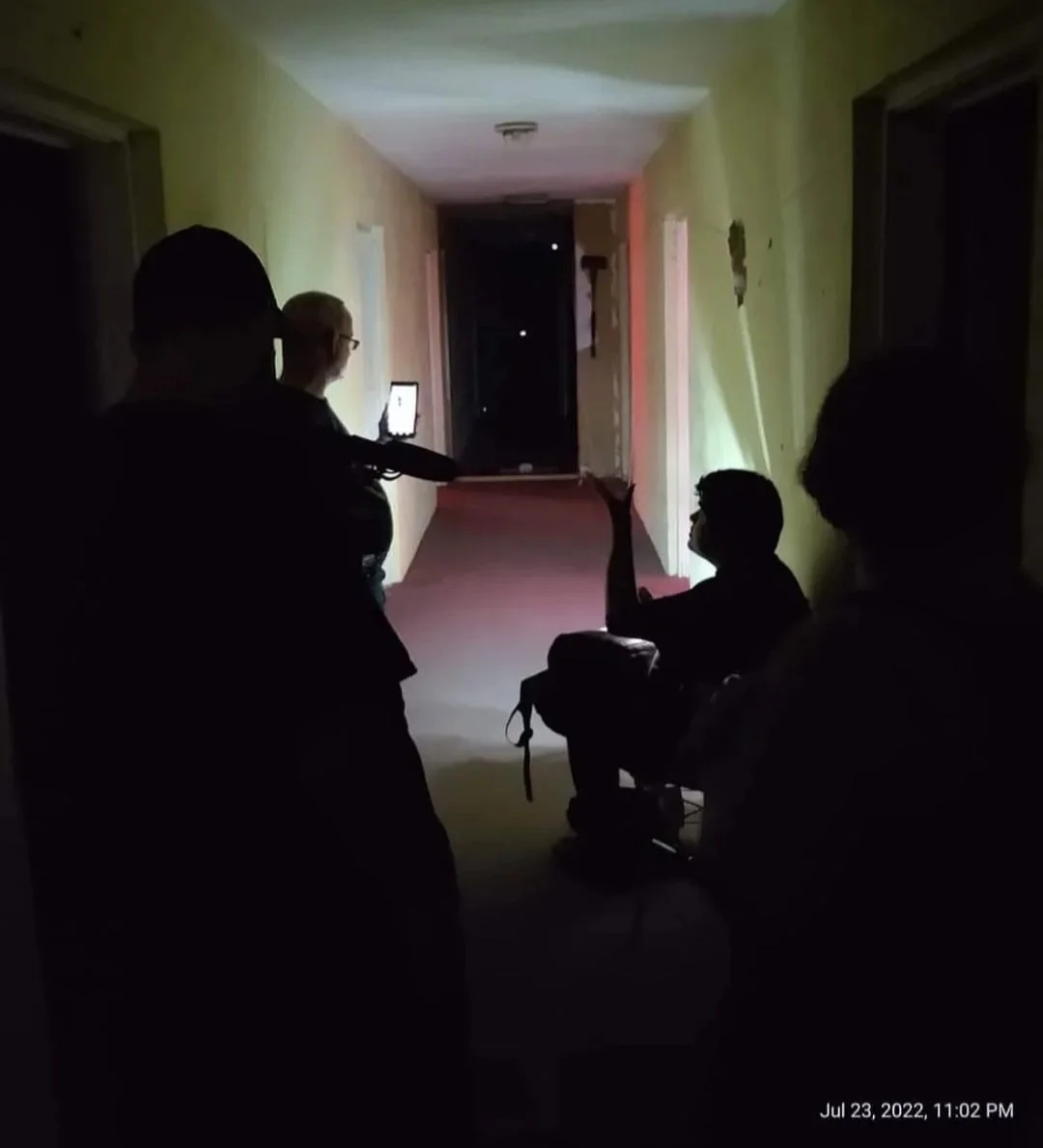
Our last investigation back in 2022.
9. Olde Park Hotel — Ballinger
The Olde Park Hotel has worn nearly every hat a small Texas building can wear. Built in the 1880’s, it is believed it served as a bunkhouse/lodging for railroad workers and cowboys. It later became the Three Sisters Hotel followed by becoming a general store, meeting hall, courthouse, boarding house, saloon, medical facility, funeral parlor, and a brothel over the years. It may have also served as a bootlegging site during Prohibition. Local legend even places outlaw John Wesley Hardin spending some time in its saloon, though that has yet to be proven or validated.
The Keel family purchased the property in 1922 and gave it the name it carries today: Olde Park Hotel. In more recent years it passed to owners Dan and Connie Lafave, who opened it to the public for ghost tours and overnight stays, and as of 2025 ownership shifted again to Chad and Leslie Wandel, who've taken on restoring the building.
Ghost Stories and Hauntings
The Lady in White / Phantom Lady — The hotel's signature apparition, seen drifting through hallways in a Victorian-style gown. Some people believe she was a guest who met an untimely end, others believe her to be a part of the hotel's brothel past.
Room 4 — Guests report a sudden temperature drop, an overwhelming sense of being watched, unexplained knocking on the door and walls, and electromagnetic field (EMF) readings that spike without cause or explanation.
The Doll Room — The hotel boasts a number of "haunted" dolls that appear to move on their own. The room is often described as one of the most unsettling rooms in the building.
Sounds and physical activity — Heavy footsteps described as sounding like cowboy boots, men voices, women's voices, doors that open, close, and lock on their own, and reports of guests being touched.
Visiting
Unlike most of the sites on this list, the Olde Park Hotel operates as a working paranormal attraction offering public ghost tours and overnight stays. It's been featured on multiple paranormal shows, so it's a legitimate location. My team and I have been there multiple times and I imagine we will stay there again.
10. Baylor University (Carroll Science Hall) — Waco
Baylor University is the oldest continuously operating university in Texas, chartered by the Republic of Texas on February 1, 1845 — signed into law by President Anson Jones. It grew out of an 1841 push by Robert E. B. Baylor, James Huckins, and William Milton Tryon to establish a Baptist university in Texas. The school opened in 1846 in Independence, Texas, with preparatory classes starting that May and full college coursework following in June. Baylor subsequently relocated to Waco in 1886. Main Building (1887) and Georgia Burleson Hall (1888) were the first two structures raised on the new Waco campus and remain today.
Ghost Stories and Hauntings
Carroll Science Hall — The Ghost of Rufus Burleson — President Rufus C. Burleson oversaw construction of Carroll Science Hall, but died before it was completed. Students have reported seeing his apparition on the building's staircase.
Armstrong Browning Library — The library holds personal possessions of poet Elizabeth Barrett Browning, and her ghost is said to appear at various points on the second floor. Legend says, an electrician was crushed to death when an elevator he was working on plunged from an upper floor. He is the one blamed for the elevator's persistent malfunctions and reported activity in the basement.
Brooks Residence Hall — In the early 20th century, a student who regularly played violin on the fifth floor reportedly died of the flu. Afterward, students in the hall repeatedly heard violin music with no legitimate cause.
Texas Ranger Hall of Fame and Museum — Located near campus in Waco, this museum houses Bonnie and Clyde's actual guns alongside the weapon of the Texas Ranger who helped ambush them. Staff have reported hearing disembodied footsteps, seeing shadows, and hearing the sound of firearms clicking at night.
Visiting
Baylor is a private university campus in Waco, open to walk around during the day. The historic Quadrangle (including Georgia Burleson Hall and the area around Carroll Science) is publicly accessible, and Armstrong Browning Library operates as a public research library and museum with regular visiting hours. Brooks Residence Hall remains an active dorm and isn't open to outside visitors. The Texas Ranger Hall of Fame and Museum is a separate public attraction that requires ticket purchase if you want to round out a Waco haunted-history trip.
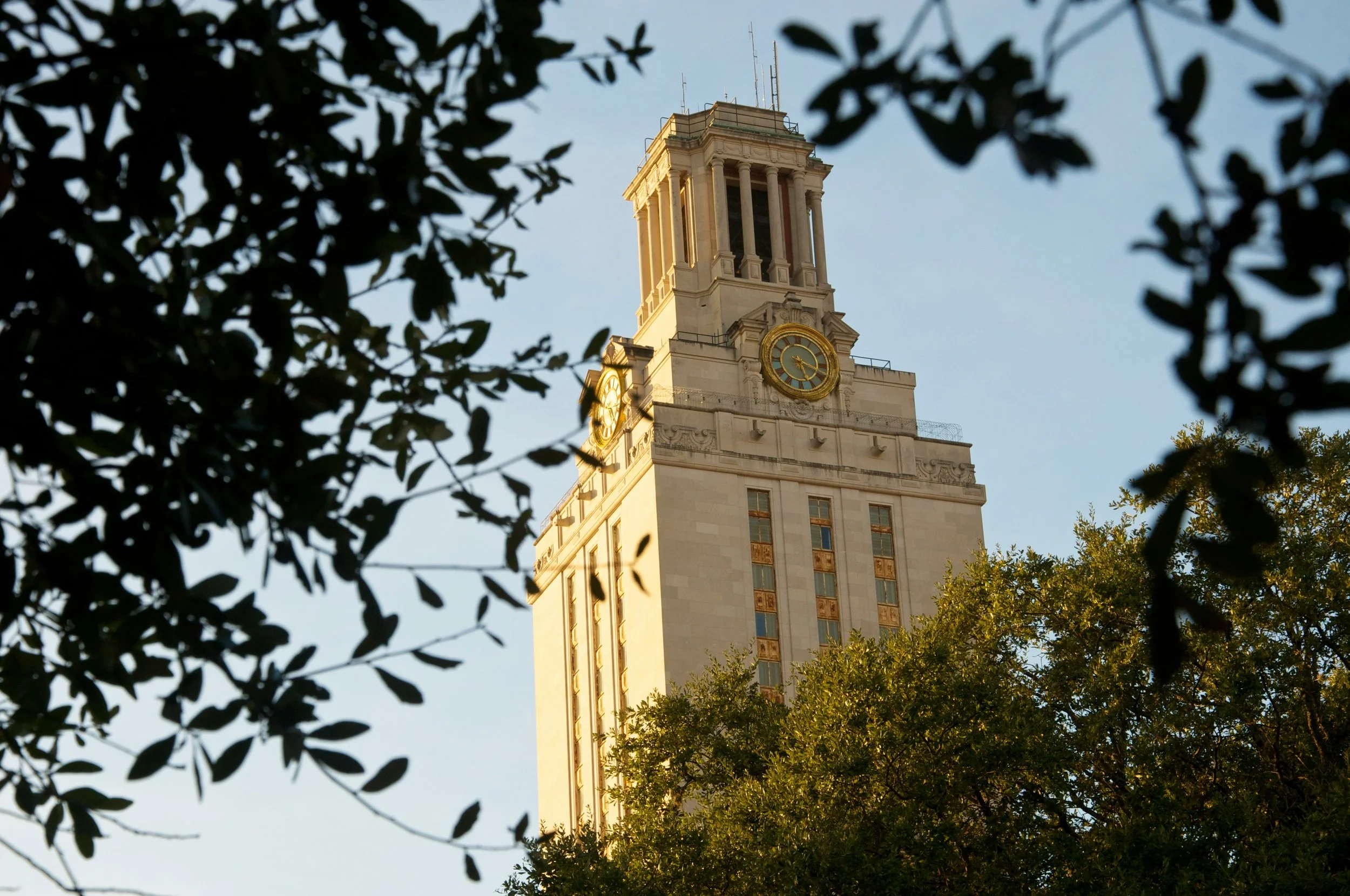
11. University of Texas at Austin (Littlefield House) — Austin
The University of Texas was created by the Texas Constitution of 1876 but didn't open until 1883. The cornerstone of the original Main Building was laid in November 1882, and the university formally opened September 15, 1883.
One somber chapter belongs in any honest chronology of the campus: on August 1, 1966, a gunman opened fire from the observation deck of the UT Tower killing more than a dozen people in what's considered one of the first mass campus shootings in U.S. history. It remains a defining, tragic event in the university's story, and it's worth acknowledging with the respect and gravity it deserves rather than folding into ghost-story content.
Ghost Stories and Hauntings
The Littlefield House — Built in 1893/1894 for cattle baron and Confederate veteran George Littlefield, the Victorian mansion sits on the northern edge of UT's campus and now houses university offices. UT's most enduringly "haunted" building, and unlike Old Main, this one isn't debunked. After George's death, Alice lived in the house another 15 years before bequeathing it to the university.
The hauntings attributed to it are extensive: unexplained piano music and singing (believed to be Alice, who was an accomplished pianist), objects moving on their own, an apparition believed to be a former housekeeper, and faces have been observed in various windows. Alice reportedly suffered severe anxiety and paranoid episodes later in life. Legend says she was confined to her home for her own safety, although there is nothing that validates or confirms it. Staff and visitors report seeing her apparition on the second floor and hearing disembodied footsteps on the stairs. The house is closed to the public today, used only for offices and university events.
The UT Tower — The Tower opened in 1937, standing just oveer 300 feet tall. On August 1, 1966, Charles Whitman climbed to the 28th-floor observation deck and opened fire on the people below, killing 16 (later counted as 17 when a victim died decades on from his wounds, plus an unborn child) and wounding more than 32 — one of the first mass shootings on an American campus. He was killed by Austin police officers Houston McCoy and Ramiro Martinez.
The deck closed for a period of time for repairs, then it reopened. Sadly, the tower would see a string of suicides before the university closed the observation deck to the public permanently in 1974, citing both the shooting's legacy and the suicides. It stayed closed for almost 25 years until President Larry Faulkner reopened it in 1999 with the deck now enclosed by a webbed safety barrier. A memorial garden near the turtle pond lists the victims' names.
The haunted claims.
They're modest compared to other UT Austin sites you've covered. There have been reports that security guards stationed on the deck describe lights flickering and fading with no cause……..some guards allege they've had encounters with Whitman's spirit.
Visiting
UT Austin is a large public university campus, open to walk around during the day,. The Littlefield House sits at the northwest edge of campus at Whitis Avenue and West 24th Street — you can view its exterior and famous Himalayan cedar tree, but it's closed to public entry, used strictly for offices and events.
***************
Step into corridors where history whispers between lockers and chalk dust holds secrets—our haunted schools are classrooms of the uncanny, perfect for curious minds and brave hearts. Explore aged auditoriums, creaky stairwells, and forgotten classrooms where stories of restless students and lingering lessons come alive after dusk. Come for the architecture and history, stay for the spine-tingling tales that turn every desk into a portal to the past. Bring your camera, your courage, and an appetite for the eerily educational—these schoolyards of spirits are waiting to teach you something unforgettable.
Make this beautiful day count!
Annette