
The Ghosts of Jefferson, TX
Jefferson, Texas — a small, atmospheric town in East Texas — is equal parts 19th-century riverport, Civil War crossroads, and paranormal playground. Once a bustling port on Big Cypress Bayou, Jefferson now draws history buffs and ghost hunters with its preserved antebellum architecture, antique shops, and a thick roster of spectral stories.
History
Early boom: Jefferson’s location on Big Cypress Bayou made it a major inland port in the mid-1800s. Flatboats, steamboats, and the Red River trade connected Jefferson to New Orleans and beyond. By the 1840s–1860s it was one of Texas’s busiest inland ports.
Economy and culture: The town prospered on cotton, timber, and river commerce. Wealth from trade produced ornate homes, hotels, theaters, and mercantile buildings; many survive today and form the town’s historic core.
Civil War and decline: The Civil War and shifts in river navigation (sandbars, alternative trade routes, railroads) undercut Jefferson’s dominance. Postwar economic declines and a catastrophic flood/infrastructure changes gradually reduced traffic. By the early 20th century Jefferson’s population had shrunk, leaving many 19th-century buildings intact.
Preservation and tourism: In the mid-20th century preservation efforts and a growing interest in heritage tourism revived Jefferson as a destination. Today its downtown is a walking museum of Victorian-era architecture, boutique shops, and museums that celebrate river-town life.
Notable historic sites
The Grove: A stately antebellum home with period furnishings and gardens that reflect Jefferson’s prosperous era.
Jefferson Historical Museum: Exhibits on riverboat commerce, Civil War era, local industry, and artifacts from the town’s heyday.
Historic Jefferson Square and downtown: Lined with preserved brick storefronts, old hotels, and carriage houses that make it easy to imagine 19th-century life.
Caddo Lake and Cypress Bayou: Nearby natural attractions that were integral to Jefferson’s trade routes and are atmospheric settings for ghost stories.
Ghost stories and hauntings Jefferson’s long history, river tragedies, wartime trauma, and preserved Victorian houses provide fertile ground for ghost lore. These are some of the town’s most commonly told hauntings, mixing oral tradition, local reports, and tourism-oriented storytelling.
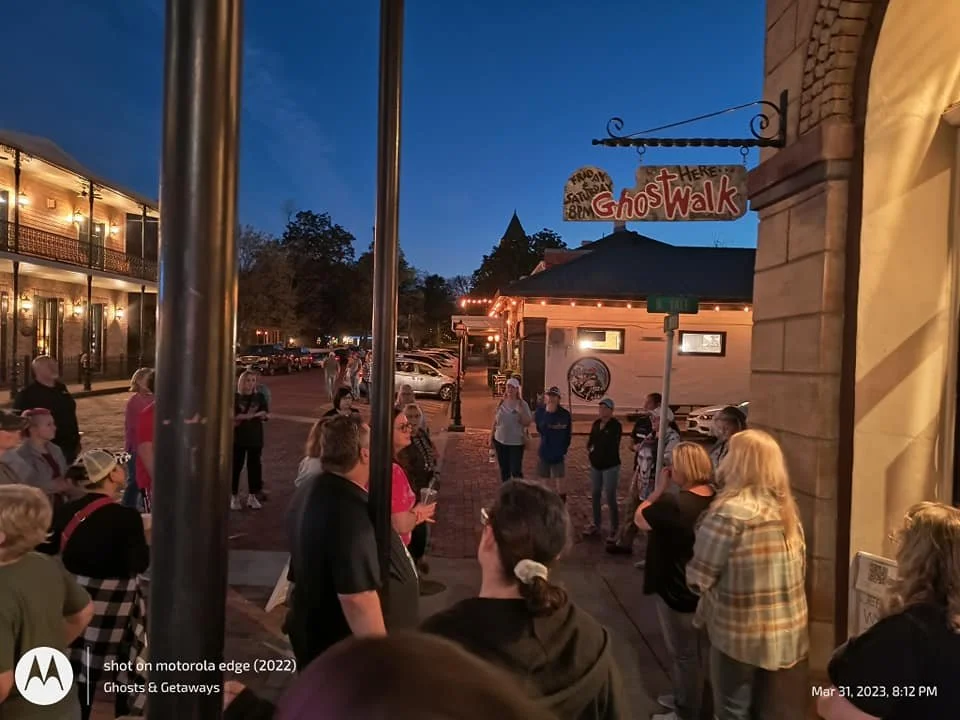
The local ghost tour met in front of the Kahn Hotel during our stay.
The Excelsior House Hotel/ Union Bank Inn
Background: One of Jefferson’s elegant old hotels with a long hospitality history.
Phenomena: Guests report unexplained knocks, lights turning off and on, apparitions in period dress, and the scent of cigar smoke or perfume with no source. Some staff and guests claim furniture shifts and items misplaced after cleaning.
Story notes: Hotels commonly accumulate layered hauntings from transient guests and long histories of grief or dramatic events; the Excelsior is no exception in local lore.
The Jefferson General Store / Downtown hauntings
Background: Brick storefronts and hotels lining the square host multiple anecdotal hauntings.
Phenomena: Shadow figures in windows after hours, voices, the sound of carriage wheels or horses when streets are empty, and spectral figures seen in second-floor windows.
Story notes: Many of these reports come from shop owners, night workers, and tourists on guided evening walks. The town’s ambient 19th-century feel amplifies suggestibility.
River and boat tragedies — the bayou’s dead
Background: The bayou that made Jefferson wealthy also claimed lives: drownings, steamboat accidents, and seasonal floods.
Phenomena: People report late-night lights drifting on the water, the sound of distant whistles, or the feeling of being watched along the banks. Some fishermen and night walkers speak of shapes in the fog and sudden chills.
Story notes: Water-related hauntings are common in river towns; Jefferson’s fog and cypress line create an eerie stage for these tales.
The Grove and mansion hauntings
Background: Prominent homes such as The Grove have long family histories and often appear in ghost lore.
Phenomena: Apparitions in period clothing, footsteps in empty rooms, and cold spots. Some stories mention sightings of a woman in white or a sorrowful figure on the staircase.
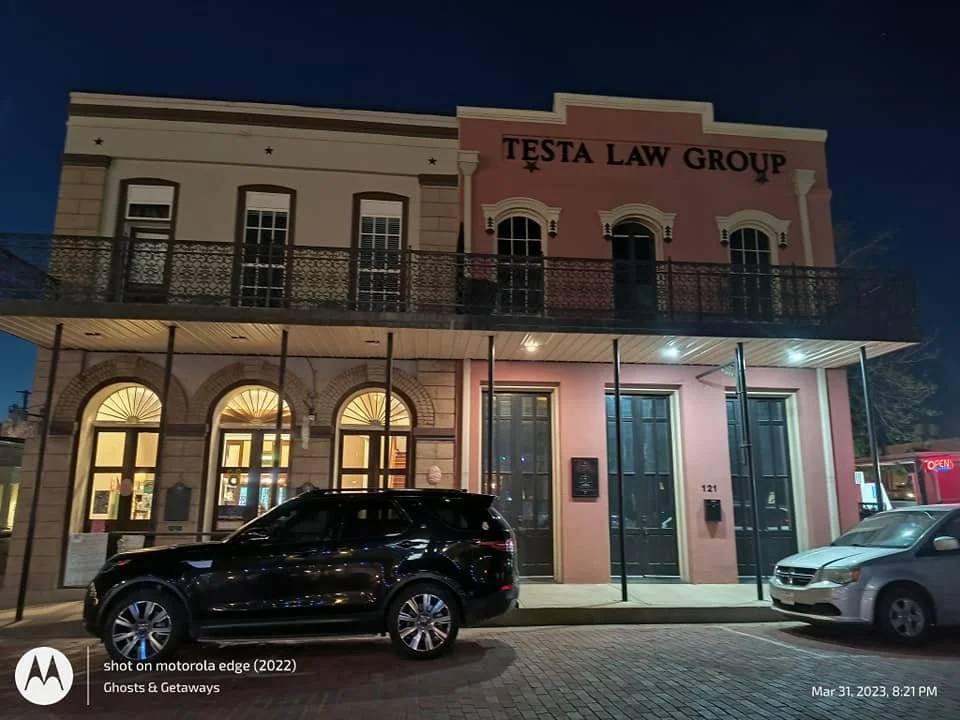
Front of the Kahn (entrance on the left side).
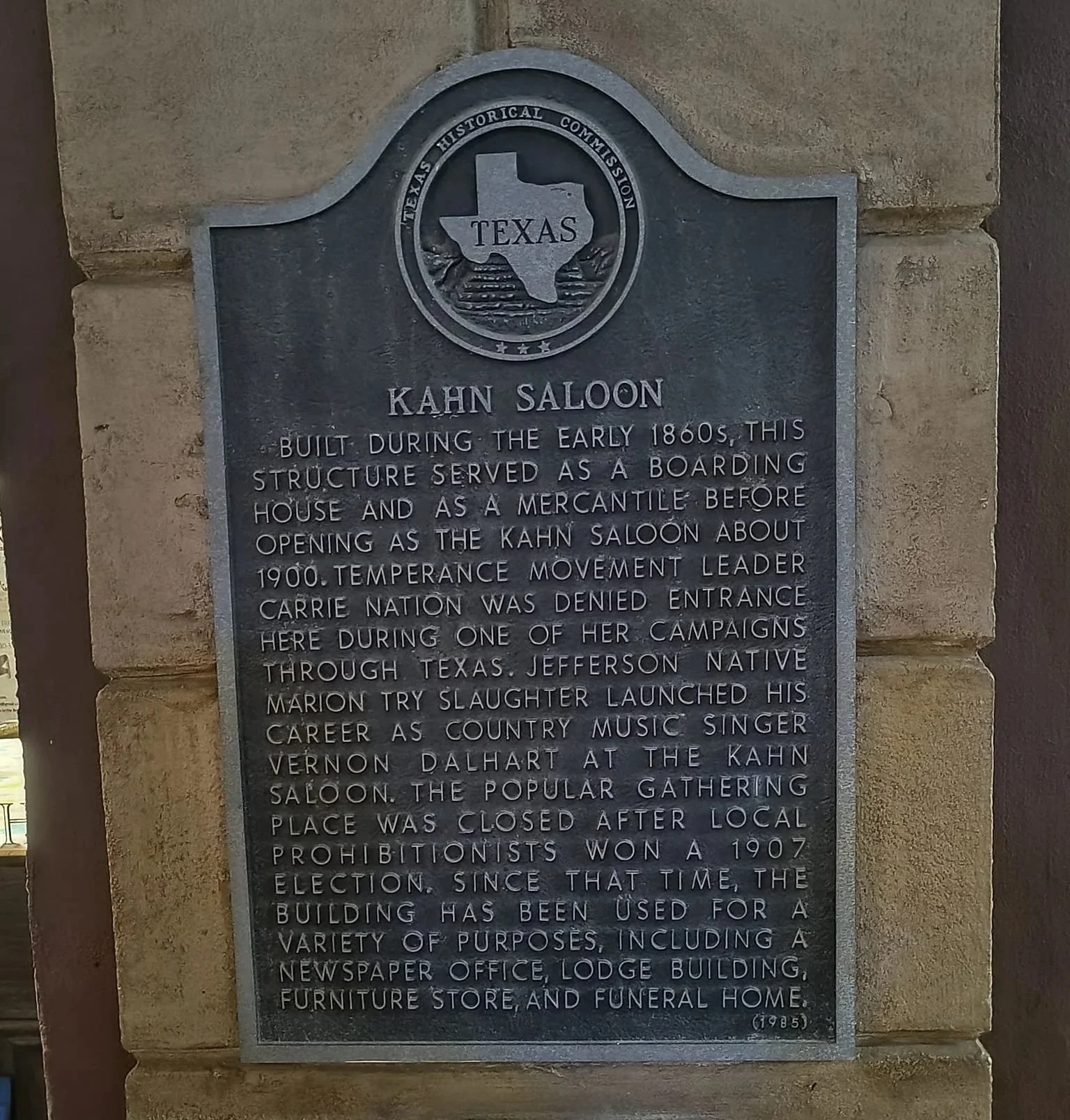
Kahn Hotel — Jefferson, Texas
The Kahn Hotel opened in the late 19th century in Jefferson, Texas, one of the state’s best-preserved river towns. Built by members of the Kahn family—German-Jewish immigrants who were prominent merchants in Jefferson—the hotel served riverboat passengers, traveling businessmen, and visitors drawn to the town’s busy Red River port. Over the decades the building has seen multiple uses and renovations: its earliest life as an elegant lodging for 19th-century travelers, later commercial uses, periods of decline when the river traffic waned, and eventual restoration as part of Jefferson’s heritage and tourism push. The structure’s architecture reflects Victorian commercial style with period details restored to evoke the hotel’s heyday.
The Kahn family were civic leaders and retailers who helped shape Jefferson’s mercantile district; their name on the hotel connects it to the town’s boom era (roughly 1840–1870) and the later 19th-century attempts to sustain commerce after river traffic slowed. Today the Kahn building is regarded as an important piece of Jefferson’s historic fabric and is included in many heritage walks and ghost-tour circuits.
Ghost stories and reported hauntings
The Kahn Hotel is one of Jefferson’s better-known haunted locations among locals and paranormal enthusiasts. Accounts vary—some are dramatic, some are subtle—but several recurring themes appear in oral histories and investigations.
The Lady in White
Multiple visitors and guides report sightings of a woman in a white dress who appears on stair landings or at the end of hallways. Witnesses describe her as wearing late-19th- or early-20th-century attire, gliding rather than walking, and sometimes vanishing into a wall or doorway. Some say she’s mourning—her posture and expressions are described as sorrowful. Local legend links her to a guest who lost a child or a spouse, though historical records don’t pin a single identity to the figure.The Watcher / Businessman
Several staff and tour guides have reported a presence in the old lobby and office area that feels “watchful”—an energy associated with a male figure in period clothing, possibly tied to one of the Kahn family members or a long-ago merchant. People report cold spots, the sensation of being observed, and the sound of footsteps when no one is there. On occasion investigators have recorded low-frequency bangs or the faint tapping of cane-like knocks.
Moving Objects and Cold Spots
Guests and paranormal groups have reported objects appearing to move on their own—doors left open that are later found closed, small items displaced, and light fixtures that flicker in localized patterns. Many accounts include pronounced cold spots in particular rooms or at the top of the stairs, where digital thermometers show sudden drops of several degrees.Unexplained Voices and EVPs
During formal investigations, groups using audio recorders have captured ambiguous voices, whispering, and short phrases that some interpret as responses to questions. These EVPs are often low-volume and require interpretation, but they show a pattern familiar to other Jefferson hauntings—voices that answer questions about names, dates, or feelings.Childlike Activity
Reports of childlike laughter, the sound of small footsteps, and the sense of playful, mischievous energy come from the second floor. These phenomena are less threatening and more like the echo of past family life—children who once stayed there with traveling parents.
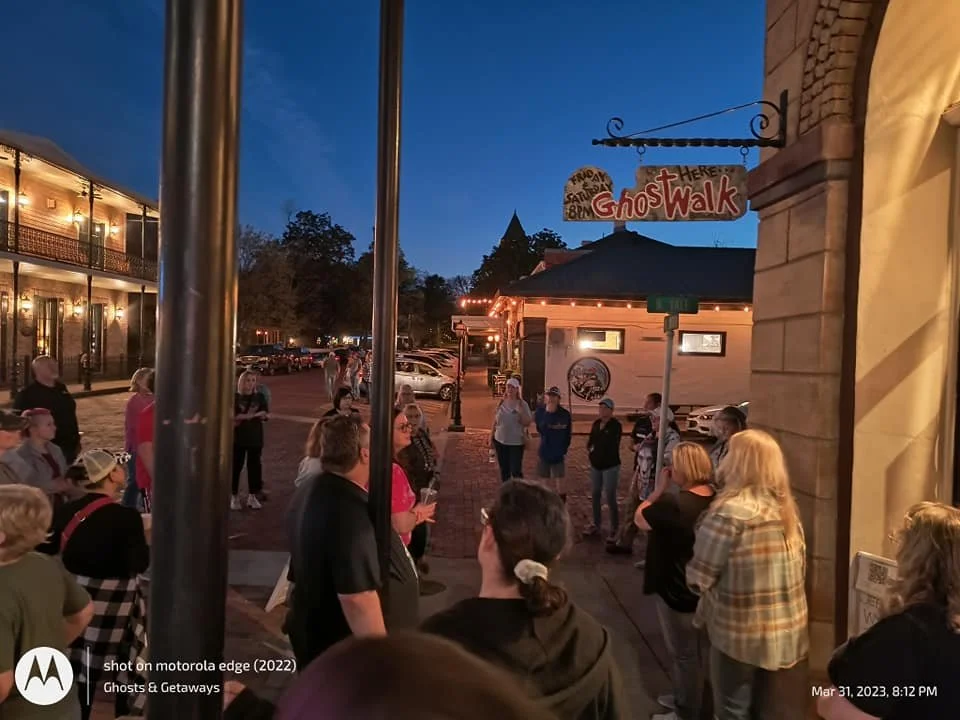
The local ghost tour gathers in front of the Kahn.
As with many historic hotels, the Kahn’s reported phenomena can be read several ways:
Historical layering: The building’s long life as a hotel, store, and boarding space means many people passed through—births, deaths, grief, business deals—and those layered stories often feed ghost lore.
Psychological / expectation effects: Jefferson prides itself on its haunted reputation; visitors primed to experience the uncanny are more likely to interpret ambiguous stimuli as supernatural.
Possible genuine residual or intelligent-type activity: For investigators who work in the field, the repetition of certain reports (Lady in White, footsteps, EVPs) suggests persistent local narratives that aren’t easily dismissed as one-off misperceptions.
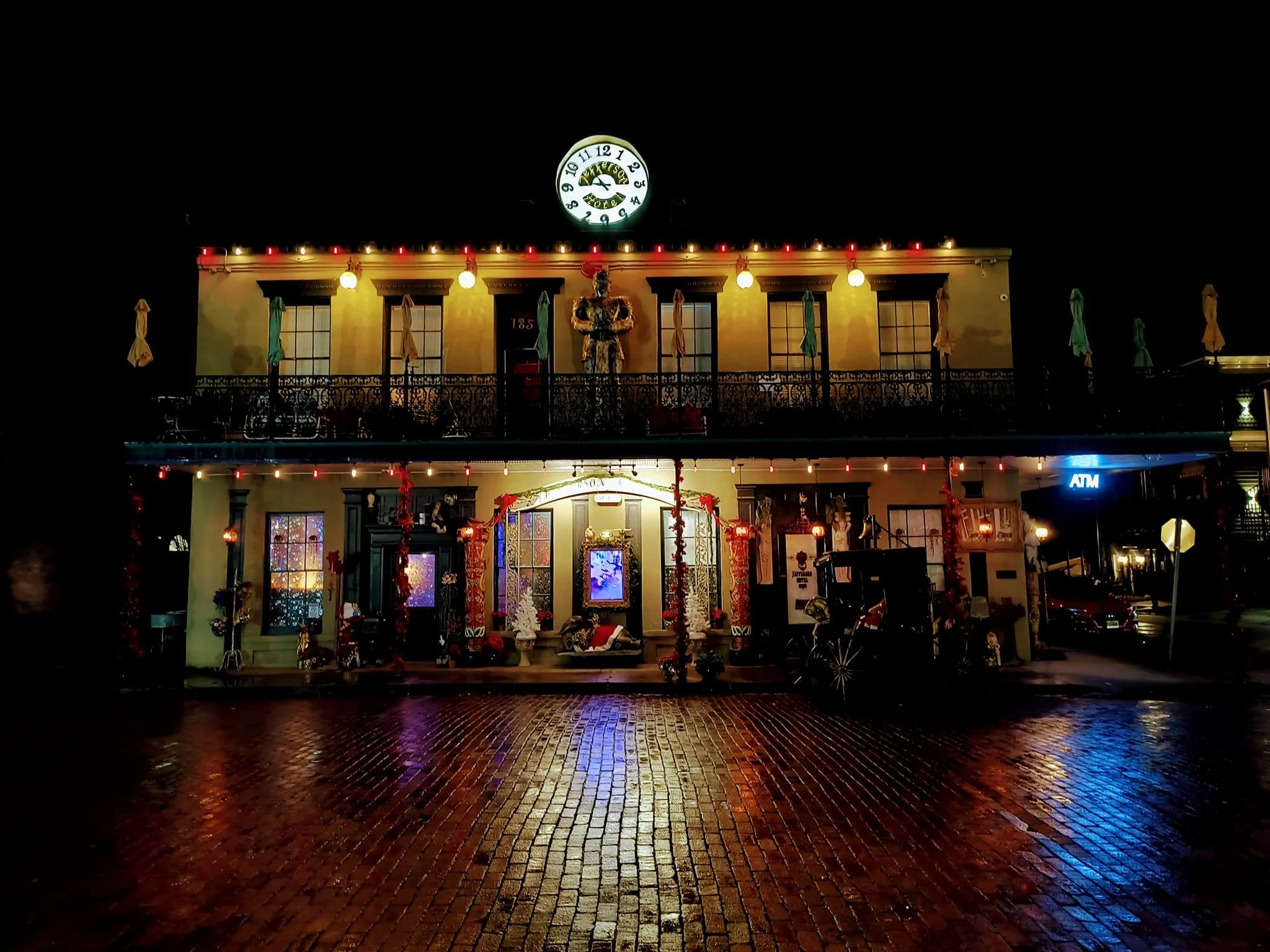
The Jefferson Hotel
The Jefferson Hotel is widely considered one of the most haunted locations in the state. Often confused with the Jefferson Hotel in Richmond, VA, the Texas landmark has a grittier, more "wild west" history involving cotton warehouses, brothels, and high-society scandals.
The building’s past is a timeline of Jefferson’s evolution from a booming river port to a quiet historic town.
Cotton Warehouse (1851): The structure was originally built as a massive warehouse to store cotton during Jefferson's "Golden Era" as the second-largest port in Texas.
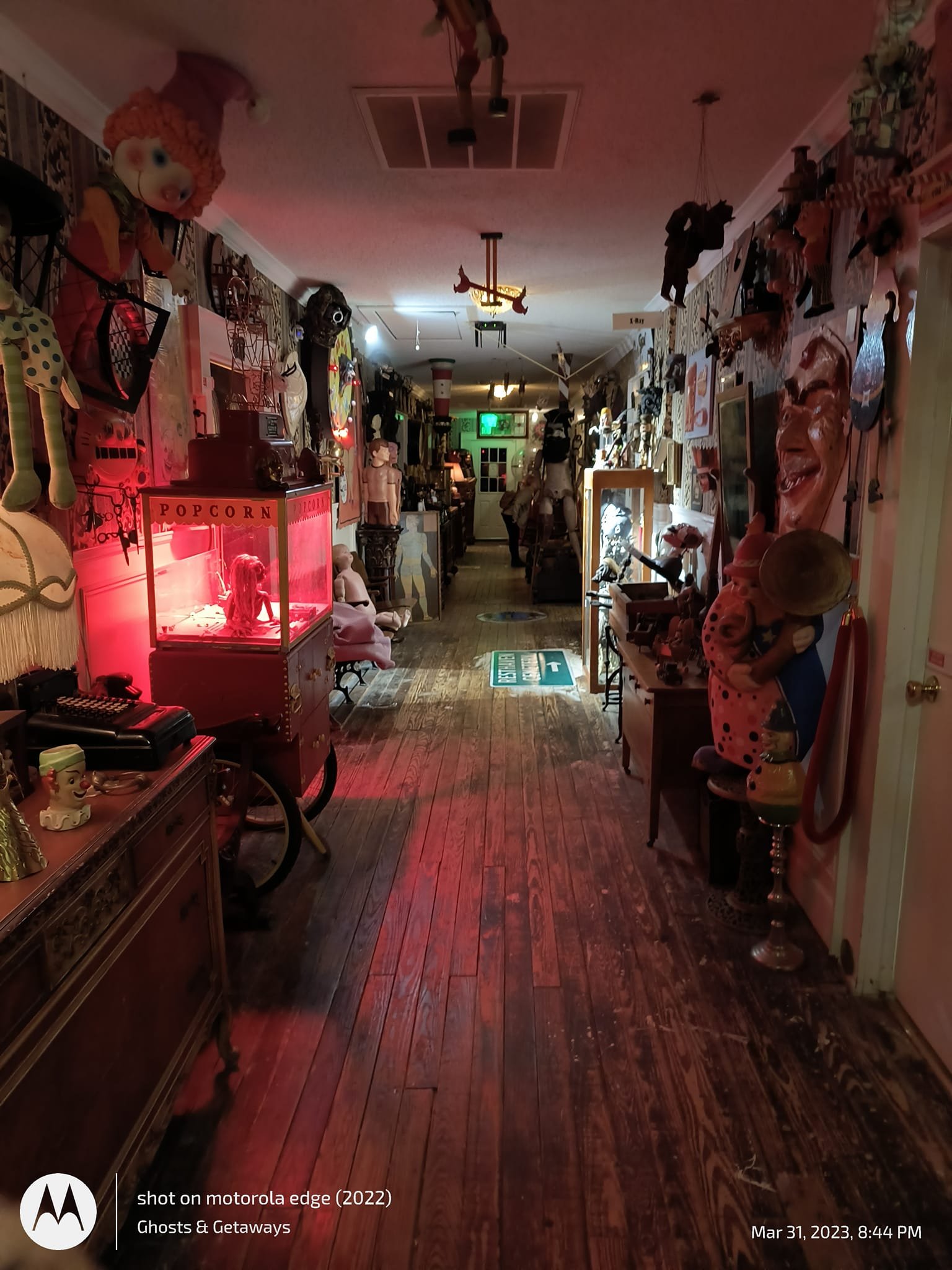
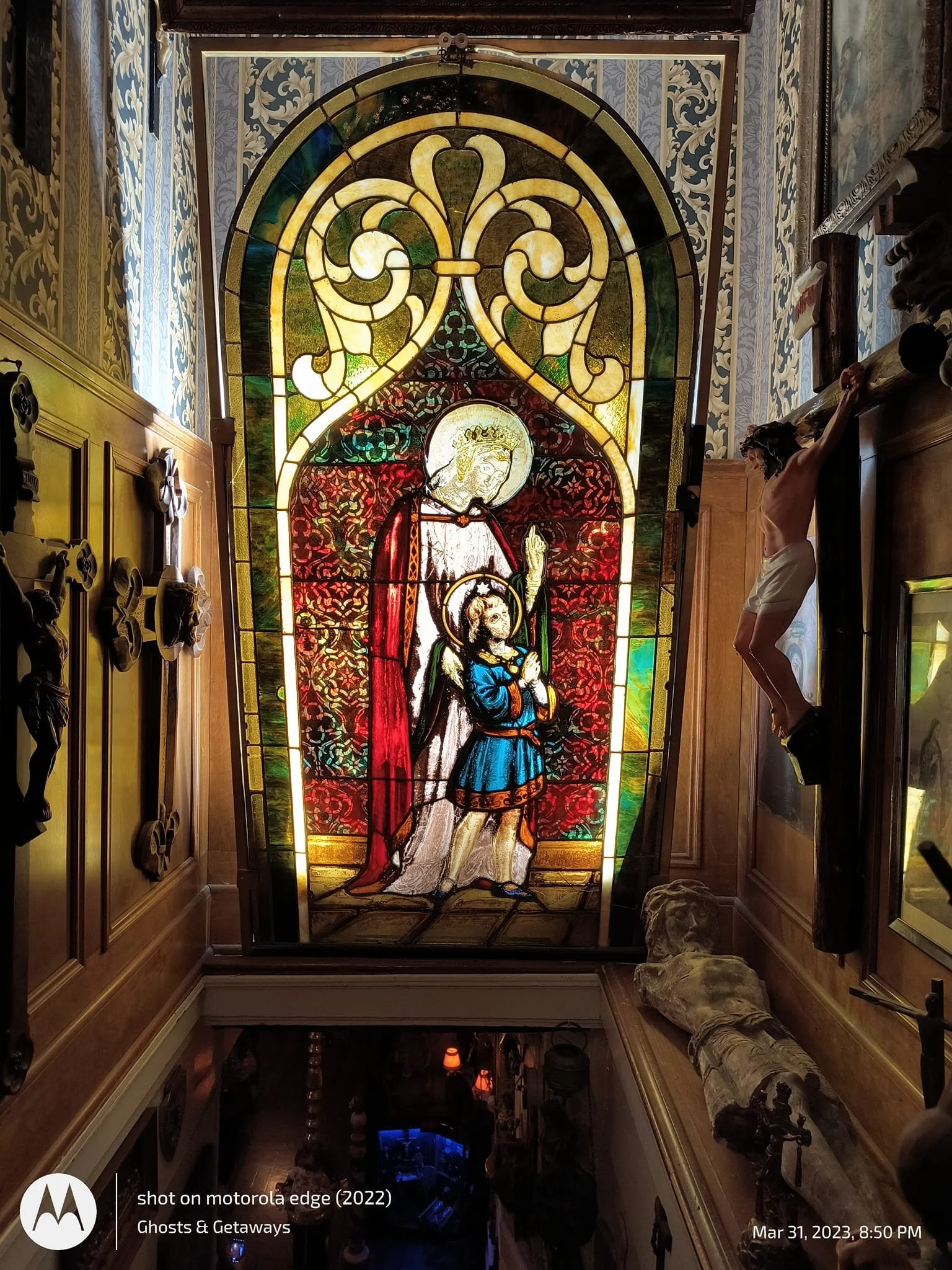
The Bordello Years: Following the decline of the river trade, the building served as a dance hall and a high-end brothel. The second-floor veranda, which still stands, was famously used by the "ladies of the night" to advertise to passersby.
The Crystal Palace (Prohibition Era): During the 1920s, it became a notorious speakeasy and gambling den known as the "Crystal Palace," where locals and travelers dodged the law to dance and drink.
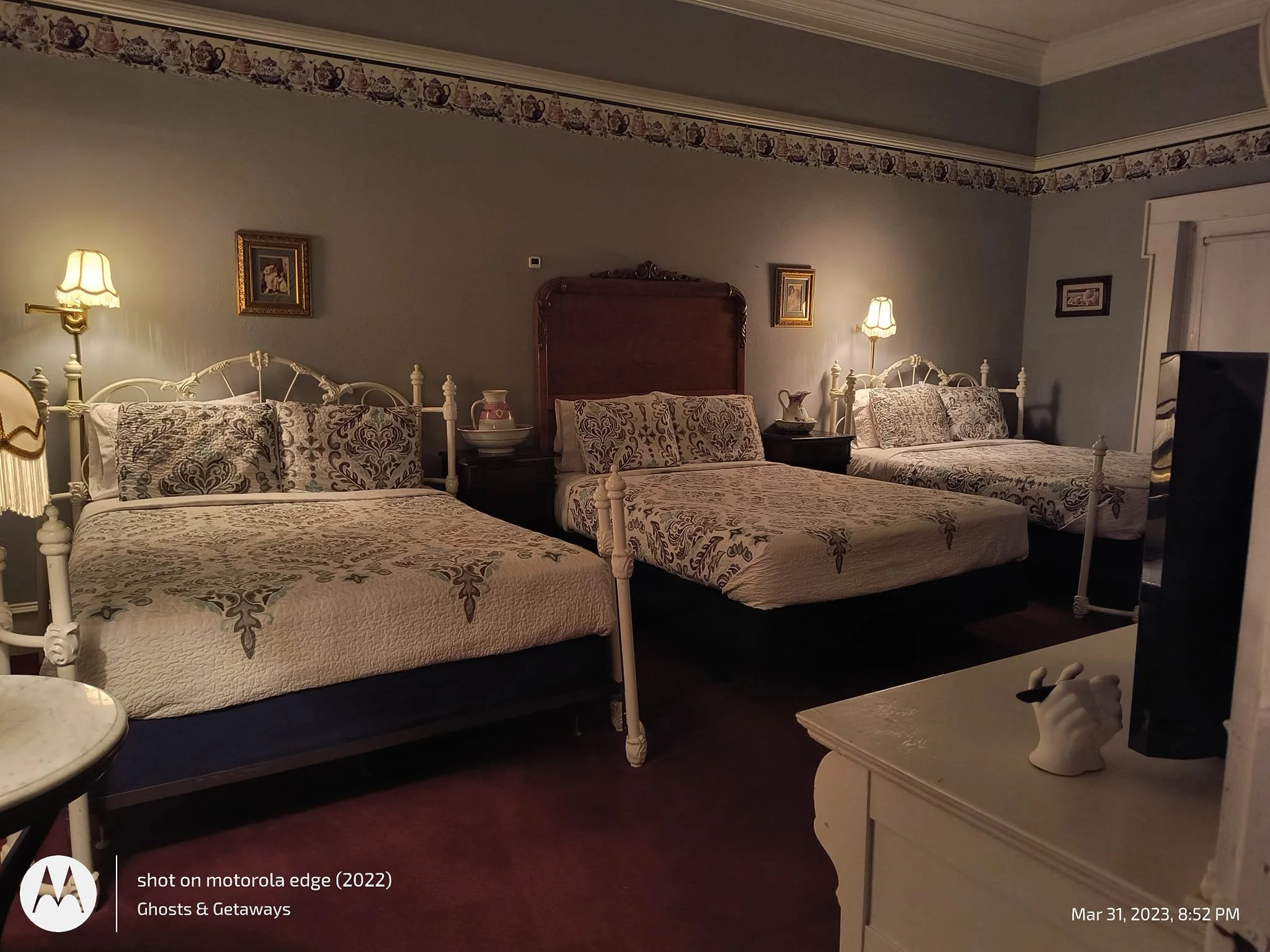
The Hotel Today: It now operates as a boutique hotel known for its period-accurate antiques and unique themed rooms.
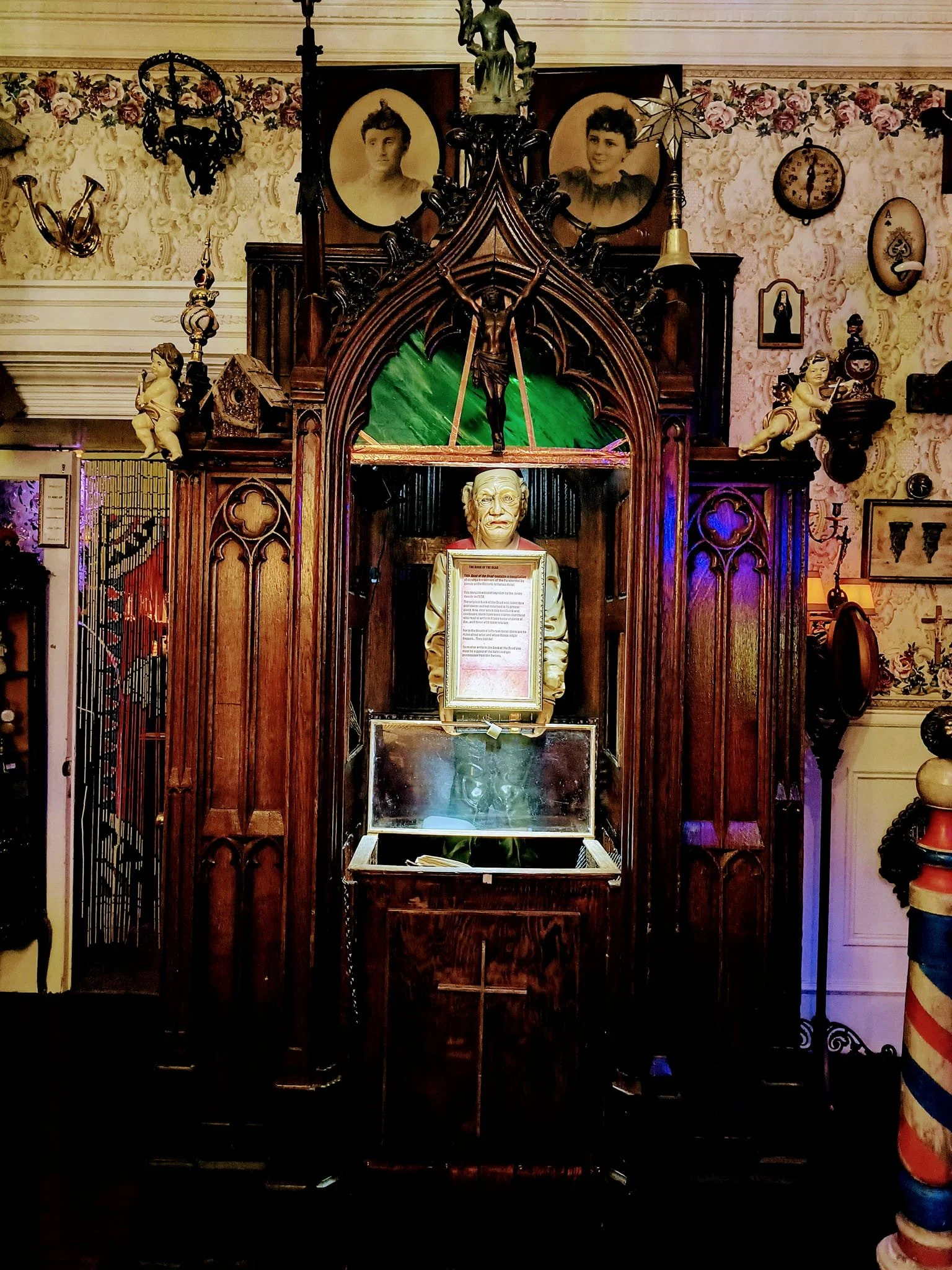
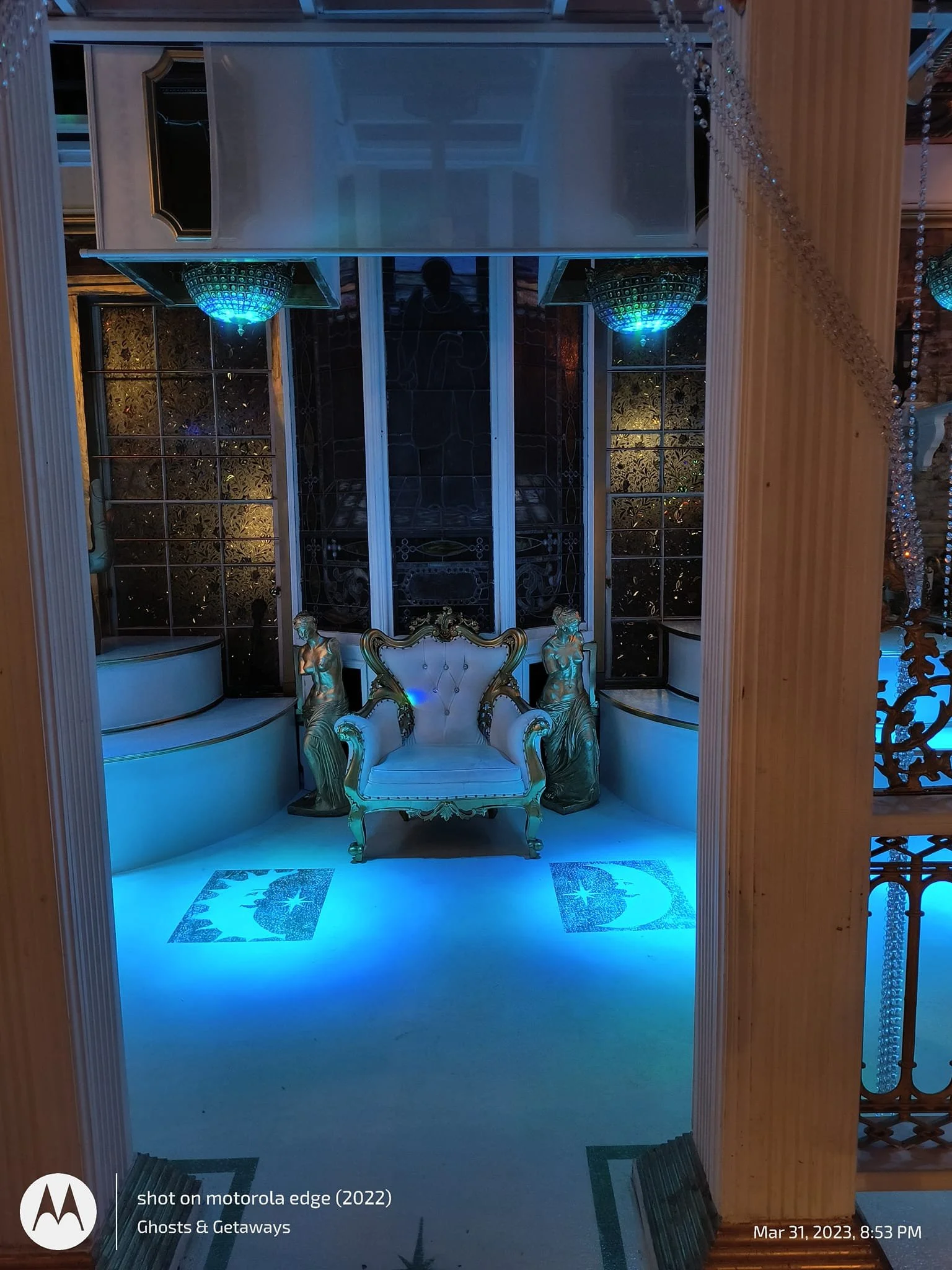
Room 19 and "Judy’s Mirror"
Room 19 is considered the most "volatile" hotspot in the hotel.
The Spirit: It is allegedly haunted by Judy, a teenage girl from the building's brothel days who was reportedly stabbed by a client and left to die in the bathtub.
The Activity: Guests frequently report seeing her face in the steam of the shower or finding messages like "Help Me" or "Get Out" scrawled in the condensation on the bathroom mirror.
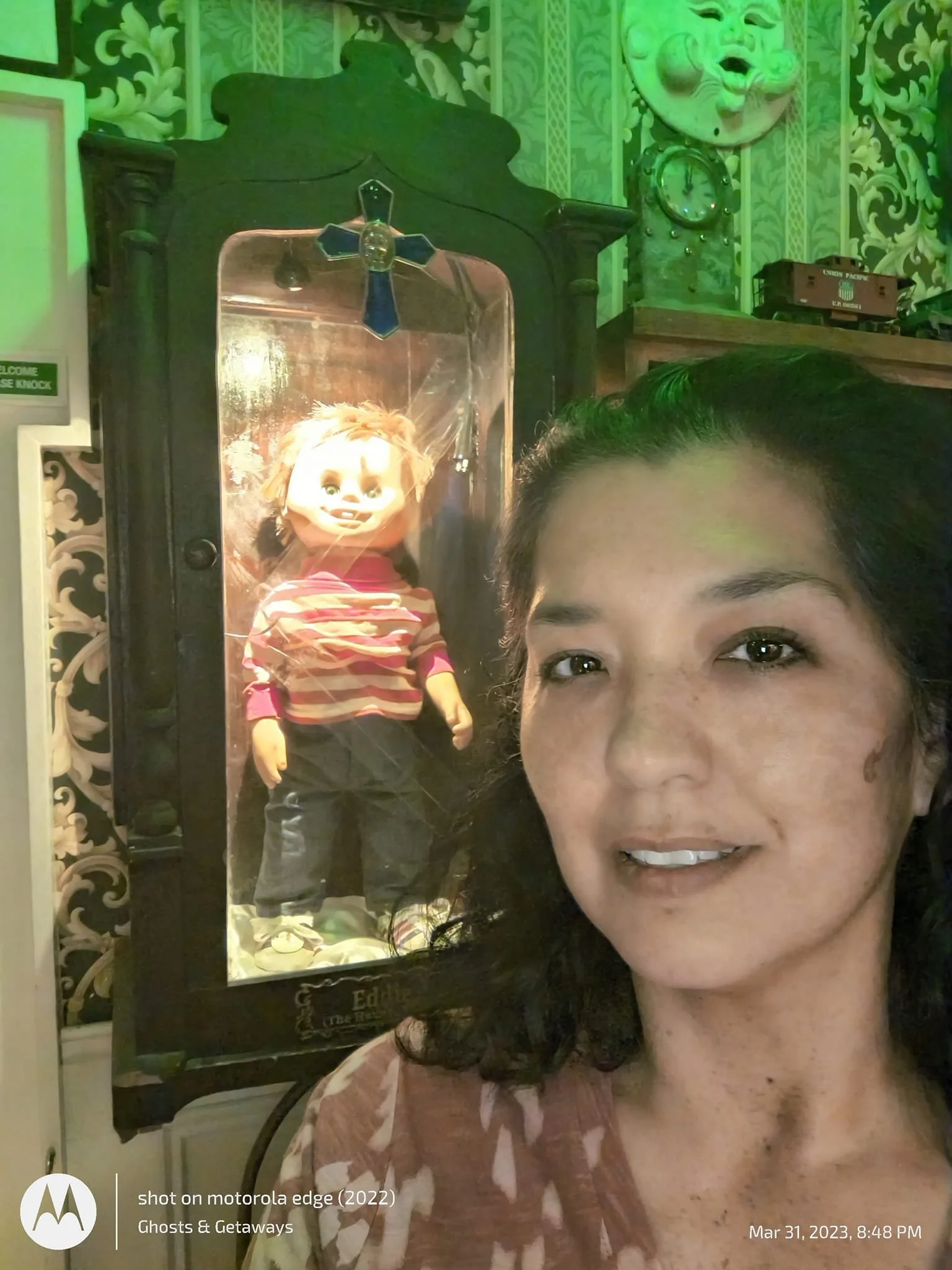
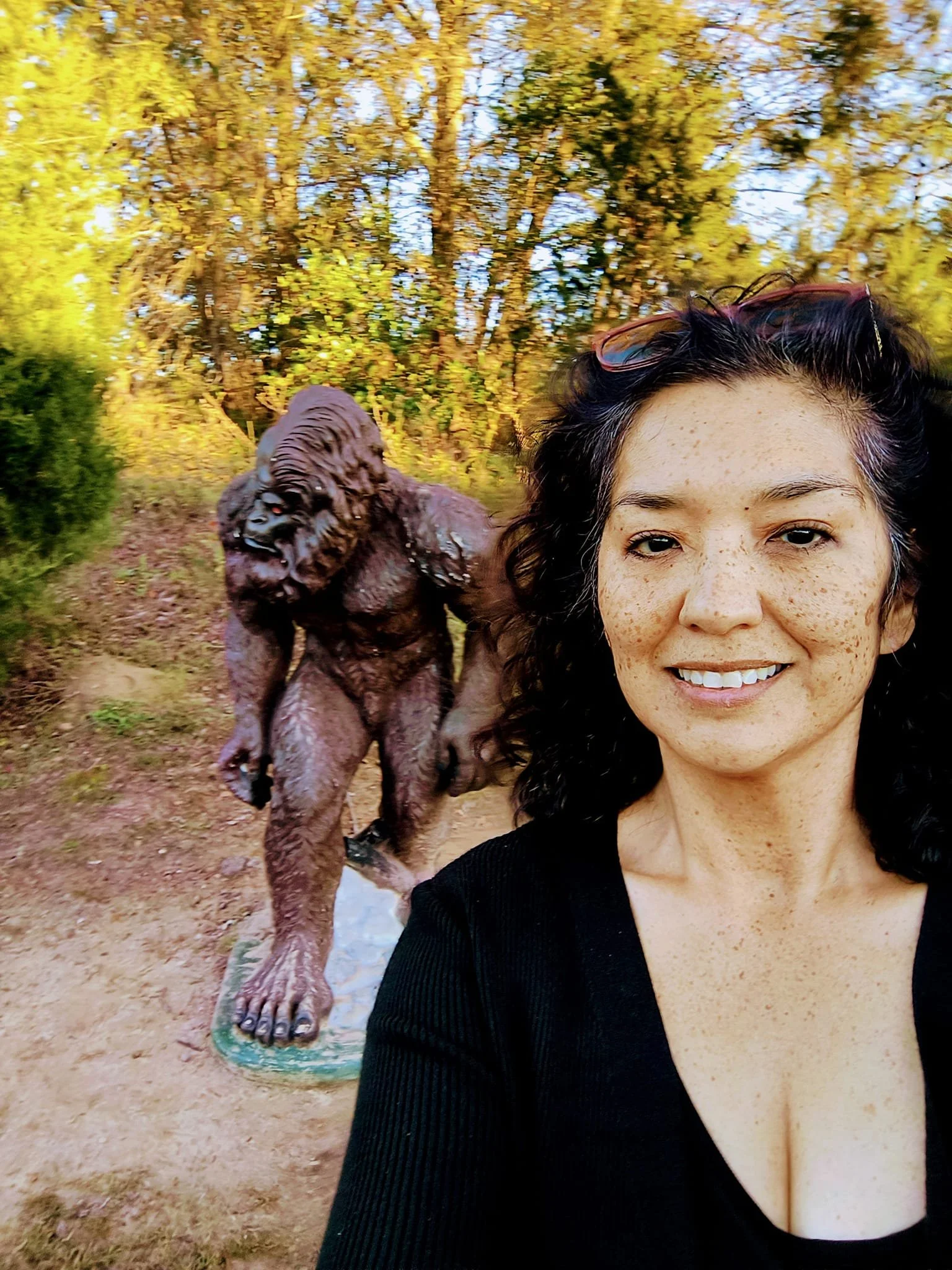
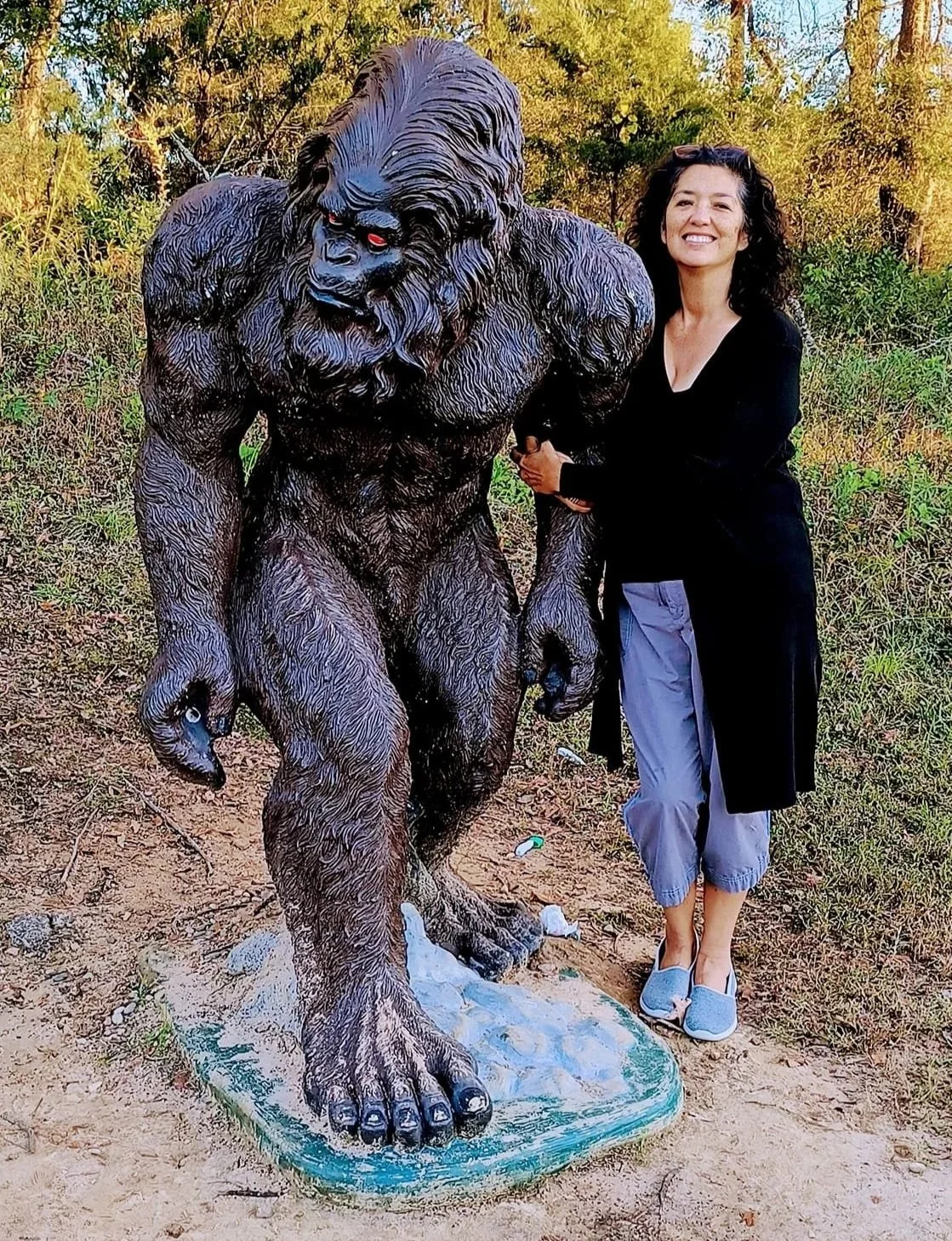
Me hanging out with Eddie who is believed to be haunted.
The Mill Children
A young boy in knee-britches and a girl in a pinafore are often seen playing in the hallways. They are believed to be the spirits of children who worked and died in the building during its time as a cotton warehouse. They are known for being mischievous—pulling hair, rattling door handles, and hiding guests' keys or jewelry.
The Vanishing Man
A tall male figure wearing a long duster coat and high boots is frequently spotted walking the halls. He is so lifelike that guests often follow him, thinking he is a fellow traveler, only to watch him vanish into a wall or a locked room.
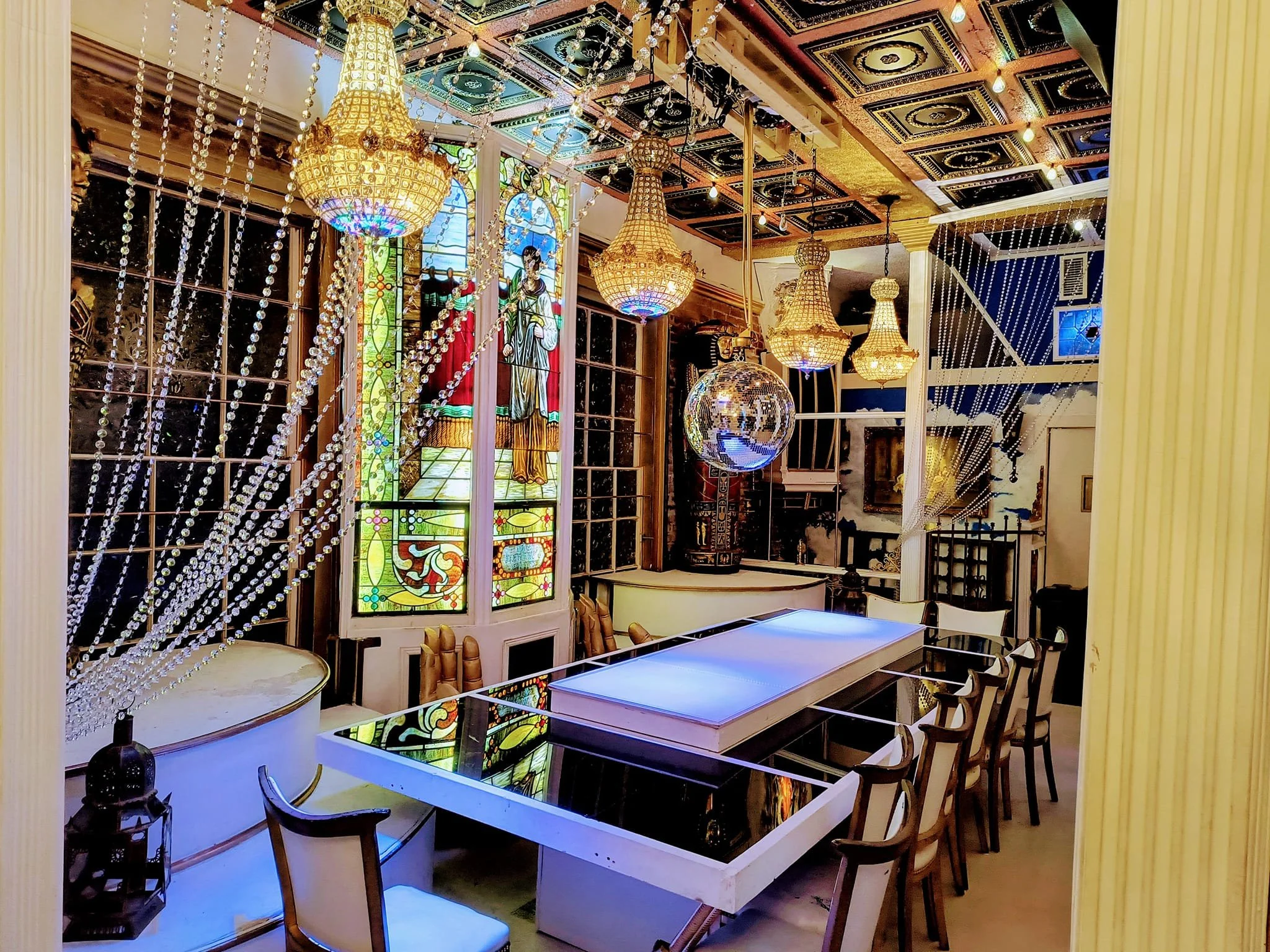
The Floating Woman in Red
A staff member once reported seeing a woman in a vibrant red dress on the sixth floor. As he approached to offer assistance, he realized she had no feet and was floating several inches off the ground before she vanished into thin air.
Unexplained Phenomena
The Switchboard: Former managers have reported the old front-desk switchboards lighting up as if empty rooms were "talking" to each other.
*****************
Jefferson, Texas, is often called the "Most Haunted Small Town in Texas," a reputation built on its atmospheric brick streets, Gilded Age architecture, and a history that includes the decline of a major river port and a series of tragic, violent legends.
……..so are you ready to visit?
Make this beautiful day count!
Annette