
The Ghosts of the Queen Mary
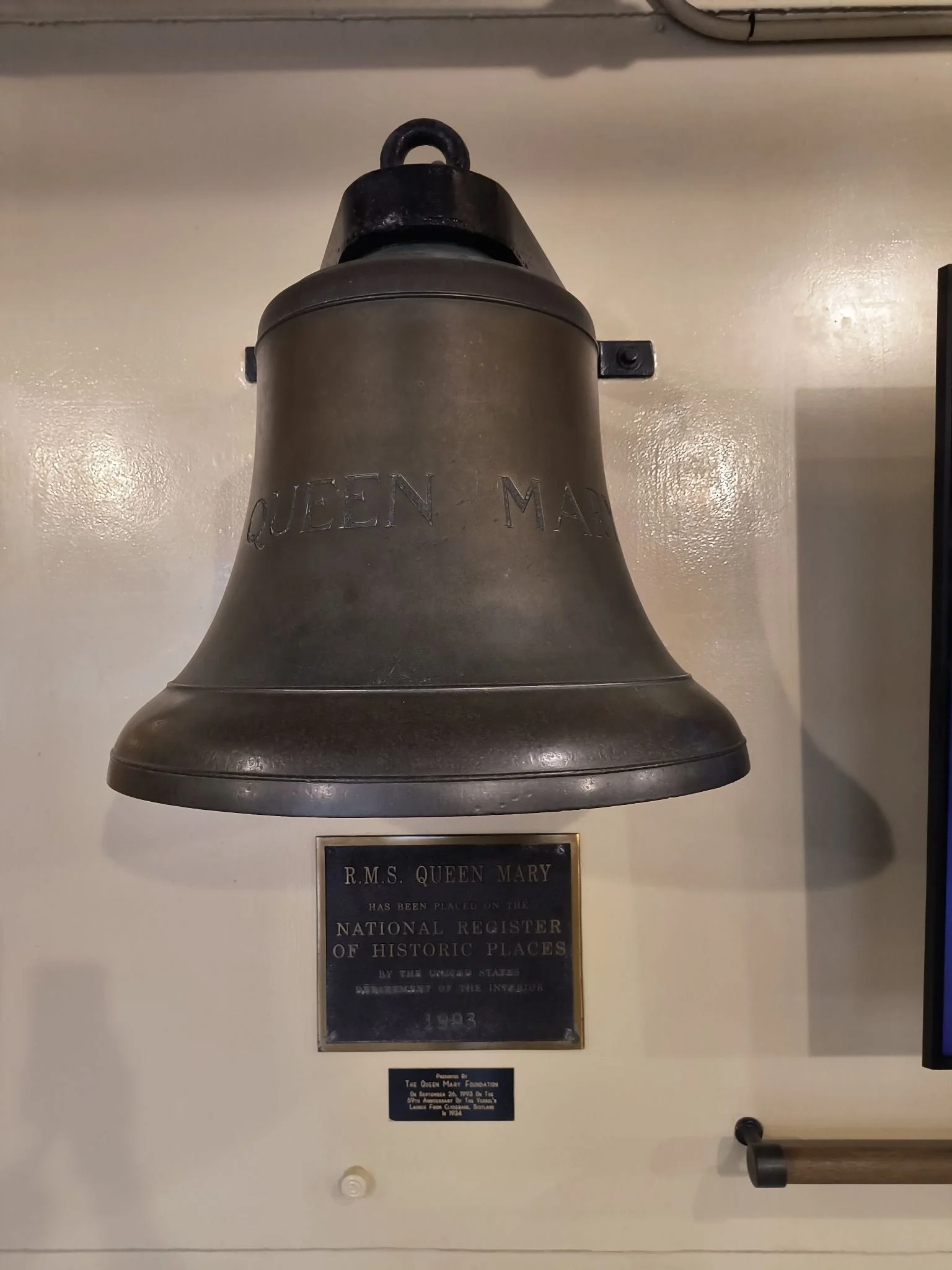
Rising from the harbor like a rusted ocean liner relic and dressed in art deco charm, the RMS Queen Mary is one of Southern California’s most famous dark-tourism attractions. Launched in 1934, retired to Long Beach in 1967, and forever linked to glamour, wartime service, and whispered after-hours encounters, she’s part museum, part hotel, and fully a playground for people who like history with a side of goosebumps.
Quick history
Built: Laid down in 1930, launched in 1934 by John Brown & Company in Scotland.
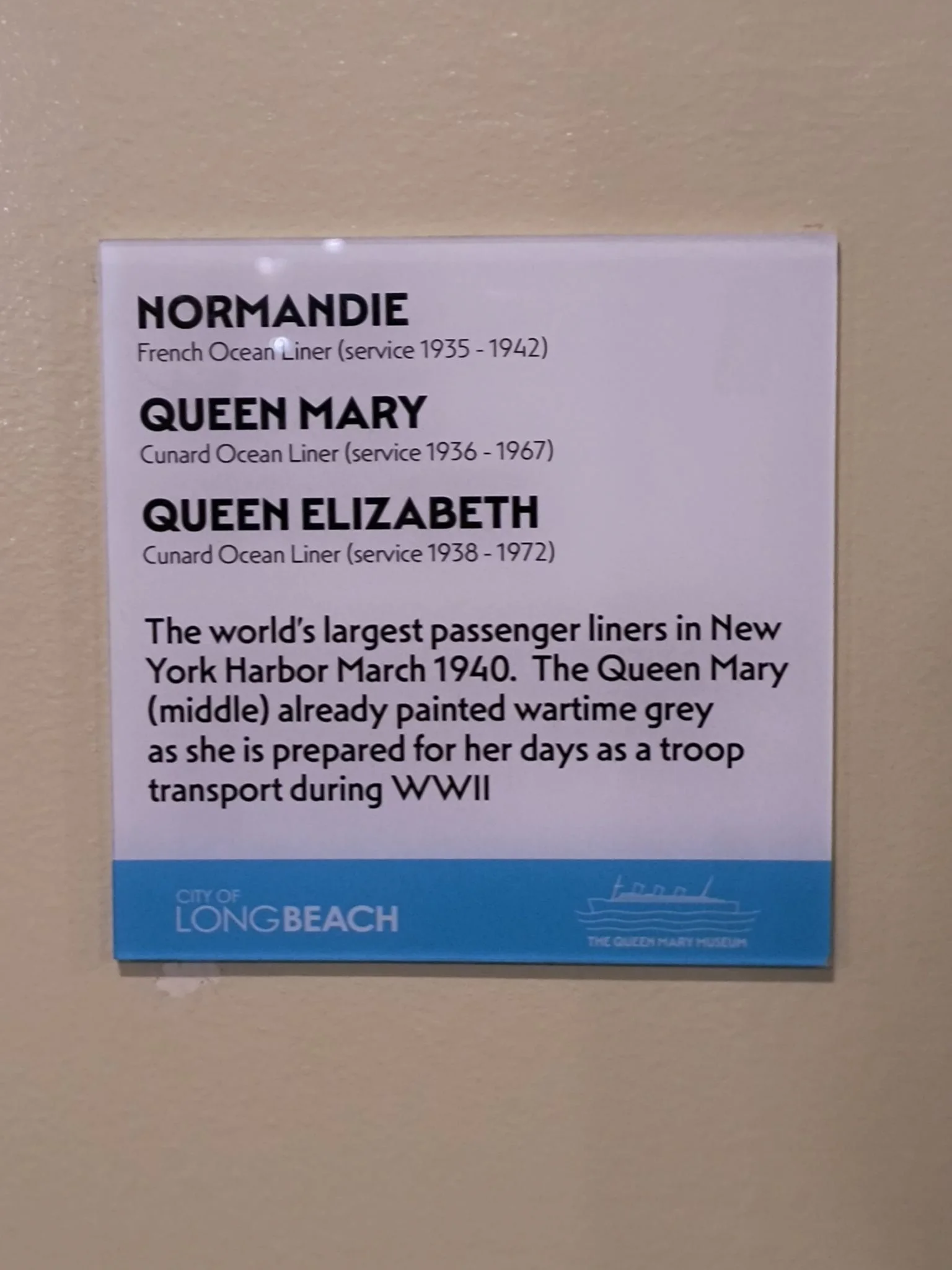
Role: Premier transatlantic ocean liner in the 1930s; competed with the Normandie. During World War II, the ship was converted into a troopship. Because of her speed and grey hull, she earned the nickname "Grey Ghost."
Postwar: Returned to passenger service in 1947, then retired from transatlantic service in 1967.
Permanent berth: Arrived in Long Beach, California, in 1967 and opened as a hotel and attraction. She’s been a museum/hotel/entertainment complex since, though ownership and restoration battles have been frequent.
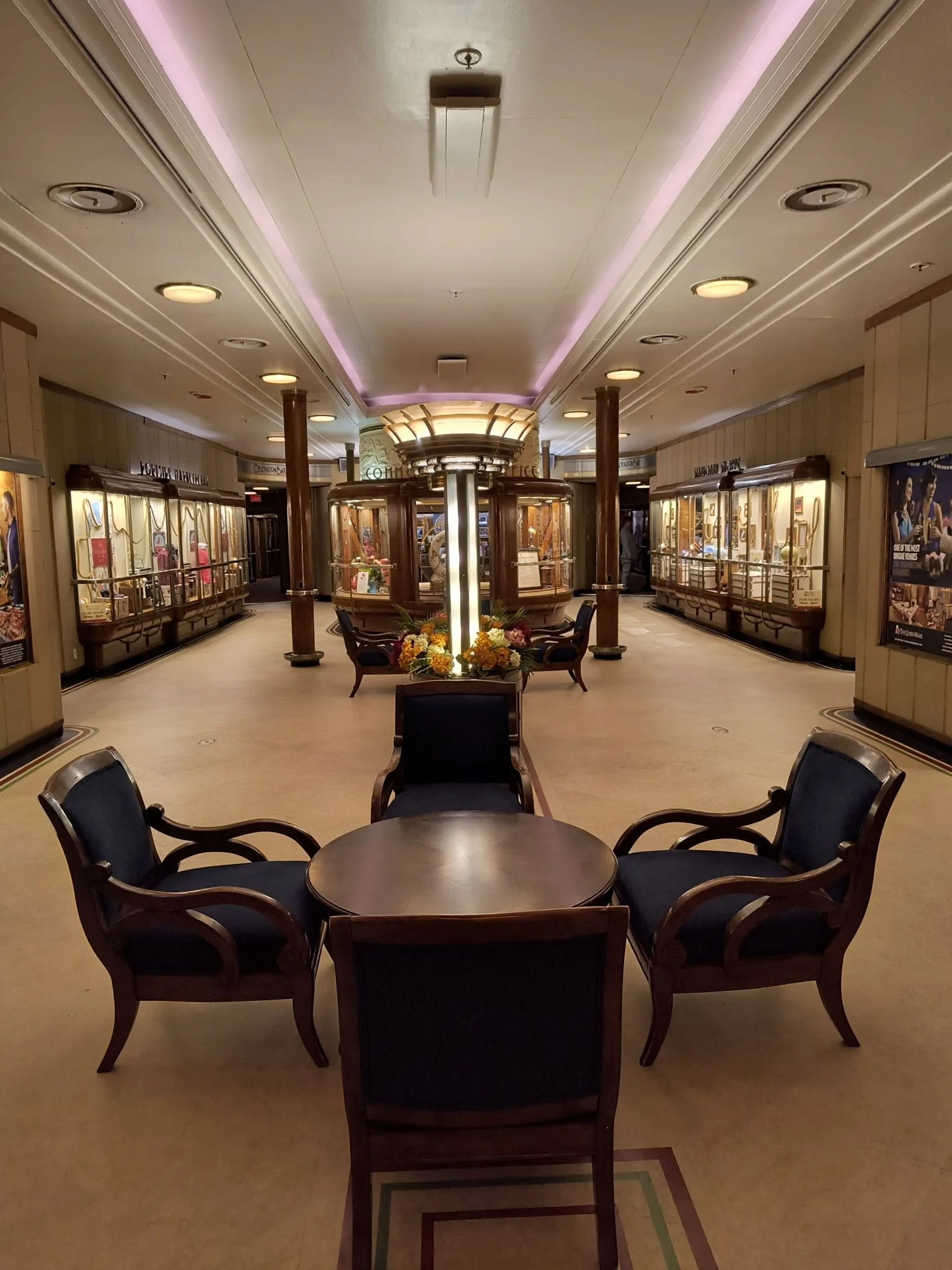
The haunts and hot spots People report activity throughout the ship, but a few areas get the most attention from guests, staff, and investigators:
The Engine Room and Boiler Rooms
Atmosphere: Deep, echoey, and industrial — perfect for eerie feelings.
Reports: Cold spots, tools moving, and witnesses hearing voices or seeing apparitions of men in uniform. Some investigators pick up disembodied footsteps and mechanical-sounding EVP (electronic voice phenomena).
The First-Class Pool (aka the Swimming Pool/Pool Deck)
Atmosphere: Tiled, sunken, and stage-lit at night.
Reports: Witnesses claim to see a woman in a white bathing suit or hear the splashing of a swim that never happened. Some staff have said the lights flicker spontaneously and shower doors open on their own.
The Observation Bar / Pumpkin Room
Atmosphere: Upscale, art-deco bar area with panoramic views.
Reports: Apparitions in period clothing, cold spots, objects (like glasses) moved or knocked over. One frequent tale involves a woman who died in a car accident near the ship and later appeared in the bar.
Stateroom B340 and other cabins (including B345 and B339 depending on source)
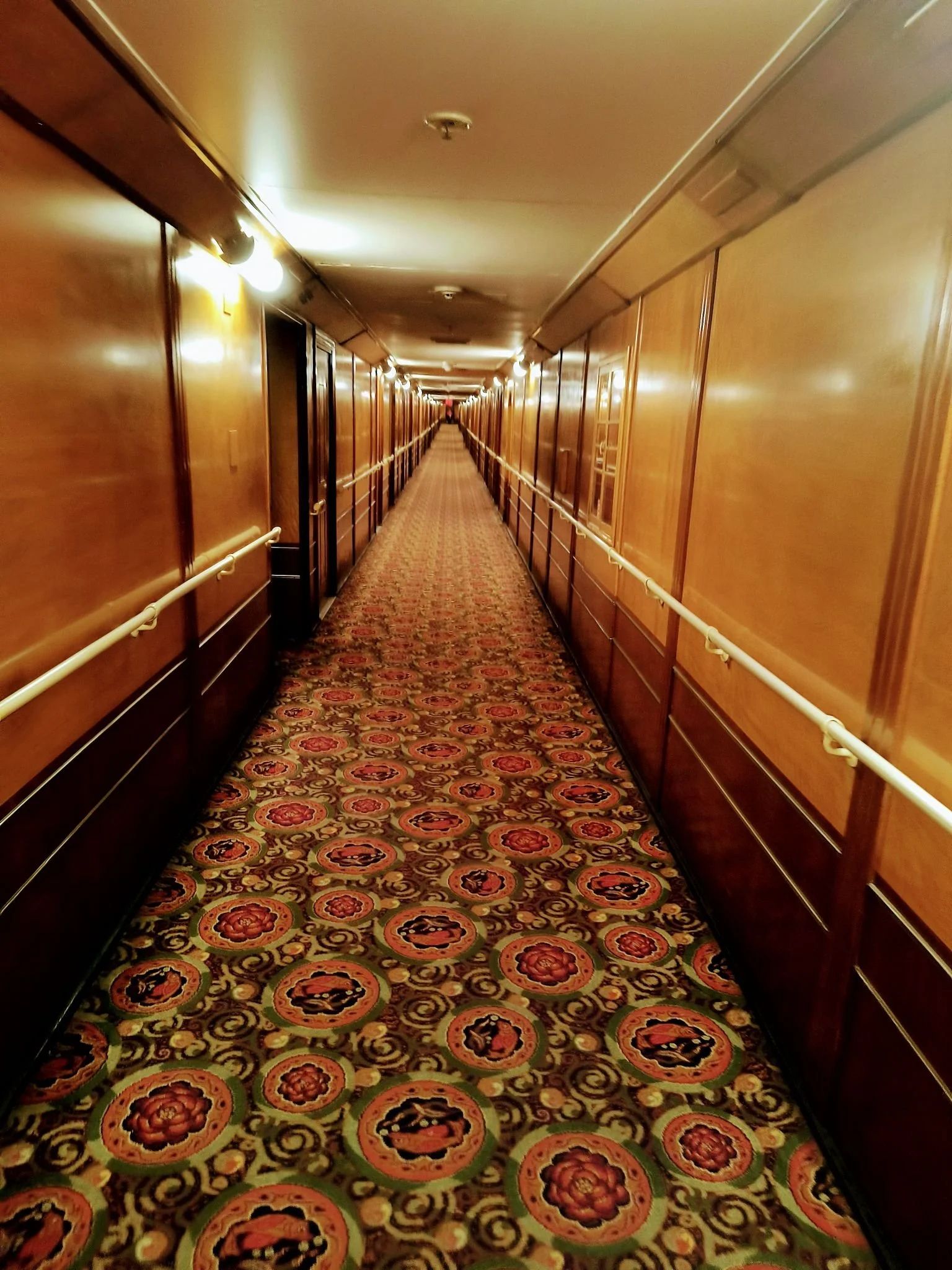
Atmosphere: Narrow corridors, small cabins preserving period décor.
Reports: Guests waking to find beds being sat on by unseen presences, lights turning on/off, sounds of children laughing and running in hallways, and doors slamming. B340 is often singled out as especially active.
The Chapel and surrounding corridors
Atmosphere: Small, solemn, and acoustically live.
Reports: Sensed presences, whispering, and instances where visitors feel watched or emotionally affected. Occasionally, visitors report seeing a man in uniform who disappears.
The Long Beach/Promenade area around the ship
Atmosphere: Dockside, public spaces.
Reports: Some ghost-hunting groups claim residual activity can be picked up on the pier, including orbs on camera and EVP captured from shore.
Notable ghost stories and legends
The “Lady in White”
Story: Sightings of a woman in a white gown or swimsuit appear in multiple public areas, most often near the pool and in corridors. Accounts vary—some say sadness, others that she’s protective. Some link her to a woman who lost her life in a car accident near the ship or an aboard casualty whose identity has morphed in retellings.
The “Ghost of the Engine Room”
Story: Crew and investigators have reported the sense of a male presence in work areas. Some claim to see a shadowy figure dressed like a 1940s engineer. Tools fall, switches flip, and footsteps echo when no one’s there.
The “Children of the Queen Mary”
Story: Voices and laughter attributed to children are often heard near cabins and hallways. Some experiments supposedly captured EVP children calling for their “mother.” The phenomenon is often described as residual—a looped imprint of past noise rather than interactive spirits.
Unofficial shipboard fatalities and wartime deaths
Background: Over her life the ship saw accidents and wartime casualties. Crew deaths, construction accidents, and wartime traumas provide a ready-made narrative for
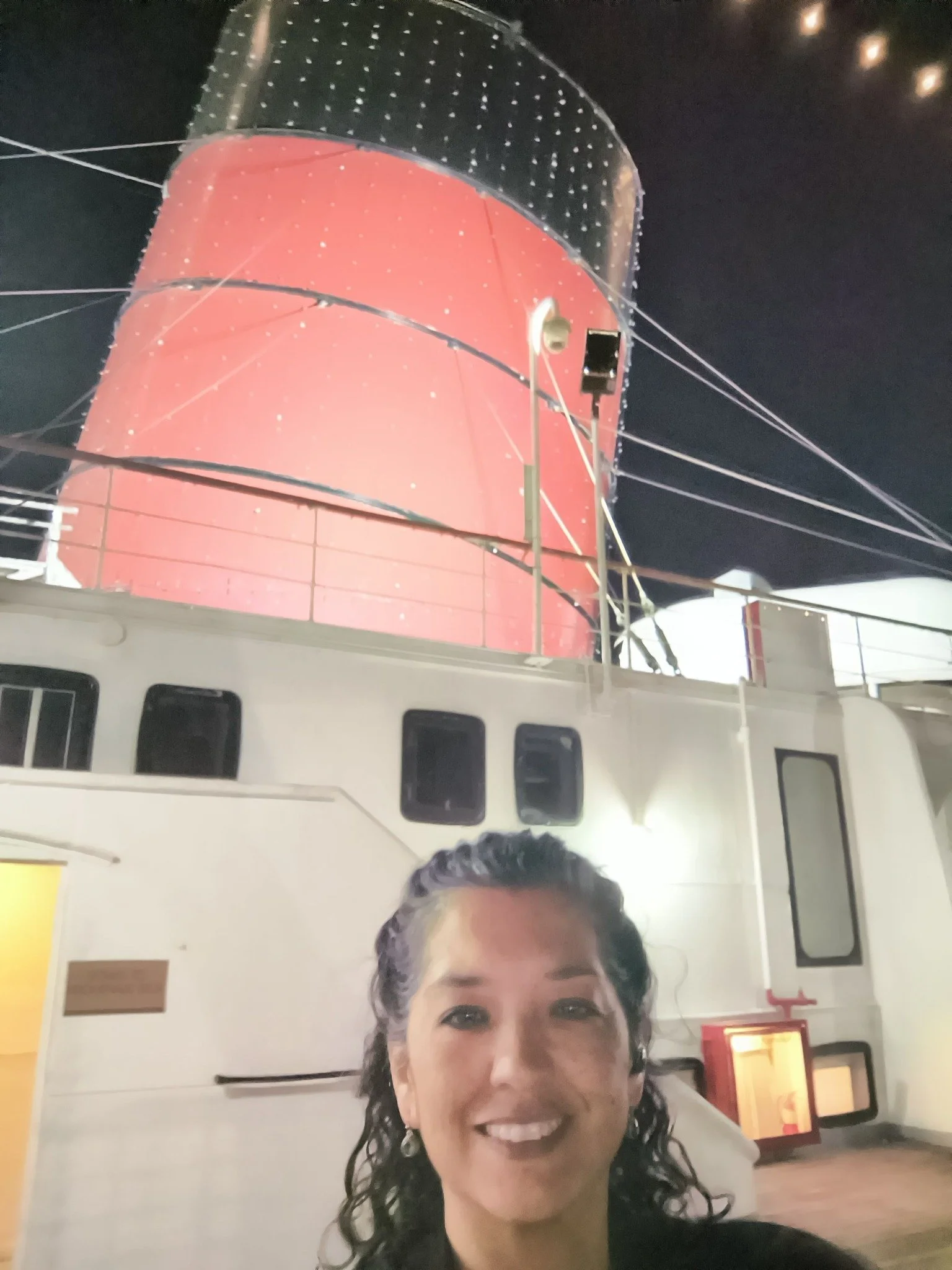
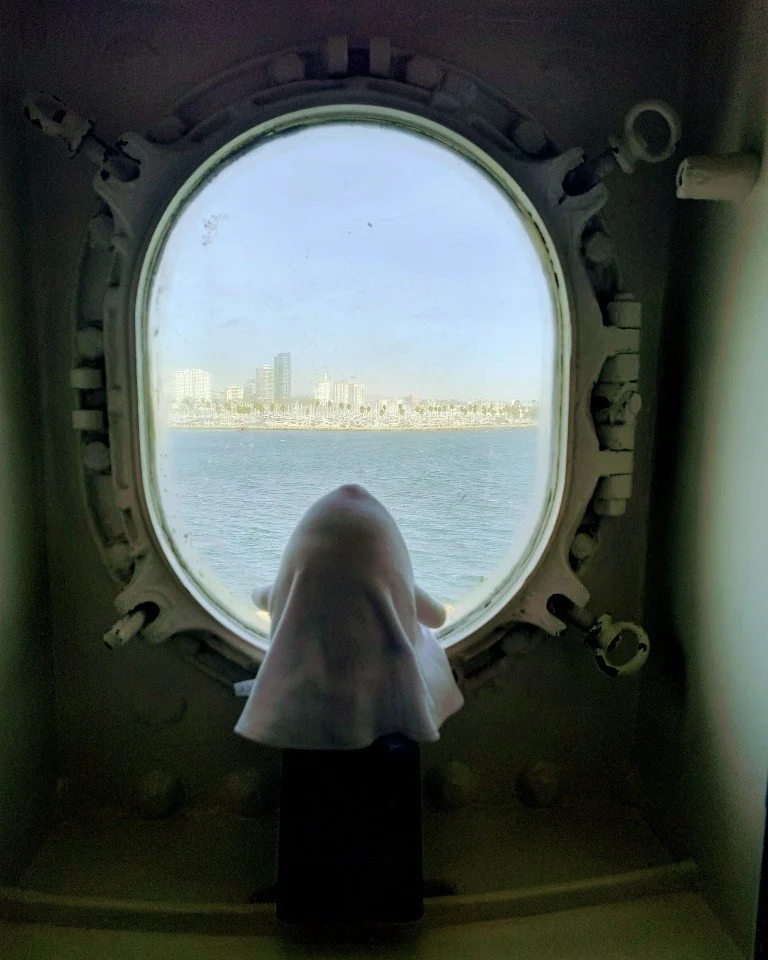
My personal experiences
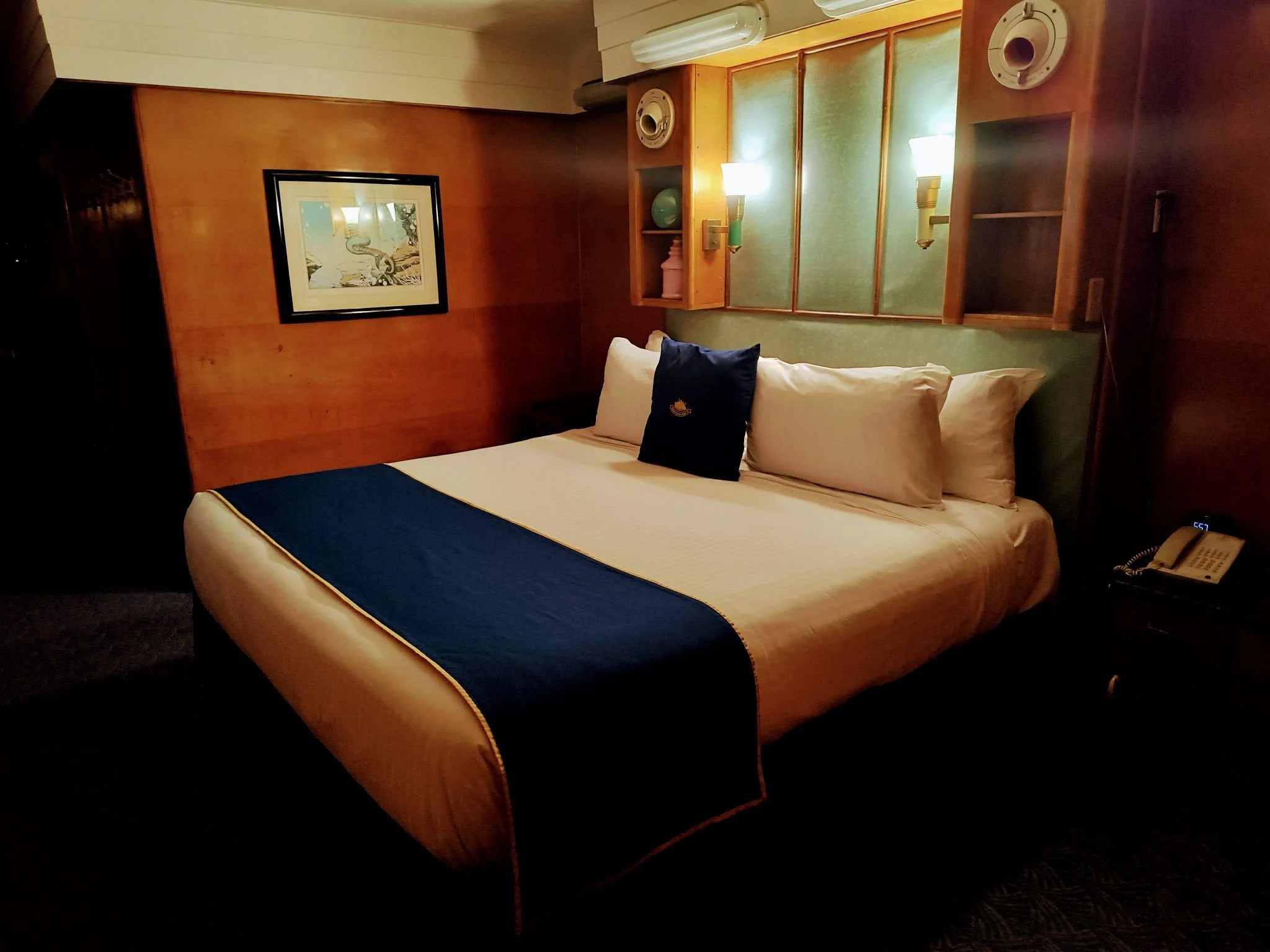
I spent some time walking the decks and exploring the ship but my experiences occurred in my room. I was pretty tired after running around Long Beach but I did spend some time investigating on my own. There were two instances in which I heard movement after I got into bed. I turned the light on but saw nothing. A few minutes after laying back down, I heard more movement. After a couple of more rounds of that, I didn’t hear any more movement but I had a moment where I felt something blow past my left ear. I never saw anything when that happened…..I only felt it. As if someone was blowing on my ear lobe or something.
Visiting the Haunted Queen Mary in Long Beach
The RMS Queen Mary is one of the crown jewels of American dark tourism: an elegant ocean liner-turned-hotel that’s anchored in Long Beach, California, and steeped in decades of maritime history, glamour, and ghost stories. Whether you’re a seasoned paranormal investigator, a weekend ghost-tourist, or just someone who appreciates history served with a chill down the spine, the Queen Mary delivers ambiance, atmosphere, and a generous helping of hair-raising tales.
What to do
Take a daytime history tour first: Ground yourself in the ship’s real stories—construction, wartime service, celebrity guests—before you hunt spirits. Understanding the historical context makes the paranormal reports richer.
Book a guided ghost tour: The Queen Mary runs several guided paranormal experiences—often led by staff who share both documented incidents and guest accounts. These tours also grant access to areas you might not explore on your own.
Overnight stay in a haunted cabin: If you dare, spend the night aboard. Waking up in a creaky stateroom with the ship’s silhouette against the harbor is part history lesson, part thrill.
Bring a flashlight, camera, and an open but skeptical mind: Lights help you explore safely; a camera can capture odd anomalies (or test your composure in dim corners). Balance curiosity with critical thinking—many “paranormal” experiences have natural explanations.
Practical tips
Book in advance for popular tours and overnight stays; weekend evening slots fill quickly, especially around Halloween and the full moon.
Wear comfortable shoes: The ship is large and has many stairs and narrow passageways.
Respect the ship: It’s both a historic vessel and a memorial for many who worked or traveled on her. Don’t touch artifacts, and follow tour rules.
Expect sensory quirks: The ship shifts slightly with changes in temperature and water level; pipes, HVAC, and settling noises are normal and can sound eerie.
Consider timing: Night tours are best for spooky atmosphere; daytime tours are great for historical context and photos.
Photo and journaling ideas
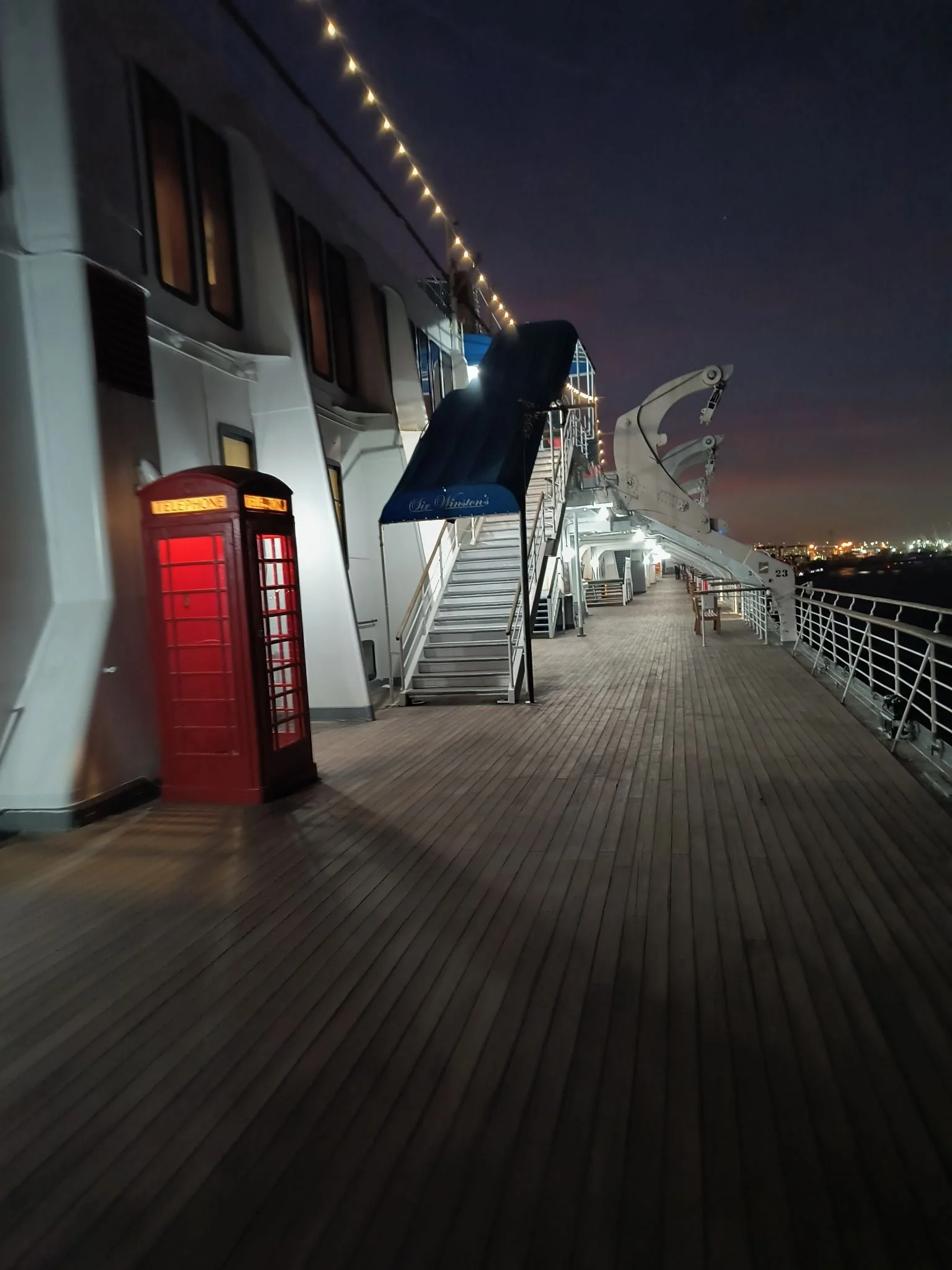
Capture the glow of the Promenade Deck at dusk for classic ocean-liner romance.
Take medium-range portraits on the grand staircase to catch ambient shadows.
Keep a paranormal log: note times, locations, sensory experiences, and equipment readings. Even mundane details can build a compelling pattern.
Final note The Queen Mary is a layered destination—glamour, sorrow, service, and speculation all share the same metal and wood. Visit with an open mind, bring good shoes and a playful dare, and you’ll leave with stories: some historical, some spooky, and some that live somewhere deliciously in between. If you’re planning a group trip or want help arranging a haunted-night itinerary, I can design a package with the best tours, stateroom recommendations, and after-hours activities tailored to your vibe. Ready to set sail into the uncanny?
Make this beautiful day count!
Annette